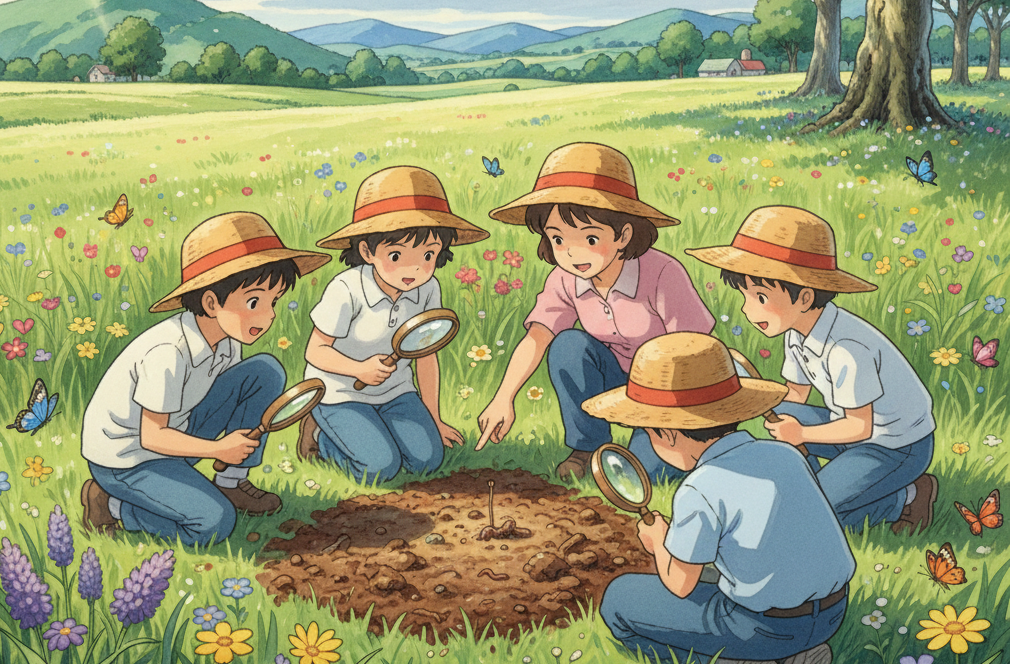
Did you know that a single teaspoon of healthy soil contains more living organisms than there are people on Earth? For decades, we have treated soil as nothing more than “dirt”—a dead medium used to hold plants upright while we pump them full of synthetic chemicals. However, according to the UN, nearly 33% of the world’s topsoil is already degraded. If we continue at this rate, we may only have 60 harvests left. The challenge is that our current industrial farming methods are essentially “mining” the soil of its life, leaving behind a sterile, dusty wasteland that can no longer support healthy crops.
The pain point is felt by every farmer and gardener: declining yields, increased pests, and the constant need for more expensive fertilizers just to stay afloat. But there is a way back. The solution is Soil Healing—a return to regenerative practices that restore the biological life within the earth. By focusing on soil health rather than just plant growth, we can create a self-sustaining ecosystem that is resilient to climate change. This article will walk you through the core principles of soil restoration, the immense benefits of living earth, and a practical guide to healing your own soil naturally.
💡 Understanding Soil Health: Key Concepts and Importance
To understand Soil Health, you must first stop seeing soil as a chemistry set and start seeing it as a biological community. Healthy soil is a living, breathing “web” of bacteria, fungi, protozoa, and earthworms. These organisms work in a symbiotic relationship with plants, breaking down minerals and organic matter into food that the roots can actually absorb.
Key Concepts:
- Soil Organic Matter (SOM): This is the “humus” or decomposed plant and animal material that gives soil its dark color and holds moisture like a sponge.
- The Microbiome: Just like the human gut, soil has a microbiome. Mycorrhizal fungi, for example, attach to roots and act like an extended nervous system, bringing water and phosphorus from far away in exchange for plant sugars.
- Structure and Porosity: Healthy soil is crumbly, not hard. This structure allows air and water to penetrate deep into the ground.
The Analogy: Think of soil like a “Natural Bank Account.” Synthetic fertilizers are like taking out a “high-interest loan”—they give you cash (growth) fast, but they drain your long-term savings (microbes and minerals). Healing the soil is like making “regular deposits” of organic matter; it builds interest over time, ensuring you never go bankrupt even during a drought.
✨ Why It Matters: The Top Benefits of Healthy Soil
When you heal the soil, you solve multiple problems at once. The impact is felt across your entire farm or garden.
- Natural Pest and Disease Resistance: Healthy soil grows “strong” plants with thick cell walls. These plants produce natural defense chemicals that make them much less attractive to pests and fungus.
- Unbeatable Water Retention: Every 1% increase in organic matter allows the soil to hold an additional 20,000 gallons of water per acre. This makes your farm virtually “drought-proof.”
- Nutrient Density: Crops grown in living soil have significantly higher levels of vitamins and minerals. You aren’t just growing food; you are growing medicine.
- Carbon Sequestration: Healthy soil is the world’s second-largest carbon sink. By healing the soil, you are literally pulling carbon out of the atmosphere and storing it in the ground, helping to fight climate change.
Pro Fact: Regenerative farming practices that focus on soil health can reduce input costs (fertilizers and pesticides) by up to 40% while maintaining or even increasing long-term yields.
🌱 How to Get Started: A Practical Guide for Beginners
Healing soil is not a fast process, but it is a rewarding one. Follow these five foundational steps:
- Step 1: Stop the Tilling: Heavy plowing or tilling is like an “earthquake” for soil microbes. It destroys fungal networks and exposes carbon to the air where it turns into CO2. Switch to No-Till or “Low-Till” methods.
- Step 2: Keep the Soil Covered: Nature hates bare skin. Use Mulch (straw, woodchips, or leaves) or Cover Crops (clover, rye, or vetch) to protect the soil from the sun’s heat and the rain’s impact.
- Step 3: Feed the Microbes: Use Compost or Vermicompost (worm castings). These are “probiotics” for your soil, introducing billions of beneficial bacteria and fungi in every handful.
- Step 4: Promote Biodiversity: Don’t grow just one thing. Rotate your crops and plant “companion plants” to ensure the soil gets a diverse diet of different root exudates.
- Step 5: Test, Don’t Guess: Get a comprehensive soil test that looks at Biological Activity, not just N-P-K levels. This will tell you if your “livestock” (the microbes) are actually alive and working.
Beginner’s Tip: Start a “Compost Pile” today. It is the single most important thing you can do to heal soil. Even kitchen scraps and cardboard can be turned into “Black Gold” for your garden.
🚀 Overcoming Challenges and Looking into the Future
The biggest challenge is Patience. Chemical fertilizers give an instant green-up, whereas healing soil takes 2–3 years to show massive results. You may also face Weed Pressure initially as you transition to no-till methods.
However, the future of agriculture is Regenerative. We are seeing a global shift where food companies are beginning to pay farmers “Carbon Credits” for healing their soil. In the future, we will have “Soil-Sensing AI” that can map the microbial health of an entire field in seconds, allowing for even more precise restoration.
✅ Conclusion
Healing the soil naturally is the most important work of our generation. We cannot have healthy people on a sick planet, and it all starts with the ground beneath our feet. By moving away from “dirt management” and toward “soil stewardship,” we can ensure that our land remains fertile for our children and grandchildren. Remember, you don’t grow plants; you grow soil, and the soil grows the plants.
Call to Action: This weekend, take a shovel and dig a small hole in your yard or farm. Count how many earthworms you see. If you see fewer than five, it’s time to start your soil-healing journey!
❓ Frequently Asked Questions (FAQs)
1. How long does it take to heal dead soil? You will see minor improvements in one season, but it usually takes 3 to 5 years of consistent regenerative practice to fully restore the soil microbiome.
2. Can I use some chemical fertilizer while healing? It is best to phase them out slowly. High doses of synthetic nitrogen act like “salt” to earthworms and microbes, slowing down the healing process.
3. What is the best cover crop for beginners? Clover is excellent because it is easy to grow and naturally “fixes” nitrogen from the air into the soil for free.
4. Is soil healing possible in sandy or clay soil? Yes! Organic matter is the “magic fixer.” It helps sandy soil hold water and helps heavy clay soil drain better and breathe.