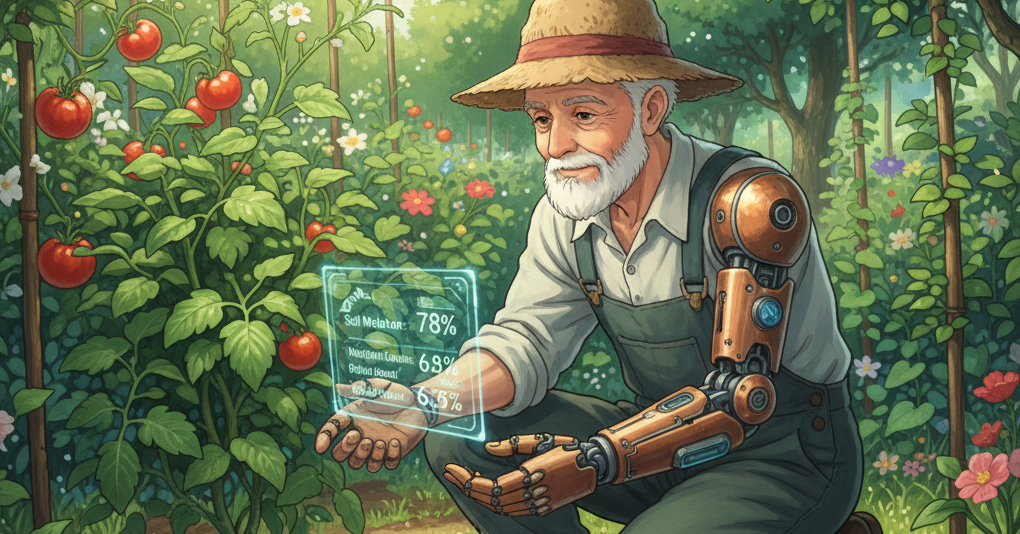
Did you know that nearly 40% of the world’s agricultural land is already degraded, largely due to over-irrigation and the excessive use of chemical fertilizers? For generations, farmers have relied on “touch and feel” to understand their soil. They would crumble a handful of earth in their palms, guessing if it needed more water or a specific nutrient. But in today’s world, where water is becoming a luxury and soil fertility is plummeting, guessing is a risk we can no longer afford.
The challenge is invisible to the naked eye. How do you know exactly what is happening six inches beneath the surface? The answer is literally in your pocket. IoT (Internet of Things) Sensors are changing the game by allowing you to monitor the heartbeat of your land directly from your smartphone. By bridging the gap between technology and the earth, we can now grow healthier crops with fewer resources. This article will guide you through the basics of IoT soil monitoring, its life-changing benefits, and how you can start your own smart-farming journey today.
💡 Understanding IoT Sensors: Key Concepts and Importance
To understand IoT in Agriculture, imagine your farm as a living organism that can finally speak to you. IoT stands for the “Internet of Things,” which refers to physical objects—in this case, sensors—that are connected to the internet. These sensors are small, durable devices that you bury or stick into the soil to collect real-time data.
How it works:
- Data Collection: The sensor measures specific parameters like Moisture Levels, pH Balance, Temperature, and Nutrient Content (NPK).
- Wireless Transmission: The data is sent via Wi-Fi, LoRaWAN, or Cellular networks to a “Cloud” server.
- Smartphone Interface: You receive this information on a dedicated app in the form of easy-to-read charts, alerts, and recommendations.
The Analogy: Think of an IoT sensor as a “Stethoscope for the Soil.” Just as a doctor uses a stethoscope to hear a patient’s heart and diagnose an issue before it becomes a crisis, these sensors listen to the soil’s needs, telling you exactly when it’s “thirsty” or “hungry” before the plants even begin to wilt.
✨ Why It Matters: The Top Benefits of IoT Soil Monitoring
The impact of knowing your soil’s real-time health is profound, affecting everything from your wallet to the planet.
- Precision Irrigation: Instead of watering on a fixed schedule, you only water when the sensor tells you the moisture is low. This can save up to 30-50% of water, which is crucial in drought-prone areas.
- Optimized Nutrient Use: Over-fertilization is a major cost and environmental hazard. IoT sensors help you apply organic fertilizers only when nutrient levels drop, saving money and preventing soil toxicity.
- Real-Time Alerts: If the soil temperature drops too low or moisture spikes due to a leak, you get an instant notification on your phone, allowing for immediate action.
- Better Crop Quality: Consistent soil conditions lead to uniform growth. Plants that aren’t stressed by lack of water or nutrients produce higher-quality, more nutrient-dense yields.
Pro Fact: Smart farms using IoT sensors have reported a reduction in fertilizer costs by nearly 20% while simultaneously increasing crop yields by avoiding plant stress.
🌱 How to Get Started: A Practical Guide for Beginners
You don’t need to be a tech expert to start monitoring your soil health. Here is a 5-step plan to bring your garden or farm into the digital age:
- Step 1: Identify Your Needs: Determine what you want to measure. For home gardeners, a simple Moisture and pH sensor is enough. For commercial farmers, look for NPK (Nitrogen, Phosphorus, Potassium) sensors.
- Step 2: Choose Your Connection: Ensure your farm has some form of connectivity. If your field is far from the house, look for LoRaWAN sensors, which can transmit data over several kilometers with very low power.
- Step 3: Placement is Key: Install sensors in different “zones” of your farm. Place them near the roots of your primary crops and ensure they are at a depth where most water absorption happens.
- Step 4: Download the Management App: Most sensor brands come with their own apps. Look for ones that offer push notifications and historical data tracking so you can see how your soil changes over a season.
- Step 5: Act on the Data: Use the insights to adjust your habits. If the app shows high moisture even after two days of no watering, you know your soil has good retention and you can wait longer to irrigate.
Beginner’s Tip: Start with a single “Smart Zone.” Buy one affordable sensor (like those from brands like Teralytic or even DIY Arduino kits) and monitor its data for one month before investing in sensors for the whole field.
🚀 Overcoming Challenges and Looking into the Future
The main hurdle for many is the initial setup cost and the fear that the sensors might break during plowing or harvest. Additionally, sensors require periodic calibration to ensure the readings remain accurate over time.
However, the future is incredibly exciting. We are moving toward “Plant-to-Smartphone Communication.” Soon, sensors will be biodegradable, meaning you can plant them with the seeds, and they will dissolve into the earth after the harvest. Furthermore, the integration of AI with IoT will mean the sensors won’t just tell you the soil is dry; they will automatically turn on the solar-powered pumps for you.
✅ Conclusion
IoT sensors are not just fancy gadgets; they are essential tools for the modern, sustainable farmer. By moving from a “guesswork” approach to a “data-driven” approach, we can protect our most precious resource—the soil. Monitoring soil health from your smartphone is the first step toward a more efficient, profitable, and eco-friendly farm. The future of agriculture is smart, and it starts with the data right beneath your feet.
Call to Action: This week, research one soil moisture sensor that fits your budget. Even a basic tool can change the way you see your plants forever.
❓ Frequently Asked Questions (FAQs)
1. Do these sensors need a constant internet connection? Most sensors store data locally and sync whenever a connection is available, but for real-time alerts, a stable Wi-Fi or cellular connection is recommended.
2. How long do the batteries in these sensors last? High-quality agricultural sensors are designed for low power consumption; many can last between 1 to 3 years on a single battery or use small solar panels.
3. Can I use these for indoor plants? Yes! IoT soil sensors are excellent for indoor gardening and greenhouses where climate control is critical.
4. Will the sensor get damaged by rain? No, agricultural-grade sensors are built with IP67 or IP68 waterproof ratings, meaning they are designed to survive heavy rain and irrigation.