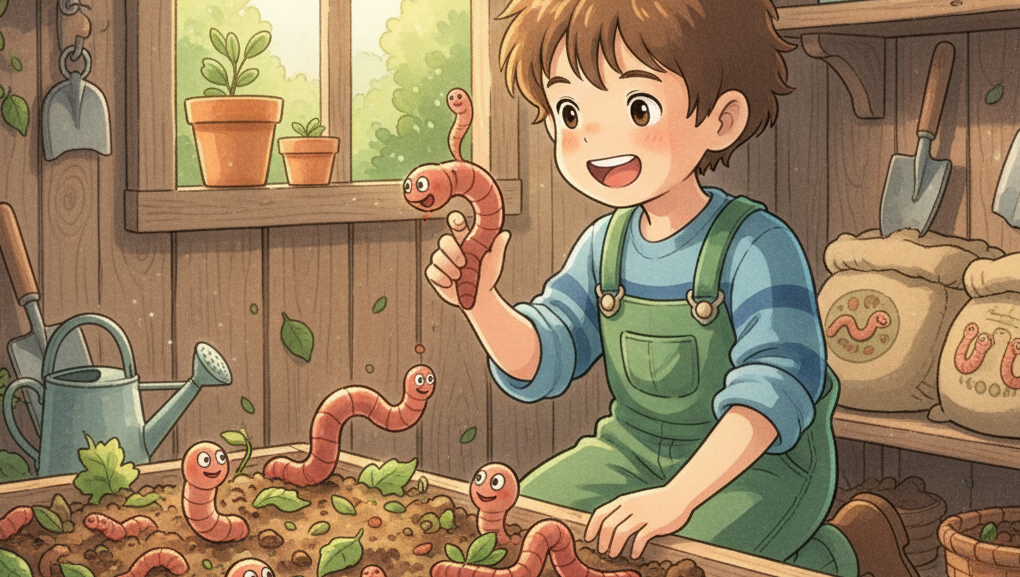
Did you know that the average household throws away nearly 30% of its waste in the form of food scraps, most of which ends up in landfills producing harmful methane gas? While we often think of “waste” as something to be gotten rid of, nature sees it as a goldmine of nutrients. The challenge for many home gardeners and eco-conscious individuals is the high cost of organic fertilizers and the lack of space for traditional, large-scale composting piles. How can an urban dweller or a small-scale farmer turn kitchen scraps into high-quality plant food quickly and without any foul smell?
The ultimate solution is Vermicomposting. By utilizing the incredible digestive power of specific earthworms, you can convert organic waste into “Black Gold”—the most nutrient-dense fertilizer known to man—right in your own kitchen or balcony. This process is faster, more efficient, and more space-saving than any other composting method. This article will provide you with the fundamentals of worm farming, the massive benefits for your plants, and a practical step-by-step guide to starting your own vermicompost bin today.
💡 Understanding Vermicomposting: Key Concepts and Importance
To understand Vermicomposting, you have to stop thinking of worms as “slimy creatures” and start seeing them as high-speed recycling machines. Unlike traditional composting, which relies on heat and bacteria over many months, vermicomposting uses worms to physically break down organic matter in a matter of weeks.
Key Concepts:
- The “Red Wiggler” (Eisenia fetida): These are not your average garden earthworms. Red Wigglers are surface dwellers that thrive in high-density environments and can eat half their body weight in food every single day.
- Worm Castings: This is the polite term for “worm poop.” Castings are highly concentrated pellets of nutrients, enzymes, and beneficial microbes that are instantly available for plants to absorb.
- Aerobic Process: Because worms move through the bedding, they naturally aerate the bin. This prevents the “rotten egg” smell associated with anaerobic decay.
The Analogy: Think of a vermicompost bin as a “Miniature Factory.” Your kitchen scraps are the “raw materials,” the worms are the “factory workers,” and the castings are the “premium finished product.” While a traditional compost pile is like a slow-moving ocean liner, a vermicompost bin is like a high-speed jet—getting you to the destination of fertile soil much faster.
✨ Why It Matters: The Top Benefits of Black Gold
The output of a vermicompost bin is far superior to standard store-bought fertilizers or even regular garden compost.
- Superior Nutrient Profile: Worm castings contain 5 times more nitrogen, 7 times more phosphorus, and 11 times more potassium than ordinary topsoil.
- Natural Growth Stimulants: Castings are rich in plant growth hormones (auxins and cytokinins) that help seeds germinate faster and plants grow stronger root systems.
- Enhanced Moisture Retention: Vermicompost acts like a biological sponge, helping your potting soil hold water more effectively, which reduces the frequency of watering.
- Disease Suppression: The beneficial microbes in vermicompost help protect plants from soil-borne diseases and pests by outcompeting the “bad” bacteria.
Pro Fact: Adding just 10% vermicompost to a standard potting mix can significantly increase the yield and vitamin content of vegetables like tomatoes and peppers.
🌱 How to Get Started: A Practical Guide for Beginners
Setting up a worm bin is a simple weekend project. Follow this 5-step implementation plan:
- Step 1: Choose or Build Your Bin: You can use a plastic storage tote or a wooden box. Ensure it has small air holes on the sides and drainage holes at the bottom. A shallow, wide bin is better than a deep, narrow one.
- Step 2: Prepare the Bedding: Worms need a moist “home.” Use shredded brown cardboard, newspaper, or coco-coir. Soak it in water and wring it out so it feels like a damp sponge. Fill the bin about 6-8 inches deep.
- Step 3: Introduce Your Workers: Purchase “Red Wigglers” from a local breeder. Place them on top of the bedding and let them burrow in naturally. Start with about 500 to 1,000 worms for a standard household.
- Step 4: Feed with Care: Add fruit and vegetable scraps, coffee grounds, and crushed eggshells. Avoid dairy, meat, oils, and excessive citrus, as these can harm the worms or cause smells.
- Step 5: Harvest the Gold: After 3-4 months, the bedding will turn into dark, crumbly castings. Push the finished compost to one side and put fresh bedding/food on the other. The worms will migrate to the new food, leaving the “Black Gold” ready for you to harvest.
Beginner’s Tip: “When in doubt, underfeed.” Most beginner worm bins fail because too much food is added at once, which can lead to overheating or mold. Let the worms finish what’s there before adding more.
🚀 Overcoming Challenges and Looking into the Future
The primary challenges are Fruit Flies and Excessive Moisture. Fruit flies can be managed by burying the food deep under the bedding. If the bin is too wet, simply add more dry shredded paper to soak up the liquid.
Looking ahead, the future is “Large-Scale Urban Vermiculture.” Cities are beginning to use massive worm “flow-through” reactors to process community food waste into fertilizer for urban parks. Future trends also include “Liquid Vermicompost” (Worm Tea), where the nutrients are extracted into a water-based spray that can be applied directly to plant leaves for an instant health boost.
✅ Conclusion
Vermicomposting is the perfect bridge between urban living and sustainable farming. It allows us to take responsibility for our waste and turn it into the highest quality nourishment for our plants. By keeping a small bin of worms, you are participating in a cycle of life that is as old as the earth itself. It is easy, educational for children, and incredibly rewarding for any gardener. Start your worm farm today and witness the magic of “Black Gold” in your own home.
Call to Action: This week, find a plastic bin and start shredding some old newspapers. Ordering your first batch of Red Wigglers is the best investment you will ever make for your garden!
❓ Frequently Asked Questions (FAQs)
1. Does a worm bin smell bad? If managed correctly, a vermicompost bin has a pleasant, earthy smell like a forest floor. If it smells “rotten,” it usually means it has too much water or too much food.
2. Can worms survive the winter or summer? Red Wigglers prefer temperatures between 15°C and 25°C. In extreme winters, bring the bin inside; in hot summers, keep it in a shaded, cool area.
3. How fast do the worms multiply? Under ideal conditions, a worm population can double every 60 to 90 days. You may soon have enough worms to gift a “starter kit” to your friends!
4. Can I use worms from my backyard? Regular garden earthworms are “deep burrowers” and will die in a bin. You must use composting worms like Red Wigglers for the best results.