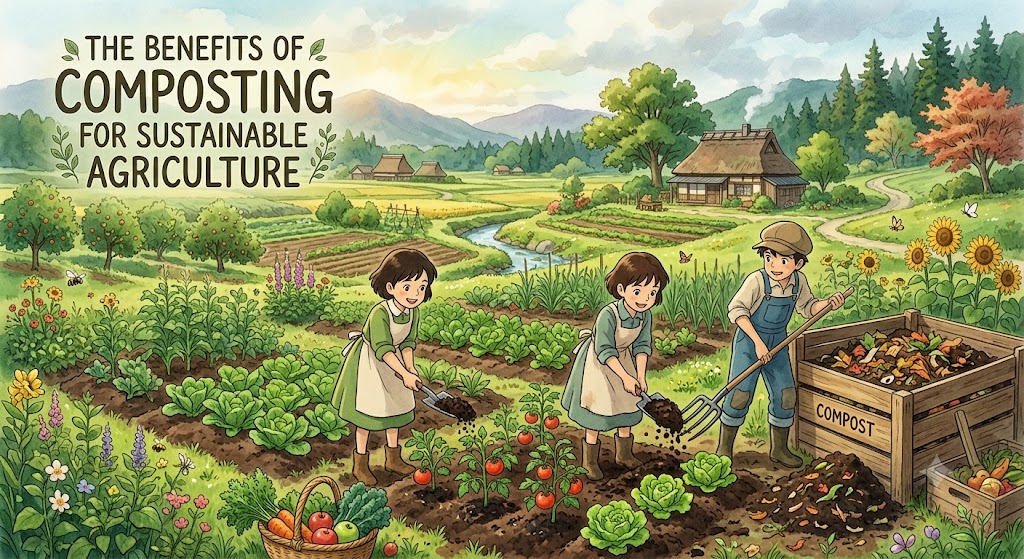
Every successful farm begins with healthy soil, and one of the most effective ways to build that soil naturally is through composting. Instead of relying only on synthetic fertilizers, many farmers are turning agricultural waste into nutrient-rich compost that improves soil fertility, strengthens crop growth, and supports long-term sustainability.
Composting is much more than simply recycling organic waste. It is a natural biological process where microorganisms break down plant residues, animal manure, food scraps, and other organic materials into a dark, nutrient-rich substance known as compost. This finished compost acts as a natural soil conditioner that nourishes crops while improving the overall health of farmland.
As concerns about soil degradation, climate change, and rising fertilizer costs continue to grow, composting has become one of the most valuable practices in sustainable agriculture.
Why Composting Is More Important Than Ever
Modern farming has increased food production significantly, but it has also placed tremendous pressure on agricultural soils. Years of intensive cultivation and excessive chemical use often leave soils with lower organic matter, poor structure, and reduced biological activity.
Composting offers a practical solution by returning valuable nutrients back to the soil instead of allowing organic waste to become an environmental problem.
Agriculture Without Compost Often Faces:
- Declining soil fertility
- Poor water retention
- Increased fertilizer expenses
- Soil compaction
- Lower microbial activity
- Greater risk of erosion
- Reduced long-term productivity
Adding compost helps reverse many of these issues naturally.
What Makes Compost So Valuable?
Unlike chemical fertilizers that mainly supply nutrients, compost improves the entire soil ecosystem.
It contains:
| Component | Benefit to Soil |
|---|---|
| Organic Matter | Improves soil structure |
| Beneficial Microorganisms | Enhances nutrient cycling |
| Humus | Increases moisture retention |
| Natural Nutrients | Supports healthy plant growth |
| Carbon | Builds long-term soil fertility |
This combination makes compost one of the most complete soil amendments available.
1. Restores Soil Fertility Naturally
Healthy soil continuously supplies nutrients to growing plants.
Over time, repeated harvesting removes these nutrients from the field.
Compost slowly releases essential elements like:
- Nitrogen
- Phosphorus
- Potassium
- Calcium
- Magnesium
- Sulfur
Because nutrients are released gradually, plants receive a steady supply throughout the growing season.
2. Improves Soil Structure
One of compost’s greatest strengths is its ability to improve soil texture regardless of soil type.
Sandy Soil
Compost increases water-holding capacity and nutrient retention.
Clay Soil
Compost loosens compacted soil, improving drainage and root growth.
As soil structure improves, crops develop stronger and healthier root systems.
3. Increases Water-Holding Capacity
Water scarcity is becoming a major challenge for agriculture worldwide.
Compost acts like a sponge by absorbing and storing moisture within the soil.
Benefits include:
✔ Reduced irrigation frequency
✔ Better drought resistance
✔ Improved seed germination
✔ Healthier crop development
✔ Lower water consumption
This is especially valuable in regions experiencing irregular rainfall.
4. Supports Beneficial Soil Life
Healthy soil contains billions of living organisms.
These include:
- Earthworms
- Bacteria
- Fungi
- Protozoa
- Nematodes
- Beneficial insects
Compost provides food and habitat for these organisms, allowing them to multiply naturally.
A living soil ecosystem helps plants absorb nutrients more efficiently while improving disease resistance.
5. Reduces Dependence on Chemical Fertilizers
Chemical fertilizers can produce rapid plant growth, but long-term overuse may negatively affect soil health.
Compost helps farmers gradually reduce fertilizer requirements by naturally improving nutrient availability.
Many farmers notice:
- Lower fertilizer costs
- Better nutrient efficiency
- Improved soil quality
- More balanced plant growth
This makes farming both environmentally and economically sustainable.
6. Recycles Agricultural Waste
Every farm generates organic waste.
Instead of burning or discarding materials, composting transforms waste into a valuable farming resource.
Common compost materials include:
- Crop residues
- Dry leaves
- Grass clippings
- Fruit peels
- Vegetable waste
- Livestock manure
- Straw
- Coffee grounds
Recycling these materials reduces waste while creating high-quality compost.
7. Helps Prevent Soil Erosion
Healthy soils rich in organic matter are more stable and less likely to wash away during heavy rainfall.
Compost improves soil aggregation, helping soil particles stick together.
This results in:
- Better infiltration
- Reduced runoff
- Stronger root anchorage
- Lower erosion rates
Protecting topsoil is essential for long-term agricultural productivity.
8. Improves Crop Quality
Healthy soil produces healthier plants.
Farmers often observe improvements in:
- Fruit size
- Vegetable quality
- Root development
- Crop uniformity
- Plant vigor
Better-quality crops frequently command higher market prices and improve customer satisfaction.
9. Supports Climate-Friendly Farming
Composting contributes to environmental sustainability in several ways.
It helps:
- Reduce landfill waste
- Lower methane emissions
- Store carbon in soil
- Reduce chemical fertilizer production
- Improve biodiversity
These environmental benefits make composting an important tool in climate-smart agriculture.
10. Increases Long-Term Farm Productivity
Unlike many short-term solutions, compost continues improving soil year after year.
Regular compost application builds stronger soil that becomes increasingly productive over time.
Long-term benefits include:
✔ Higher yields
✔ Improved soil fertility
✔ Better moisture retention
✔ Reduced production costs
✔ Stronger crop resilience
✔ Greater farm profitability
Healthy soil becomes a long-lasting asset for future generations.
How to Start Composting on the Farm
Beginning a composting system does not require expensive equipment.
Farmers can follow these simple steps:
Step 1
Collect organic materials such as crop waste, manure, leaves, and kitchen scraps.
Step 2
Layer green materials with dry brown materials.
Step 3
Maintain adequate moisture without making the pile too wet.
Step 4
Turn the pile every few weeks to improve airflow.
Step 5
Allow microorganisms enough time to fully decompose the materials.
Well-prepared compost is dark, crumbly, and has an earthy smell.
Common Composting Mistakes
Avoiding a few common mistakes helps produce better-quality compost.
Do not:
- Add diseased plants
- Compost fresh meat or dairy products
- Allow piles to become waterlogged
- Ignore regular turning
- Use excessive fresh manure
- Add too much of one material
Balanced compost ingredients produce the best results.
Quick Comparison
| Chemical Fertilizer | Compost |
|---|---|
| Fast nutrient release | Slow nutrient release |
| Limited soil improvement | Improves overall soil health |
| No organic matter | Rich in organic matter |
| Can increase soil degradation over time | Builds soil fertility naturally |
| Higher long-term dependency | Supports sustainable farming |
Conclusion
Composting is one of the simplest and most effective ways to improve soil health while supporting sustainable agriculture. It transforms organic waste into a valuable natural resource that restores soil fertility, enhances water retention, promotes beneficial microorganisms, and reduces dependence on chemical fertilizers. Beyond improving crop production, composting also protects the environment by reducing waste and improving long-term soil quality.
For farmers looking to build healthier soils, lower production costs, and create a more sustainable farming system, composting remains one of the smartest investments they can make. Small efforts today can produce healthier fields and more productive harvests for many years to come.
Frequently Asked Questions
1. What is compost used for in agriculture?
Compost is used to improve soil fertility, increase organic matter, enhance water retention, and support healthy crop growth.
2. How long does compost take to mature?
Depending on materials and management, compost usually takes between two and six months to fully decompose.
3. Can compost completely replace chemical fertilizers?
In many farming systems, compost significantly reduces fertilizer requirements, although nutrient needs vary depending on crops and soil conditions.
4. What materials are best for composting?
Crop residues, dry leaves, grass clippings, fruit and vegetable waste, livestock manure, and straw are excellent compost ingredients.
5. Why is compost important for sustainable agriculture?
Compost improves soil health naturally, reduces waste, conserves resources, lowers chemical dependency, and supports environmentally responsible farming practices.