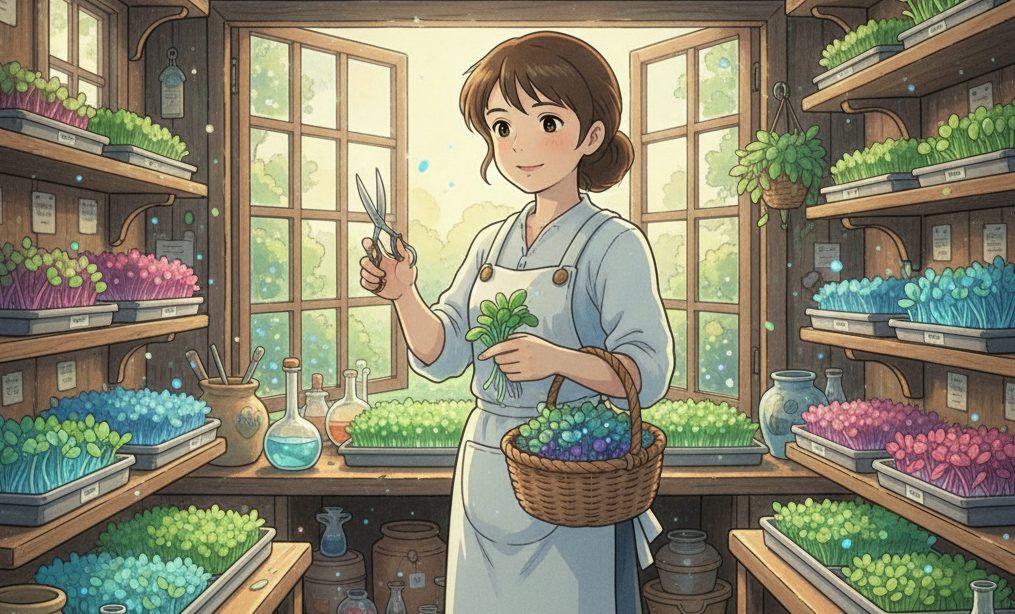
Did you know that some varieties of microgreens contain up to 40 times more nutrients than their fully grown counterparts? Imagine a crop that you can plant today and harvest in just seven days, all while utilizing a space as small as a spare closet or a basement corner. For most people, the word “farming” brings to mind vast fields, heavy tractors, and months of waiting for a single harvest. The challenge is that many aspiring entrepreneurs feel shut out of agriculture because they don’t own land or have thousands of dollars in startup capital.
The pain point is a classic one: how do you start a high-profit business with low overhead and fast turnover? The ultimate solution is the Microgreens Business. These tiny, flavor-packed greens have become the darlings of the culinary world, and because they grow vertically and incredibly fast, they offer one of the highest Returns on Investment (ROI) in the entire agricultural sector. This article will break down the fundamentals of microgreens, explore why they are such a powerful business model, and provide a practical step-by-step guide to starting your own “farm” from home.
💡 Understanding Microgreens: Key Concepts and Importance
To understand the Microgreens Business, you have to stop thinking of plants in terms of “acres” and start thinking in terms of “trays.” Microgreens are young vegetable greens that are approximately 1–3 inches tall. They are harvested after the cotyledon leaves (the first set of leaves) have developed and just as the first “true leaves” are emerging.
Key Concepts:
- Vertical Farming: Since microgreens are small and grown in trays, you can stack them on shelves. This means a 10×10 room can actually have 400 square feet of growing space.
- Rapid Turnover: Most crops like broccoli, radish, and sunflowers are ready for harvest in 7 to 14 days. This allows for over 25 harvests per year from the same tray.
- High Nutrient Density: Their status as a “superfood” makes them highly desirable for health-conscious consumers, allowing farmers to charge a premium price.
The Analogy: Think of a microgreens farm like a “High-Speed Printing Press.” Instead of growing a single large book (like a full head of cabbage) that takes months to print, you are printing thousands of high-value “leaflets” (microgreens) every few days. The demand is high, the cost of paper (seeds/soil) is low, and the press never stops running.
✨ Why It Matters: The Top Benefits of the Microgreens Model
Microgreens offer a unique combination of financial and environmental advantages that traditional farming simply cannot match.
- Exceptional ROI: With a startup cost of less than $500, you can generate hundreds of dollars in weekly revenue. A single 10×20 inch tray can produce $15 to $25 worth of product in two weeks.
- Minimal Space Requirements: You can run a full-time business from a garage, spare bedroom, or greenhouse. You don’t need fertile outdoor soil; you bring the “soil” (growing medium) to the trays.
- Year-Round Income: Because they are grown indoors under controlled conditions, you are not affected by seasons, droughts, or frost. You can sell fresh greens in the middle of winter when prices are at their highest.
- Sustainability: Microgreens use significantly less water than traditional field crops and require zero chemical pesticides, making them a perfect fit for the organic and local food movement.
Pro Fact: Because they are harvested so early, microgreens require very little fertilizer. The seed itself contains almost all the energy the plant needs to reach the harvest stage.
🌱 How to Get Started: A Practical Guide for Beginners
Launching a microgreens business is a process of precision and cleanliness. Follow these five steps to get your first harvest:
- Step 1: Set Up Your Grow Space: Find a clean, temperature-controlled area. Install a 4-tier wire shelving unit and attach LED shop lights (6500K color temperature is best) to each shelf.
- Step 2: Source Your Supplies: You will need 10×20 inch growing trays (some with holes for drainage, some without), a high-quality seed starting mix (or coco coir), and organic seeds.
- Step 3: Seeding and Germination: Fill your trays with 1-2 inches of moist soil. Spread the seeds evenly and densely across the surface. Cover the seeds for 2-3 days (the “blackout phase”) to encourage them to stretch and grow tall.
- Step 4: Lighting and Watering: Once the seeds have sprouted, move them under the lights. Water from the bottom (pouring water into the tray without holes) to keep the greens dry and prevent mold.
- Step 5: Harvest and Packaging: When the first leaves are fully open, use sharp scissors or a knife to cut the greens just above the soil line. Dry them gently and pack them into breathable containers for sale.
Beginner’s Tip: Start with Radish or Pea Shoots. These are the easiest to grow, have high germination rates, and are very popular with customers because of their spicy or sweet flavors.
🚀 Overcoming Challenges and Looking into the Future
The biggest hurdles for new growers are Mold and Humidity Control. Because the plants are grown so densely, airflow is critical. Investing in small fans for each shelf is a must. Another challenge is Market Saturation; you must find your unique niche—whether it’s selling to high-end chefs, local grocery stores, or directly to neighbors through a subscription model.
Looking forward, the future is “Automated Indoor Farming.” We are seeing the development of smart sensors that can monitor the exact nutrient levels in trays and AI-controlled lights that adjust intensity based on the plant’s growth stage. As urban populations grow, “Hyper-Local” microgreen farms inside city limits will become the primary source of fresh vitamins for the modern world.
✅ Conclusion
The microgreens business is the ultimate proof that you don’t need a lot of land to be a successful farmer. By leveraging vertical space and fast growth cycles, anyone with a small room and a bit of dedication can build a profitable, sustainable business. It is a venture that rewards attention to detail and a passion for health. Whether you want to earn a side income or build a full-scale agricultural empire, microgreens provide the fastest path to a green thumb and a healthy bank account.
Call to Action: This week, buy one tray, a small bag of radish seeds, and a bag of potting soil. Grow your first tray on your kitchen counter. Once you taste the quality and see how fast they grow, you’ll see the business potential for yourself!
❓ Frequently Asked Questions (FAQs)
1. Do I need expensive grow lights to start? Not necessarily. While professional LEDs are better, many beginners start with standard T5 fluorescent shop lights which are very affordable and effective for microgreens.
2. Is there a big market for microgreens? Yes. Chefs use them as a “signature garnish” to justify higher plate prices, and health enthusiasts buy them at farmers’ markets as a powerful supplement for smoothies and salads.
3. How much can I earn per week? A dedicated hobbyist with a few shelves can easily earn $100–$300 per week, while a full-scale home operation can generate $1,000–$2,000+ per month.
4. Can I grow microgreens in just water (Hydroponics)? Yes, some varieties like arugula and kale grow well on hemp mats or reusable screens using only water, which makes the process even cleaner for indoor environments.