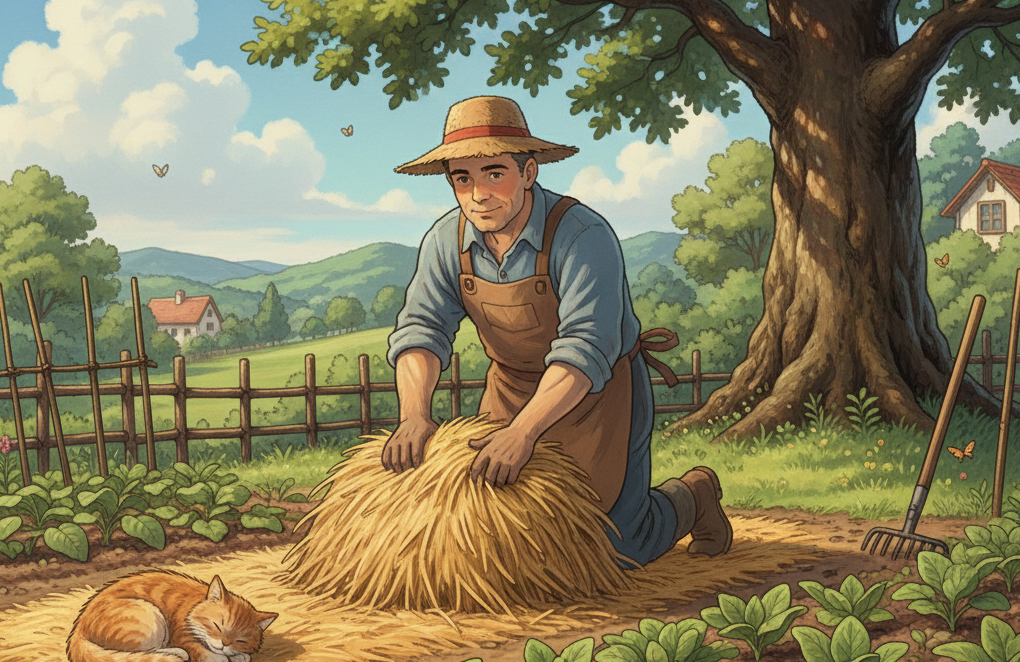
Did you know that a single square foot of garden soil can contain thousands of dormant weed seeds just waiting for a sliver of sunlight to germinate? For many farmers and gardeners, the word “weeds” triggers memories of back-breaking labor, aching knees, and endless hours spent under the scorching sun. The challenge is that as soon as you pull one weed, three more seem to take its place. Traditionally, we have turned to heavy tilling or toxic chemical herbicides to solve this problem, but these “solutions” often end up poisoning our soil, killing beneficial microbes, and creating a cycle of dependency.
The pain point is exhausting: how do you stop the weeds without destroying your back or your environment? The ultimate solution is Organic Mulching. By simply imitating the floor of a natural forest, you can create a protective barrier that “suffocates” weeds before they ever see the light of day. This article will explore the core fundamentals of mulching, the incredible benefits it brings to your soil health, and a practical step-by-step guide to implementing this “lazy farmer’s secret” in your own fields.
💡 Understanding Organic Mulching: Key Concepts and Importance
To understand Organic Mulching, you have to look at how nature protects itself. In a forest, you rarely see bare brown dirt; the ground is always covered with fallen leaves, twigs, and decaying organic matter. Mulching is the practice of applying a layer of this organic material over the surface of your soil.
Key Concepts:
- Light Exclusion: Most weed seeds need direct sunlight to trigger germination. A thick layer of mulch acts as a “blackout curtain,” keeping the soil in darkness.
- Moisture Regulation: Mulch prevents the sun from “cooking” the soil, reducing evaporation and keeping the root zone cool and damp.
- Soil Building: Unlike plastic mulch, organic mulch eventually decomposes, turning into rich humus that feeds your earthworms and microbes.
The Analogy: Think of organic mulching as a “Protective Blanket” for your soil. Just as a blanket keeps you warm in the winter and protects your skin from sunburn in the summer, mulch shields the soil from extreme weather. It’s like a “Security Guard” standing at the door; it lets your plants grow through, but it blocks the unwanted “intruder” weeds from getting in.
✨ Why It Matters: The Top Benefits of Natural Suppression
Mulching is one of the few agricultural practices that provides multiple, massive benefits with a single application.
- Superior Weed Control: A 3-to-4-inch layer of organic mulch can reduce weed growth by up to 90%, virtually eliminating the need for hand-weeding or expensive herbicides.
- Unbeatable Water Savings: Mulched soil stays moist for much longer. This can reduce your irrigation needs by 25% to 50%, saving both money and precious water resources.
- Thermal Insulation: Mulch acts as a buffer against temperature swings. It keeps soil cooler during heatwaves and holds onto warmth during early spring frosts, extending your growing season.
- Natural Fertilization: As materials like straw or woodchips break down, they slowly release nitrogen, potassium, and carbon back into the earth, providing a “slow-release” meal for your crops.
Pro Fact: In heavy rain, mulch acts as a shock absorber. It prevents the soil from “crusting” over and stops topsoil from washing away, protecting your farm’s most valuable asset—its fertility.
🌱 How to Get Started: A Practical Guide for Beginners
Transitioning to a mulched system is simple, but doing it correctly is key to avoiding pests and rot. Follow this 5-step implementation plan:
- Step 1: Choose Your Material: Select a mulch based on what is available and what you are growing. Use Straw or Salt Hay for vegetables, Woodchips or Bark for fruit trees and berries, and Shredded Leaves for flower beds.
- Step 2: Clear the Area: Before applying mulch, pull any large, existing weeds. It is much easier to prevent weeds than to cover up fully grown ones.
- Step 3: Apply the Correct Depth: Aim for a layer that is 3 to 4 inches thick. If the layer is too thin, light will get through; if it is too thick (over 6 inches), air might not reach the soil, causing root rot.
- Step 4: Keep the “Donut” Shape: Never pile mulch directly against the stems or trunks of your plants. Leave a small 1-to-2-inch gap around the base. This prevents moisture from being trapped against the bark, which can cause fungal diseases.
- Step 5: Recharge Annually: Because organic mulch is alive and decomposing, it will get thinner over time. Add a fresh “top-up” layer every spring or fall to maintain its weed-blocking power.
Beginner’s Tip: Use Cardboard or Newspaper as a “Base Layer.” If you have a very weedy patch, lay down plain brown cardboard (remove the tape!) first, then put your organic mulch on top. This creates a double-strength barrier that even the toughest weeds can’t penetrate.
🚀 Overcoming Challenges and Looking into the Future
The biggest challenges with organic mulching are Slugs and Rodents. These creatures love the cool, damp environment under the mulch. You can manage this by keeping mulch a bit thinner near the base of young seedlings. Another hurdle is the Nitrogen Tie-up; if you use very “woody” mulch, it can temporarily pull nitrogen from the top inch of soil. Using a bit of compost under the mulch solves this immediately.
Looking forward, the future is “Live Mulching.” We are seeing a move toward using low-growing “living carpets” of clover or creeping thyme that act as a permanent, green mulch. There is also a trend toward “Bio-Degradable Mulch Films” made from cornstarch that provide the weed-blocking power of plastic but disappear completely into the soil after the harvest.
✅ Conclusion
Organic mulching is the ultimate way to work with nature instead of fighting it. By covering your soil, you are not just stopping weeds; you are building a fortress for your plants to thrive. It is a one-time investment of labor that saves you hundreds of hours in the long run. Agriculture doesn’t have to be a battle against the earth; with a thick layer of mulch, it becomes a partnership. Put away the hoe, pick up the straw, and let your soil heal.
Call to Action: This weekend, find a source of organic straw or shredded leaves. Mulch just one of your garden beds and compare it to an uncovered bed after two weeks. The lack of weeds and the moisture in the soil will make you a believer!
❓ Frequently Asked Questions (FAQs)
1. Can I use grass clippings as mulch? Yes, but only if they are “weed-seed free” and have not been treated with chemicals. Spread them in thin layers to prevent them from becoming a smelly, matted mess.
2. Does mulch attract termites? While termites eat wood, they are generally not attracted to the thin layer of mulch on the surface. However, as a precaution, keep wood-based mulches a few inches away from the foundation of your home.
3. When is the best time to apply mulch? Mid-to-late spring is best, once the soil has warmed up. If you apply it too early in a cold climate, you might trap the cold in the ground and delay plant growth.
4. Can I use colored mulch from the store? It is better to avoid it. The dyes used in red or black “designer” mulches are often safe, but the wood itself is sometimes made from recycled pallets that might contain old chemicals. Stick to natural, untreated materials.