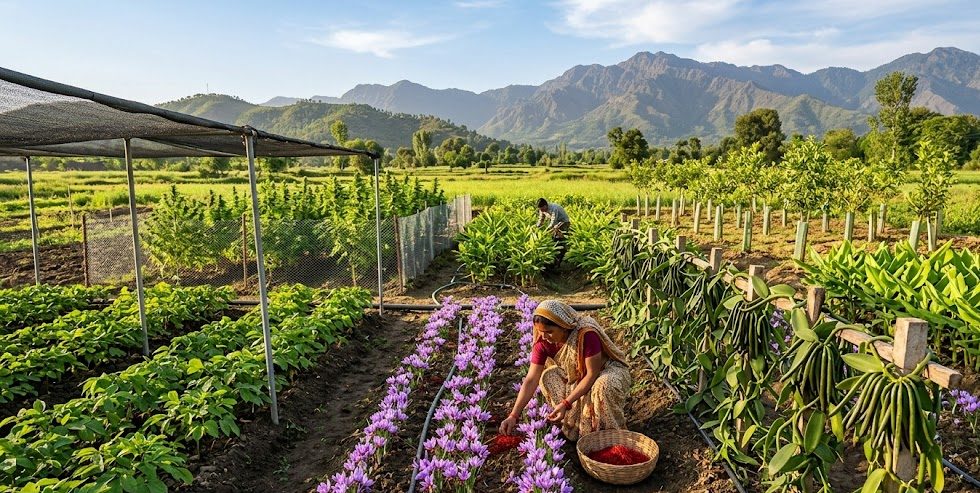
Farming is undergoing a significant transformation. Across India, progressive farmers are moving away from traditional, low-margin staples and embracing high-value crops that offer significantly better returns on investment. Whether you are a smallholder with just an acre of land or a larger commercial operation, the secret to increasing your net income often lies in strategic crop diversification. By choosing crops that are in high demand in both domestic and export markets—and by utilizing modern techniques like precision irrigation and greenhouse cultivation—you can turn your farm into a high-performing business. In this guide, we explore the most promising high-value cash crops for 2026, providing the practical insights you need to make informed decisions for your next planting season.
TheTractorAdda.com+ 1
1. High-Value Spice Farming: The “Gold” of the Soil
India has long been the global leader in spice production, and the demand only continues to grow. Spices offer a distinct advantage: they are often non-perishable, easy to store, and highly sought after by the food, pharmaceutical, and cosmetic industries.
Eicher Tractors
Turmeric and Ginger
Turmeric and ginger remain among the most reliable high-value crops for Indian farmers. With export-oriented demand consistently rising, these crops can yield net profits of ₹1.5 lakh to ₹4 lakh per acre when managed well.
Sanctity Ferme
- Pro Tip: Use raised-bed planting to ensure better drainage, especially in monsoon-heavy regions. This simple technique significantly reduces the risk of root rot, which is a common cause of yield loss.
Saffron (Kesar)
Often called “red gold,” saffron is arguably the most valuable spice in the world. While traditionally grown in the cold climates of Jammu and Kashmir, recent advancements in vertical farming and controlled-environment agriculture are making it possible to experiment with saffron in other regions. It is labor-intensive, but the market price—ranging from ₹1.5 lakh to ₹3 lakh per kilogram—justifies the effort.
TheTractorAdda.com
2. Emerging Superfoods: Dragon Fruit and Avocados
The shift in consumer dietary habits toward “superfoods” has created a massive opportunity for farmers willing to adopt new-age varieties.
Dragon Fruit (Pitaya)
Dragon fruit has exploded in popularity across India due to its low water requirements and climate resilience. It thrives in semi-arid conditions, making it an ideal choice for farmers in Gujarat, Maharashtra, and Karnataka.
The Better India+ 1
- Why it works: Once established, it requires relatively low maintenance compared to traditional fruit orchards. Its premium pricing in urban markets and growing export potential make it a top-tier choice for long-term wealth building.
Avocado (Butter Fruit)
Avocados are gaining traction as a high-value orchard crop. While they require patience, a well-managed avocado orchard can be productive for 40–50 years. As the health-conscious population grows, local demand in metropolitan areas is soaring, providing a steady, lucrative income stream that often far exceeds that of conventional fruit crops.
Salam Kisan
3. High-Efficiency Horticulture: Mushroom Farming
If you are working with limited land, mushroom farming is perhaps your most efficient option. It requires no soil and can be set up in a controlled indoor environment, allowing for year-round production.
Sanctity Ferme+ 1
- Quick Returns: Mushroom cycles are incredibly fast—often ready for harvest in just 30 to 45 days. This allows for multiple production cycles in a single year, creating consistent cash flow. TheTractorAdda.com
- Space Optimization: Because mushrooms are grown on stacks of substrates (like straw or sawdust), you can produce thousands of kilograms in a small unit that would be insufficient for field crops. Additri Agrotech
4. Medicinal and Aromatic Plants
The global movement toward natural healthcare and herbal products is driving huge demand for medicinal crops like Ashwagandha, Tulsi, and Aloe Vera. These crops are often drought-resistant and require fewer chemical inputs than high-maintenance vegetables.
Eicher Tractors
The Value of Value-Addition
The secret to maximizing revenue from medicinal plants is value addition. Instead of selling raw herbs, many successful farmers are now processing them into dried leaf powder, extracts, or oils. Partnering with pharmaceutical or FMCG companies through contract farming can provide the security of an assured buyer while significantly boosting your per-acre profit.
subsistencefarming.in+ 1
5. Practical Strategies for Maximum Yield
Choosing the right crop is only the first step. To ensure you actually hit your profit targets, focus on these three pillars of modern farming:
Precision Irrigation
Water is your most precious input. By switching from flood irrigation to drip systems, you not only save water but also deliver nutrients directly to the root zone (fertigation). This reduces waste and ensures your high-value crops receive exactly what they need to thrive.
Strategic Intercropping
If you are planting long-duration tree crops (like mangoes or avocados), do not leave the space between the rows empty. Use the early years to plant short-duration, high-value vegetables or pulses. This intercropping strategy provides intermediate income while the primary crop matures, keeping your farm profitable from day one.
Data-Driven Planning
Use the “Farmer’s Ledger” approach: record every input cost, irrigation event, and harvest total. By analyzing this data at the end of the season, you can objectively identify which varieties and methods performed best for your specific soil and climate. This removes the guesswork and allows you to scale up what actually works.
Conclusion
Maximizing farm revenue is about aligning your production with current market trends and managing your land with precision. Whether you choose the rapid turnover of mushroom farming, the long-term reliability of avocado orchards, or the high-margin potential of turmeric and spices, success lies in your ability to adapt. Start small, conduct thorough research on local market linkages, and focus on quality over quantity. By treating your farm as a high-performance business and embracing these modern techniques, you can ensure a profitable and sustainable future for your agricultural venture. The landscape of 2026 is full of potential—the key is to choose the path that best suits your resources and your long-term goals.