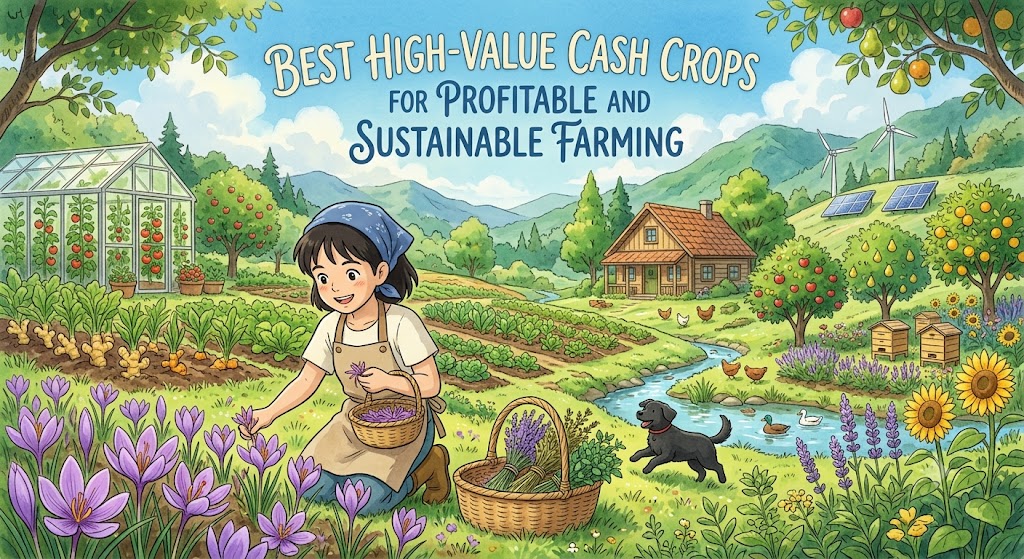
Modern farming is no longer limited to growing traditional crops in large quantities. Many farmers are now focusing on high-value cash crops that can generate better income from smaller areas of land. These crops often have strong market demand, higher selling prices, and opportunities for value-added products.
However, profitability should not be the only goal. A successful farming business must also protect soil fertility, conserve water, reduce unnecessary chemical use, and remain productive for many years. Choosing the right high-value crop based on climate, soil, market access, labour availability, and investment capacity can help farmers build a profitable and sustainable agricultural operation.
What Are High-Value Cash Crops?
High-value cash crops are agricultural products grown mainly for commercial sale rather than household consumption. They usually provide a higher return per acre compared with common staple crops such as wheat, rice, or maize.
These crops may include vegetables, fruits, herbs, spices, medicinal plants, flowers, and speciality products. Their profitability often depends on quality, freshness, market timing, packaging, and consumer demand.
A crop with a high selling price is not automatically profitable. Farmers must also consider production costs, storage needs, transportation, pest risks, and market competition.
1. Saffron
Saffron is one of the most valuable spices in the world. It is produced from the dried stigmas of the saffron crocus flower. Because harvesting is done manually and each flower produces only a small amount of saffron, the final product can command a premium price.
Saffron grows best in dry climates with well-drained soil and cold winters. It requires careful planting, proper moisture management, and skilled labour during harvest.
Farmers can improve income by selling pure saffron directly to consumers, restaurants, herbal-product manufacturers, or premium spice brands. Attractive packaging and quality certification may also increase its market value.
2. Medicinal and Aromatic Herbs
Medicinal plants such as ashwagandha, tulsi, aloe vera, chamomile, lavender, mint, lemongrass, and rosemary can provide excellent opportunities for small and medium-sized farms.
These crops are used in herbal medicines, cosmetics, essential oils, teas, soaps, perfumes, and wellness products. Many herbs require less water than conventional field crops and can grow successfully on marginal land.
Farmers should identify reliable buyers before planting large areas. Contract farming or partnerships with herbal-product companies can reduce marketing risks. Organic certification may further improve selling prices.
3. Mushrooms
Mushroom farming can generate high returns without requiring large agricultural fields. Mushrooms can be grown indoors in controlled environments using straw, sawdust, compost, or other agricultural waste materials.
Popular commercial varieties include oyster mushrooms, button mushrooms, shiitake mushrooms, and milky mushrooms. Oyster mushrooms are particularly suitable for beginners because they grow quickly and require relatively simple equipment.
Successful mushroom farming depends on temperature control, cleanliness, humidity management, and timely harvesting. Fresh mushrooms can be sold to restaurants, supermarkets, hotels, and local consumers. Dried mushrooms and mushroom powder offer longer shelf life and additional income opportunities.
4. Exotic and Premium Vegetables
Exotic vegetables are becoming increasingly popular among urban consumers, hotels, restaurants, and premium grocery stores. High-value options include coloured capsicum, broccoli, zucchini, asparagus, cherry tomatoes, lettuce, kale, celery, and baby corn.
These crops can be highly profitable when grown near cities or areas with strong demand. Protected cultivation methods such as greenhouses, shade nets, and polyhouses can help farmers improve quality and extend the growing season.
Before investing, farmers should study local demand and establish connections with buyers. Producing large quantities without a confirmed market may lead to waste because many premium vegetables are highly perishable.
5. Berries
Strawberries, blueberries, raspberries, and blackberries are valuable fruit crops with growing demand in fresh-food, bakery, beverage, and food-processing markets.
Strawberries can be particularly profitable in regions with suitable temperatures and good market access. Farmers may sell fresh fruit, jams, syrups, frozen berries, or processed products.
Berry farming requires careful irrigation, disease management, mulching, and post-harvest handling. Because berries spoil quickly, cold storage and rapid transportation are important.
Using drip irrigation and organic mulch can reduce water use, control weeds, and protect fruit quality.
6. Spices
Spices have strong domestic and international demand. Crops such as turmeric, ginger, black pepper, cardamom, chilli, cumin, coriander, and garlic can generate attractive returns under suitable conditions.
Turmeric and ginger are widely used in food, herbal medicine, cosmetics, and health products. Farmers can increase profits by processing crops into powder, paste, oil, or packaged products instead of selling only raw produce.
Proper drying and storage are essential because excess moisture can reduce quality and encourage fungal growth. Sustainable spice farming should include crop rotation, organic soil improvement, and integrated pest management.
7. Flowers
Floriculture can provide high income from relatively small areas. Roses, marigolds, lilies, orchids, gerbera, carnations, and chrysanthemums are commonly grown for weddings, festivals, religious events, decoration, and exports.
The profitability of flower farming depends heavily on timing and market demand. Prices may rise during festivals, wedding seasons, and special occasions.
Flowers require careful handling because they are delicate and highly perishable. Farmers located near cities, event markets, or transport hubs may have a major advantage.
Greenhouse flower production can improve consistency and quality, but it requires higher investment.
8. Organic Fruits and Vegetables
Organic produce can attract premium prices when consumers trust its quality and certification. Common organic cash crops include tomatoes, leafy greens, cucumbers, carrots, herbs, bananas, mangoes, and citrus fruits.
Organic farming avoids or limits synthetic chemicals and focuses on compost, natural pest management, crop rotation, biological controls, and healthy soil.
The transition to certified organic farming may take time. Farmers should maintain proper records, follow certification requirements, and develop direct marketing channels.
Selling through farmers’ markets, subscription boxes, local shops, or online platforms can help organic farmers receive better prices.
9. Bamboo
Bamboo is a fast-growing crop with uses in furniture, construction, paper, flooring, handicrafts, fencing, biomass, and home decoration.
Once established, bamboo can continue producing for many years. It also helps reduce soil erosion and can grow on land that may not be suitable for many conventional crops.
Farmers must select suitable bamboo varieties based on climate and end use. Since bamboo may take several years to provide significant commercial harvests, it is best suited to long-term farming plans.
Intercropping during the early growth period can help farmers earn additional income.
10. Avocado
Avocado demand has increased due to its use in health-focused diets, restaurants, salads, spreads, and premium food products.
The crop grows best in well-drained soil and mild climates without severe frost or extreme heat. Avocado trees require patience because commercial production begins only after establishment.
Farmers should select suitable varieties and confirm regional market demand. Good grading, careful harvesting, and proper packaging can help producers reach premium buyers.
How to Select the Right Cash Crop
Farmers should avoid selecting crops only because they appear profitable online. The best crop depends on local conditions and business capacity.
Important factors include:
- Local climate and seasonal temperatures
- Soil type, fertility, and drainage
- Water availability and irrigation cost
- Distance from markets and transport facilities
- Crop duration and expected harvest time
- Labour and technical knowledge
- Storage and processing requirements
- Pest and disease risks
- Availability of reliable buyers
- Initial investment and working capital
Starting with a small trial area is often safer than planting the entire farm with a new crop.
Sustainable Practices for High-Value Crops
Sustainable farming reduces long-term costs and protects natural resources. Farmers can improve sustainability by using drip irrigation, rainwater harvesting, compost, green manure, cover crops, crop rotation, and biological pest control.
Integrated pest management is especially important. Farmers should monitor crops regularly and use chemical treatments only when necessary. Beneficial insects, traps, resistant varieties, and natural sprays can reduce pesticide dependence.
Soil testing can help farmers apply fertilisers according to actual crop needs. This prevents waste, reduces pollution, and improves plant health.
Diversifying crops is also safer than depending on a single product. Mixed farming can protect income when prices fall or one crop is affected by disease.
Marketing High-Value Crops
Production is only one part of a profitable farming business. Farmers must also build strong marketing channels.
Possible buyers include wholesalers, supermarkets, hotels, restaurants, processors, exporters, herbal companies, and direct consumers.
Value addition can significantly improve income. For example, farmers can convert fresh turmeric into powder, herbs into tea blends, berries into jam, flowers into decorative products, or mushrooms into dried packets.
Branding, clean packaging, quality grading, and online promotion can help farmers reach premium customers.
Conclusion
High-value cash crops can help farmers earn more from limited land, but success requires careful planning. Saffron, medicinal herbs, mushrooms, exotic vegetables, berries, spices, flowers, organic produce, bamboo, and avocado all offer promising opportunities under the right conditions.
Farmers should study their soil, climate, investment capacity, and local market before selecting a crop. Starting small, building buyer relationships, managing risks, and using sustainable practices can create a farming business that remains profitable for the long term.
Frequently Asked Questions
Which cash crop is most profitable?
Profitability depends on climate, market demand, production cost, and farming skills. Saffron, mushrooms, herbs, spices, and exotic vegetables can be highly profitable in suitable regions.
Can small farmers grow high-value crops?
Yes. Mushrooms, herbs, flowers, leafy vegetables, and speciality crops can generate good income from small areas.
Do high-value crops require large investments?
Some crops require greenhouses, cold storage, or special equipment, while others can be started with limited investment. Farmers should begin with a manageable trial.
How can farmers reduce marketing risks?
Farmers can identify buyers before planting, use contract farming, join cooperatives, diversify crops, and sell through multiple channels.
Are high-value crops suitable for sustainable farming?
Yes. Many high-value crops can be grown using drip irrigation, compost, crop rotation, biological pest control, and other environmentally responsible methods.