Did you know that some plants can actually “scream” to warn their neighbors about a pest attack, while others release chemicals that make their friends taste like poison to bugs? In the world of industrial farming, we often grow vast fields of just one crop—a practice called monoculture. The challenge is that these fields act like a “giant buffet” for pests; once a single bug finds the field, there is nothing to stop it from destroying everything. This has led to an over-reliance on chemical pesticides that kill the bad bugs, the good bugs, and eventually, the soil itself.
The pain point is a frustrating cycle of spraying more and more chemicals for less and less result. How can we protect our crops without turning our farms into toxic zones? The ultimate solution is Companion Planting. By carefully selecting specific plants to grow alongside each other, you can create a biological “shield” that confuses pests, enriches the soil, and attracts beneficial insects. This article will explore the core fundamentals of plant partnerships, the scientific benefits of polyculture, and a practical roadmap to implementing your first companion garden.
💡 Understanding Companion Planting: Key Concepts and Importance
To understand Companion Planting, you have to stop seeing your farm as a row of products and start seeing it as a community. Plants, like people, have “best friends” that help them thrive and “enemies” that hold them back. This practice dates back thousands of years—most famously seen in the “Three Sisters” method used by Indigenous American tribes.
Key Concepts:
- The Three Sisters (Corn, Beans, Squash): The corn provides a tall pole for the beans to climb; the beans pull nitrogen from the air to feed the corn; and the large squash leaves cover the ground, acting as a living mulch to keep the soil cool and suppress weeds.
- Trap Cropping: This involves planting a “sacrificial” plant that pests love more than your main crop. The bugs swarm the trap crop, leaving your valuable vegetables untouched.
- Masking Scents: Strongly scented plants like Basil, Garlic, or Marigolds release volatile oils that mask the smell of your main crops, making it impossible for pests to find them by scent.
The Analogy: Think of companion planting as a “Security Detail” for a celebrity. Your main crop is the celebrity. The marigolds are the “Bodyguards” at the gate, the basil is the “Smoke Screen” that hides the location, and the sunflowers are the “Tall Lookouts” that attract helpful allies (like birds and ladybugs) to keep the celebrity safe.
✨ Why It Matters: The Top Benefits of Botanical Shields
Integrating companion plants isn’t just about aesthetics; it’s a strategic move for a healthier, more productive farm.
- Natural Pest Control: Many companions, like Nasturtiums or Marigolds, produce chemicals that are toxic to soil-borne pests (nematodes) or physically repel aphids and beetles.
- Increased Biodiversity: By growing a mix of plants, you attract a wider variety of “Good Bugs”—like ladybugs, lacewings, and predatory wasps—that eat the “Bad Bugs” for you for free.
- Space and Resource Optimization: You can grow more food in less space by utilizing different “stories.” For example, planting shade-loving lettuce under a canopy of tall tomatoes.
- Pollination Boost: Flowering companions like Borage or Lavender attract bees and butterflies, ensuring that your fruiting crops (like zucchini or peppers) get fully pollinated for a bigger harvest.
Pro Fact: Studies show that diverse planting systems can reduce pest damage by up to 40% compared to monoculture fields, significantly lowering the need for any form of spray.
🌱 How to Get Started: A Practical Guide for Beginners
Transitioning to companion planting requires planning. Follow this 5-step implementation plan for your first “Shielded Garden”:
- Step 1: Identify Your “Celebrity” Crop: Pick your main crop first (e.g., Tomatoes). Research its common enemies (e.g., Tomato Hornworms and Aphids).
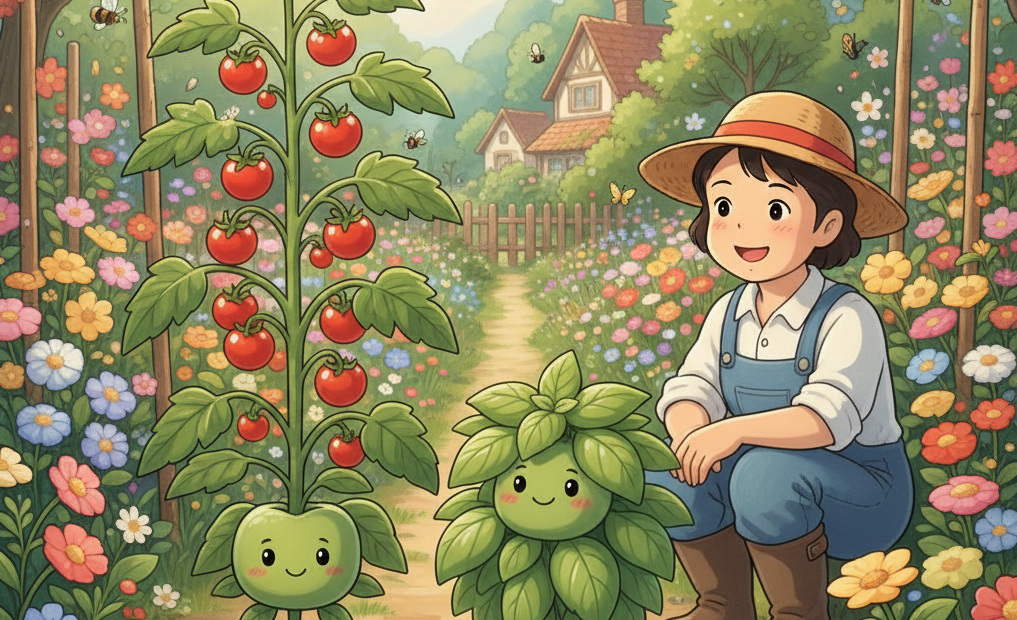
- Step 2: Choose Your Bodyguards: Match the celebrity with its best companions. For Tomatoes, plant Basil (to improve flavor and repel flies) and Marigolds (to repel nematodes and beetles).
- Step 3: Plan for Verticality: Use “Tall Lookouts.” Plant Sunflowers on the edges of your garden to draw aphids away from your vegetables and to provide a home for beneficial birds.
- Step 4: Plant in “Guilds”: Instead of straight lines, plant in clusters. A “Tomato Guild” might have a tomato in the center, basil and parsley around it, and a border of marigolds.
- Step 5: Watch and Adjust: Observe your garden. If you see ladybugs on your sunflowers, it means your “Security Detail” is working!
Beginner’s Tip: Marigolds and Garlic are the “Universal Companions.” They work well with almost everything and are extremely easy to grow. If you are a beginner, simply plant these two around the perimeter of every bed.
🚀 Overcoming Challenges and Looking into the Future
The biggest challenge is “Antagonist Plants.” Not all plants are friends. For example, never plant Beans near Garlic or Onions, as they can stunt the beans’ growth. Another hurdle is the Complex Harvest; because plants are mixed together, you cannot use large harvesting machines.
Looking forward, the future is “AI-Generated Plant Guilds.” We are seeing the development of software that can analyze your specific soil and climate to generate a 3D map of the perfect companion mix for your farm. There is also a trend toward “Edible Landscapes,” where ornamental companion plants are chosen because they are also delicious—like using Nasturtiums (which repel beetles) in your salads.
✅ Conclusion
Companion planting is the ultimate proof that nature has already solved most of our farming problems. By moving away from the “war” against pests and toward a “partnership” with plants, we can grow food that is cleaner, tastier, and more resilient. You don’t need a chemical lab to shield your crops; you just need to know which plants to put next to each other. Agriculture is beautiful when it works in harmony. Start small, pair your plants wisely, and watch your garden protect itself.
Call to Action: This week, find a “Companion Planting Chart” online. Pick one vegetable you are currently growing and find its “Best Friend” plant. Get it in the ground and let the shield start growing!
❓ Frequently Asked Questions (FAQs)
1. Does companion planting really replace pesticides? On a home or small-farm scale, yes! While it may not eliminate 100% of bugs, it keeps them at a level where they don’t cause significant damage to your harvest.
2. Can I use companion planting in large fields? It is more difficult with machines, but many large-scale organic farmers use “Inter-cropping” (alternating rows of different crops) to achieve similar results.
3. What is the best companion for Roses? Garlic! Planting garlic at the base of rose bushes helps repel aphids and prevents “Black Spot” fungus, which is a major problem for rose lovers.
4. Can companion plants compete for nutrients? If you choose wisely, No. Good companions often use different levels of the soil (one deep root, one shallow root) so they don’t fight over the same food.