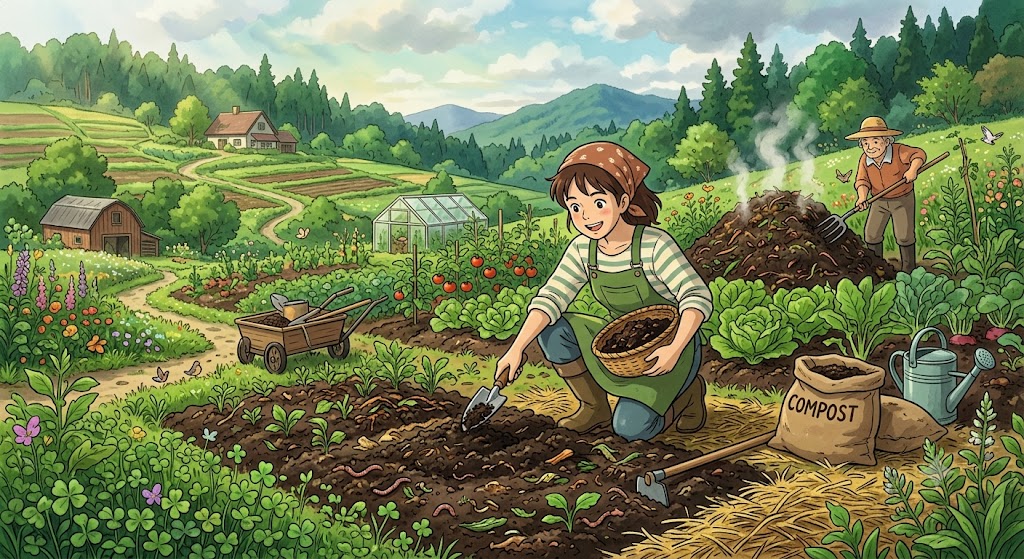
Healthy soil is the foundation of productive agriculture. Every successful crop begins with nutrient-rich soil that supports strong root development, healthy plant growth, and consistent yields. However, years of intensive farming, erosion, over-tilling, and excessive dependence on chemical fertilizers can gradually weaken soil quality and reduce its natural fertility.
Many farmers and gardeners are now looking for sustainable ways to restore soil health without relying heavily on synthetic fertilizers. Natural soil restoration methods not only improve crop productivity but also enhance biodiversity, conserve water, and support long-term agricultural sustainability.
The good news is that rebuilding healthy soil is possible through simple, environmentally friendly practices. By working with nature rather than against it, farmers can create fertile, living soil that continues to support healthy crops for generations.
Understanding Soil Health
Soil health refers to the soil’s ability to function as a living ecosystem that supports plant growth, regulates water, cycles nutrients, and sustains beneficial organisms.
Healthy soil typically contains:
- Organic matter
- Beneficial microorganisms
- Balanced nutrients
- Good soil structure
- Adequate moisture retention
- Proper aeration
When soil health declines, crops often suffer from poor growth, lower yields, increased pest problems, and nutrient deficiencies.
Why Soil Health Declines
Several common farming practices can gradually damage soil quality.
Excessive Chemical Fertilizer Use
While chemical fertilizers provide nutrients, long-term overuse can reduce microbial activity and disrupt natural nutrient cycles.
Continuous Monocropping
Growing the same crop repeatedly in the same area can deplete specific nutrients and increase disease pressure.
Soil Erosion
Wind and water erosion remove nutrient-rich topsoil, leaving behind less productive land.
Over-Tilling
Frequent tillage can break down soil structure, reduce organic matter, and disturb beneficial organisms.
Understanding these causes is the first step toward effective soil restoration.
Add Organic Matter to the Soil
One of the fastest and most effective ways to improve soil health naturally is by increasing organic matter content.
Organic matter helps:
- Improve soil structure
- Enhance water retention
- Increase nutrient availability
- Support beneficial microbes
- Reduce erosion
Common sources include:
- Compost
- Crop residues
- Grass clippings
- Dry leaves
- Well-rotted manure
Regular additions of organic materials gradually rebuild soil fertility and biological activity.
Use Compost as a Natural Soil Builder
Compost is often considered one of the best natural soil amendments available.
It contains valuable nutrients and beneficial microorganisms that help improve overall soil health.
Benefits of Compost
- Enhances nutrient availability
- Improves soil texture
- Supports microbial life
- Increases moisture retention
- Reduces waste by recycling organic materials
Applying compost before planting seasons can significantly improve soil productivity over time.
Grow Cover Crops
Cover crops are planted primarily to improve soil rather than for harvest.
Popular cover crops include:
- Clover
- Rye
- Alfalfa
- Vetch
- Mustard
These plants protect bare soil while contributing valuable organic matter.
Advantages of Cover Crops
- Prevent soil erosion
- Improve soil structure
- Suppress weeds
- Increase organic matter
- Support beneficial microorganisms
Legume cover crops also add natural nitrogen to the soil through biological nitrogen fixation.
Practice Crop Rotation
Crop rotation is a proven method for maintaining soil fertility and reducing pest problems.
Instead of growing the same crop repeatedly, farmers alternate crops with different nutrient needs and growth patterns.
Example Rotation Plan
Year 1: Corn
Year 2: Beans
Year 3: Root vegetables
Year 4: Cover crops
This system helps balance nutrient use while improving soil structure and biological diversity.
Encourage Beneficial Soil Microorganisms
Healthy soil contains countless microorganisms that perform essential functions.
These organisms help:
- Break down organic matter
- Release nutrients
- Improve soil structure
- Protect roots from certain diseases
Ways to Support Soil Life
- Add compost regularly
- Reduce chemical inputs
- Maintain soil moisture
- Keep soil covered with mulch
- Avoid unnecessary tillage
The more active the microbial community, the healthier the soil becomes.
Apply Natural Mulch
Mulching is a simple practice that offers multiple soil health benefits.
Common mulch materials include:
- Straw
- Dry leaves
- Grass clippings
- Wood chips
- Crop residues
Benefits of Mulching
- Conserves moisture
- Suppresses weeds
- Protects against erosion
- Regulates soil temperature
- Adds organic matter as it decomposes
Mulch acts as a protective layer that supports both soil organisms and plant growth.
Reduce Soil Disturbance
Excessive tillage can damage soil structure and reduce beneficial microbial populations.
Conservation farming methods aim to minimize disturbance while preserving natural soil processes.
Benefits of Reduced Tillage
- Improved water infiltration
- Better soil structure
- Reduced erosion
- Increased organic matter
- Greater microbial activity
Many farmers find that reducing tillage gradually improves soil quality and crop performance.
Use Well-Rotted Animal Manure
Animal manure has long been used as a natural fertilizer and soil conditioner.
Common sources include:
- Cow manure
- Goat manure
- Sheep manure
- Poultry manure
- Horse manure
Properly composted or aged manure provides valuable nutrients while improving soil structure.
Fresh manure should generally be composted before application to reduce potential risks and improve nutrient availability.
Protect Soil from Erosion
Preventing soil loss is just as important as improving fertility.
Effective Erosion Control Methods
- Plant cover crops
- Use mulch
- Establish windbreaks
- Practice contour farming
- Maintain ground cover
Protecting topsoil helps preserve valuable nutrients and organic matter that crops depend on.
Maintain Proper Soil Moisture
Healthy soil requires adequate moisture to support microbial activity and nutrient cycling.
Methods for improving soil moisture include:
- Mulching
- Drip irrigation
- Organic matter additions
- Reduced tillage
Soils rich in organic matter can often retain water more effectively during dry periods.
Integrate Livestock and Crop Production
Integrated farming systems can improve nutrient recycling naturally.
Livestock contribute manure, while crop residues can serve as animal feed.
Benefits include:
- Improved nutrient cycling
- Reduced waste
- Enhanced soil fertility
- Greater farm sustainability
Many traditional farming systems successfully use this natural balance to maintain productive soils.
Monitor Soil Health Regularly
Restoring soil health is an ongoing process that requires observation and management.
Key indicators include:
- Earthworm activity
- Soil texture
- Water infiltration
- Organic matter levels
- Crop performance
Periodic soil testing can also help identify nutrient deficiencies and guide future improvements.
Long-Term Benefits of Natural Soil Restoration
Natural soil-building practices provide benefits that extend far beyond a single growing season.
These benefits include:
- Improved crop yields
- Better drought resistance
- Enhanced nutrient availability
- Greater biodiversity
- Reduced input costs
- Increased environmental sustainability
Healthy soil becomes more productive and resilient over time when managed properly.
Frequently Asked Questions
1. Can soil fertility be restored without chemical fertilizers?
Yes. Organic matter, compost, cover crops, crop rotation, and natural soil management practices can effectively rebuild soil fertility over time.
2. How long does it take to improve soil health naturally?
The timeline varies depending on soil condition and management practices. Noticeable improvements often occur within one to three growing seasons.
3. What is the best natural soil amendment?
Compost is widely considered one of the most effective natural amendments because it improves both fertility and soil structure.
4. Why are soil microorganisms important?
Microorganisms help break down organic matter, release nutrients, improve soil structure, and support healthy plant growth.
5. Does mulching improve soil health?
Yes. Mulching conserves moisture, reduces erosion, suppresses weeds, and contributes organic matter as it decomposes.
Conclusion
Restoring soil health naturally is one of the most valuable investments farmers and gardeners can make. Healthy soil supports stronger crops, better yields, improved water retention, and greater resistance to environmental stresses. By focusing on natural methods such as composting, cover cropping, crop rotation, mulching, reduced tillage, and organic matter management, growers can rebuild soil fertility without depending heavily on chemical fertilizers.
Sustainable soil management not only benefits current crop production but also protects the land for future generations. Healthy soil is a living resource, and with proper care, it can continue to provide productive harvests year after year.
Explore more helpful articles on our website for additional farming tips, soil improvement strategies, and sustainable agriculture guides.