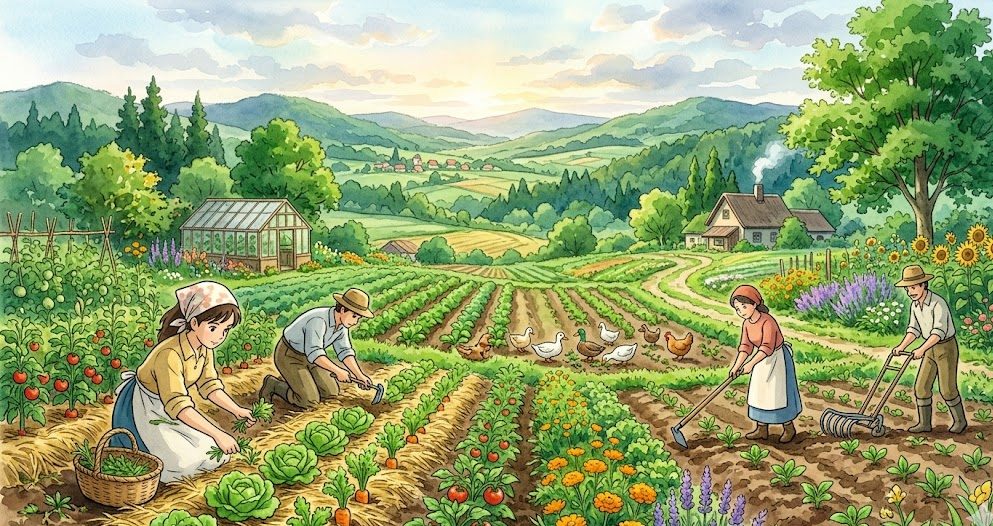
For any organic farmer or dedicated market gardener, weeds are the ultimate test of patience. Without the option to reach for synthetic chemical herbicides, managing these aggressive invaders can quickly feel like a losing, back-breaking battle.
However, running a certified organic farm or a chemical-free homestead doesn’t mean you have to surrender your yields to unwanted vegetation.
Natural weed control isn’t about finding a single “magic bullet” spray; it is about understanding soil biology and implementing a system of smart, preventative techniques. This ultimate guide explores highly effective, field-tested methods to control weeds naturally, allowing you to protect your crops, boost your soil health, and maximize your profitability.
The Philosophy of Organic Weed Management: Prevention Over Eradication
In conventional farming, weed management is reactive: you see a weed, and you spray it. In organic systems, successful weed management is proactive.
Instead of trying to kill every single weed after it emerges, organic farmers focus on changing the environment so that weed seeds never get the chance to germinate. The goal is to give your cash crops a competitive head start, allowing them to naturally outcompete and shade out the surrounding weeds.
1. Cultural Control Methods: Starving the Weed Seed Bank
Millions of dormant weed seeds live just beneath the surface of your soil—a phenomenon known as the “weed seed bank.” Cultural control methods focus on keeping those seeds asleep.
Practice No-Till or Low-Till Farming
Every time you plow or disk a field, you bring thousands of buried weed seeds up to the top few inches of the soil, exposing them to the sunlight and oxygen they need to sprout. By adopting no-till or minimum-tillage systems, you keep those dormant seeds buried deep where they cannot germinate, drastically reducing your weed pressure season after season.
Stale Seedbed Technique
This is a favorite trick among high-yield organic vegetable growers.
- Prepare your planting beds 2 to 3 weeks before you actually intend to plant your crop.
- Irrigate the empty beds to intentionally trigger the weed seeds near the surface to sprout.
- Once the tiny weed seedlings emerge, kill them shallowly using a flame weeder or a light surface hoe.
- Immediately plant your actual crop without disturbing the deeper soil. Your crops will emerge into a clean, weed-free environment.
2. Biological Controls: Using Nature to Fight Nature
Cover cropping is the absolute backbone of organic weed suppression. By filling empty fields with fast-growing, high-biomass cover crops, you rob weeds of their two most basic needs: sunlight and space.
Smother Crops
Crops like buckwheat, cowpeas, and sudangrass grow at incredibly rapid rates. If planted immediately after a cash crop harvest, they will completely carpet the ground within weeks, choking out any weeds attempting to establish themselves during the off-season.
The Power of Allelopathy
Some cover crops are natural chemical warriors. Plants like winter rye, barley, and mustard release natural biochemicals into the soil as they grow and decompose. These compounds act as organic pre-emergent herbicides, safely inhibiting the germination of small-seeded weeds without harming your established cash crops.
3. Physical and Mechanical Controls: Creating Barriers
Physical barriers are highly efficient for row crops, orchards, and intensive market gardens, providing long-lasting protection while conserving soil moisture.
Organic and Living Mulches
Spreading a thick, 3-to-4-inch layer of organic material—such as clean straw, wood chips, shredded leaves, or hay—blocks all sunlight from reaching the soil surface. For larger scales, many organic farmers utilize heavy-duty silage tarps or reusable landscape fabrics. These tarps are rolled over the soil for a few weeks to completely smother existing weeds and rot their root systems before planting.
Flame Weeding
Flame weeding utilizes specialized propane torches to pass an intense wave of heat over young weed seedlings. You don’t need to actually burn the weeds to ashes; a brief fraction of a second of intense heat boils the water inside the plant’s cells, causing the cell walls to burst. Within a few hours, the weeds wither and die. This method is incredibly effective for stale seedbeds and slow-germinating crops like carrots.
A Quick Reference Guide to Organic Weed Methods
To help you choose the right approach for your specific farm layout, here is a quick breakdown of how these natural methods compare:
| Method | Best Suited For | Labor/Setup Cost | Primary Benefit |
| No-Till Farming | Large-scale row crops & grains | Low (Saves fuel) | Long-term reduction of weed seeds |
| Cover Cropping | Off-season fields & crop rotation | Moderate (Seed costs) | Adds soil nutrients while smothering weeds |
| Flame Weeding | Slow-germinating vegetables (Carrots/Onions) | Moderate (Equipment) | Destroys weeds without disturbing soil |
| Heavy Mulching | High-value market gardens & orchards | High (Material handling) | Suppresses weeds and retains soil moisture |
4. Smart Irrigation: Stop Watering Your Weeds
Weeds need water just as much as your crops do. If you use overhead sprinklers to water your fields, you are essentially providing a free hydration station for every weed seed in the vicinity.
Switching to precision drip irrigation or subsurface drip lines allows you to deliver water directly to the root zones of your specific cash crops. The spaces between your crop rows remain completely dry, creating a hostile, desert-like environment where shallow-rooted weed seedlings simply dry up and die before they can establish a foothold.
5. Livestock Integration: The Ultimate Natural Laborers
If your farm layout allows for it, integrating livestock can turn a massive weed problem into a valuable source of free animal feed.
- Chickens and Ducks: Letting poultry forage through fields post-harvest is an exceptional way to clean up the land. They will scratching up the top layers of soil, eagerly devouring both weed seeds and destructive insect pupae.
- Goats and Sheep: For orchards, vineyards, or overgrown perimeter fence lines, grazing small ruminants is highly efficient. Goats actively prefer brush, woody perennial weeds, and invasive briars over grass, clearing tough overgrowth completely for free.
Final Thoughts: Consistency Generates Success
Managing weeds organically requires shifting your perspective from chemical warfare to ecological balance. By combining a few of these natural methods—such as maintaining a strict cover crop schedule, transitioning to low-till practices, and utilizing precision drip irrigation—you can drastically reduce your weed pressure over a 2-to-3-year period.
The secret to a clean organic farm is simple: never let a weed go to seed. By interrupting their lifecycle naturally, you protect your crops, build rich, vibrant soil, and run a far more profitable, sustainable agribusiness.