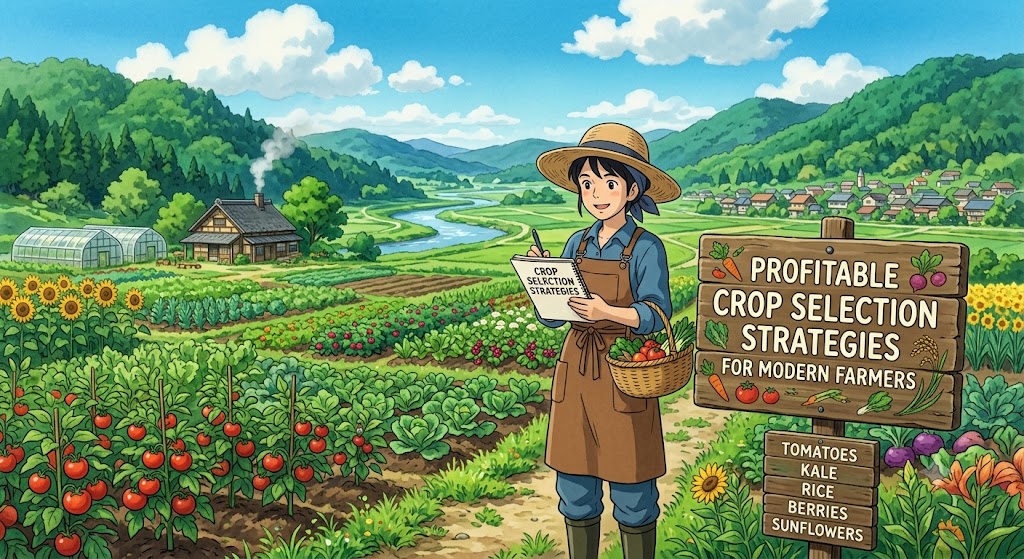
Agriculture today is not just about growing crops—it is also about making smart business decisions. With changing consumer demands, fluctuating market prices, climate challenges, and increasing production costs, farmers must carefully choose what they grow to maximize profitability. Selecting the right crops can significantly improve farm income, reduce risks, and create long-term financial stability.
Modern farmers who understand market trends, local growing conditions, and resource availability are often more successful than those who focus solely on production volume. A profitable crop is one that not only grows well but also generates strong returns after accounting for production expenses.
This article explores practical crop selection strategies that can help farmers increase profits while building sustainable and resilient farming operations.
Understanding the Importance of Crop Selection
Crop selection influences nearly every aspect of farm performance.
It affects:
- Production costs
- Water requirements
- Labor needs
- Pest management
- Market opportunities
- Profit margins
Even highly productive farms can struggle financially if they grow crops with weak market demand or high input costs.
Choosing profitable crops helps farmers:
- Improve cash flow
- Increase return on investment
- Reduce financial risks
- Utilize resources efficiently
- Strengthen long-term business growth
Successful farming begins with informed crop planning.
Evaluate Local Climate Conditions
Climate is one of the most important factors when selecting crops.
Farmers should assess:
- Temperature ranges
- Rainfall patterns
- Growing season length
- Humidity levels
- Frost risks
- Drought frequency
Different crops thrive under different environmental conditions.
Examples include:
- Tomatoes perform best in warm climates.
- Wheat prefers cooler growing seasons.
- Sorghum tolerates dry conditions.
- Rice requires abundant water.
Growing crops suited to local conditions improves yields and reduces production risks.
Analyze Soil Characteristics
Healthy soil supports profitable crop production.
Before selecting crops, farmers should understand:
- Soil texture
- Fertility levels
- Organic matter content
- Drainage quality
- Soil pH
Some crops perform better in sandy soils, while others prefer clay or loam soils.
Regular soil testing provides valuable information that helps farmers match crops to their land’s capabilities.
Focus on Market Demand
One of the biggest mistakes farmers make is growing crops without understanding market demand.
Before planting, farmers should research:
- Local market trends
- Consumer preferences
- Wholesale opportunities
- Export markets
- Seasonal demand patterns
Strong demand often translates into:
- Better prices
- Faster sales
- More stable income
Growing crops that buyers actively seek can significantly increase profitability.
Identify High-Value Crops
High-value crops often generate greater income per acre compared to traditional field crops.
Examples may include:
- Tomatoes
- Peppers
- Garlic
- Herbs
- Berries
- Specialty vegetables
- Medicinal plants
- Exotic fruits
Although some high-value crops require additional management, they often provide attractive profit margins.
Farmers should carefully evaluate production costs before expanding into these markets.
Diversify Crop Production
Relying on a single crop can increase financial risk.
Diversification helps create multiple income streams and improves farm resilience.
Benefits include:
- Reduced market dependence
- Better pest management
- Improved soil health
- More consistent cash flow
Diversified farms may combine:
- Vegetables
- Fruits
- Grains
- Legumes
- Cash crops
Diversification protects farmers from unexpected market or weather-related losses.
Calculate Production Costs Carefully
Profitability depends on both income and expenses.
Farmers should estimate:
- Seed costs
- Fertilizer expenses
- Irrigation costs
- Labor requirements
- Pest management expenses
- Transportation costs
A crop with high selling prices may still generate low profits if production costs are excessive.
Understanding true production costs helps farmers make more informed decisions.
Consider Water Availability
Water is becoming an increasingly important factor in agricultural planning.
Farmers should evaluate:
- Irrigation capacity
- Rainfall reliability
- Water costs
- Drought risks
In areas with limited water supplies, drought-tolerant crops may provide better financial returns.
Examples include:
- Millet
- Sorghum
- Chickpeas
- Certain oilseed crops
Efficient water use improves both sustainability and profitability.
Take Advantage of Seasonal Market Opportunities
Prices often rise when certain crops are in short supply.
Farmers who target seasonal market gaps can increase revenue.
Examples include:
- Early-season vegetables
- Off-season greenhouse crops
- Winter specialty produce
Producing crops when competition is lower often allows farmers to receive premium prices.
Explore Specialty and Niche Markets
Specialty crops can provide attractive profit opportunities.
Examples include:
- Organic produce
- Heirloom vegetables
- Culinary herbs
- Microgreens
- Medicinal plants
- Specialty fruits
Niche markets often reward quality and uniqueness rather than production volume.
Farmers should identify buyers before expanding into specialty production.
Use Crop Rotation for Long-Term Profitability
Crop rotation improves soil health and reduces production costs.
Benefits include:
- Better nutrient management
- Reduced pest pressure
- Improved yields
- Lower fertilizer requirements
For example:
- Rotate cereals with legumes.
- Alternate root crops and leafy vegetables.
- Include nitrogen-fixing crops within rotation plans.
Healthy soils support more profitable farming systems over time.
Evaluate Labor Requirements
Some crops require intensive labor for planting, maintenance, and harvesting.
Labor-intensive crops include:
- Tomatoes
- Strawberries
- Peppers
- Many specialty vegetables
Farmers should ensure labor availability matches production goals.
Selecting crops that fit workforce capacity helps avoid operational challenges during peak seasons.
Monitor Agricultural Trends
Consumer preferences continue to evolve.
Modern farmers benefit from monitoring:
- Emerging crop markets
- Health food trends
- Sustainable agriculture movements
- Export opportunities
- Technological advancements
Early adoption of promising crops can create competitive advantages and increase profitability.
Keep Accurate Farm Records
Farm records provide valuable information for future planning.
Farmers should track:
- Crop yields
- Production expenses
- Market prices
- Weather conditions
- Pest issues
Historical data helps identify which crops consistently generate the highest profits.
Data-driven decisions often outperform assumptions.
Manage Risk Through Strategic Planning
Every agricultural enterprise involves risk.
Potential challenges include:
- Market fluctuations
- Weather events
- Pest outbreaks
- Rising input costs
Farmers can reduce risk by:
- Diversifying crops
- Maintaining multiple markets
- Using crop insurance
- Monitoring market conditions
- Planning flexible production systems
Effective risk management supports stable long-term profitability.
Creating a Balanced Crop Portfolio
Successful farms often combine several crop categories.
Staple Crops
Provide reliable production and stable markets.
High-Value Crops
Offer greater income potential.
Specialty Crops
Target premium market segments.
Soil-Building Crops
Support long-term fertility and sustainability.
A balanced portfolio helps maximize profits while reducing financial exposure.
Conclusion
Profitable crop selection is one of the most important decisions modern farmers make. By carefully evaluating climate conditions, soil characteristics, market demand, production costs, water availability, and labor requirements, farmers can identify crops that provide strong financial returns and long-term sustainability.
Agriculture is increasingly driven by both productivity and business strategy. Farmers who combine sound agronomic practices with informed market decisions are better positioned to increase income, reduce risks, and build successful farming operations that remain profitable for years to come.