Introduction
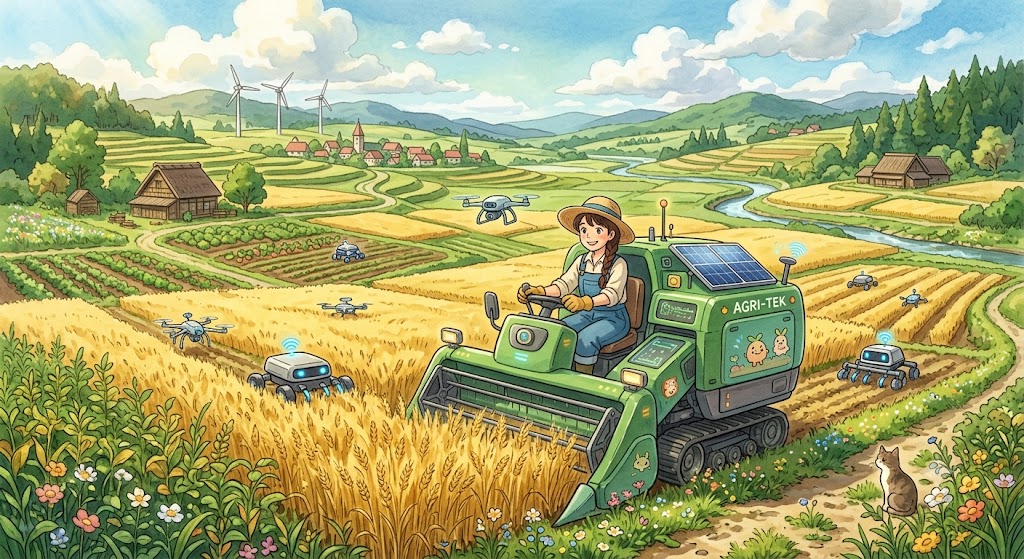
Agriculture has entered a new era where technology plays a crucial role in improving productivity, sustainability, and efficiency. Traditional farming methods are gradually being replaced by innovative solutions that help farmers make better decisions, reduce costs, and increase crop yields. Among these advancements, Artificial Intelligence (AI) and Smart Technology have become two of the most powerful tools transforming modern agriculture.
AI enables computers and machines to analyze data, recognize patterns, and make intelligent decisions, while smart technologies such as IoT sensors, drones, GPS systems, robotics, and automated irrigation provide farmers with real-time information about their farms. Together, these technologies help optimize every stage of farming, from soil preparation and planting to harvesting and storage.
As the global population continues to grow and climate change creates new agricultural challenges, AI and smart technology are becoming essential for ensuring food security, improving farm profitability, and promoting sustainable farming practices.
What is Artificial Intelligence in Agriculture?
Artificial Intelligence (AI) refers to computer systems that can perform tasks requiring human intelligence, such as learning, analyzing data, identifying patterns, and making predictions. In agriculture, AI processes information collected from farms to help farmers make informed decisions.
AI-powered systems can:
- Predict weather conditions
- Detect crop diseases
- Identify pest infestations
- Recommend fertilizer application
- Estimate crop yields
- Analyze soil health
- Optimize irrigation schedules
Instead of relying solely on experience, farmers can use AI-generated insights to improve productivity and reduce risks.
Understanding Smart Technology in Farming
Smart technology involves the use of connected digital devices, sensors, automation, and software that help farmers monitor and manage agricultural operations efficiently.
These technologies collect real-time data about crops, livestock, weather, and soil conditions. The information is then analyzed to support better decision-making and improve farm performance.
Common smart farming technologies include:
- Internet of Things (IoT)
- GPS-guided machinery
- Agricultural drones
- Smart irrigation systems
- Soil moisture sensors
- Weather monitoring stations
- Farm management software
- Automated tractors and robots
Together, AI and smart technology create an intelligent farming system that increases efficiency while reducing waste.
Why AI and Smart Technology Are Important
Modern agriculture faces several major challenges:
- Climate change
- Water shortages
- Rising production costs
- Labor shortages
- Soil degradation
- Increasing food demand
- Pest and disease outbreaks
AI and smart technologies help farmers overcome these challenges by providing accurate information and automated solutions that improve resource management and crop production.
Some key benefits include:
- Higher crop yields
- Lower operational costs
- Efficient water use
- Reduced chemical usage
- Better crop quality
- Increased sustainability
AI Applications in Agriculture
Crop Health Monitoring
AI analyzes images from drones and satellites to identify crop diseases, nutrient deficiencies, and pest damage before they become serious.
Early detection allows farmers to take immediate action and minimize crop losses.
Weather Prediction
AI-powered weather forecasting systems provide accurate predictions for rainfall, temperature, humidity, and storms.
This helps farmers plan:
- Planting
- Irrigation
- Fertilizer application
- Harvesting
Better planning reduces weather-related risks.
Precision Agriculture
Precision agriculture uses AI to analyze field data and determine the exact amount of water, fertilizer, and pesticides required for different parts of a farm.
Benefits include:
- Reduced waste
- Lower costs
- Improved yields
- Environmental protection
Yield Prediction
AI models analyze historical weather data, soil conditions, and crop performance to estimate future harvests.
Accurate yield predictions help farmers prepare for storage, transportation, and market sales.
Smart Technologies Used in Agriculture
Internet of Things (IoT)
IoT devices connect sensors and equipment across the farm.
They monitor:
- Soil moisture
- Temperature
- Humidity
- Nutrient levels
- Water usage
- Livestock movement
Farmers receive instant updates through smartphones or computers.
Agricultural Drones
Drones capture high-resolution aerial images of farmland.
They help farmers:
- Monitor crop growth
- Detect diseases
- Spray fertilizers
- Apply pesticides
- Measure plant health
- Survey large fields quickly
Drone technology saves time while improving farming accuracy.
Smart Irrigation Systems
Smart irrigation combines moisture sensors, weather forecasts, and automated controllers to deliver water only when crops require it.
Advantages include:
- Water conservation
- Reduced electricity costs
- Healthier crops
- Better yields
GPS Technology
GPS-guided machinery improves field accuracy during planting, fertilizing, and harvesting.
Benefits include:
- Straight planting rows
- Reduced overlap
- Lower fuel consumption
- Increased productivity
Agricultural Robots
Modern farms increasingly use robots for repetitive tasks.
Robots perform:
- Harvesting
- Fruit picking
- Weed removal
- Crop monitoring
- Livestock feeding
Automation reduces labor shortages while improving efficiency.
Benefits of AI and Smart Technology
Increased Productivity
Farmers produce more crops with fewer resources.
Better Decision-Making
Real-time information supports faster and more accurate farming decisions.
Cost Reduction
Automation reduces labor expenses while minimizing unnecessary input costs.
Improved Crop Quality
Continuous monitoring helps maintain healthier crops throughout the growing season.
Environmental Sustainability
Efficient use of fertilizers, pesticides, and water reduces environmental pollution.
Time Savings
Automation allows farmers to complete agricultural tasks more quickly and efficiently.
Challenges of AI Adoption
Despite its advantages, AI adoption still faces several obstacles.
High Initial Investment
Modern equipment and software can be expensive for small farms.
Technical Skills
Farmers need training to understand and operate advanced technologies.
Internet Access
Reliable internet connectivity is necessary for many smart farming systems.
Data Security
As farms become increasingly digital, protecting agricultural data becomes more important.
Future of AI and Smart Agriculture
The future of farming will rely heavily on intelligent technologies.
Emerging innovations include:
- Autonomous tractors
- AI-powered harvesting robots
- Vertical farming systems
- Smart greenhouses
- Blockchain-based food traceability
- Climate-smart farming
- Digital twins for farm simulation
- Renewable energy-powered agricultural equipment
These technologies will continue making agriculture more productive, sustainable, and profitable.
Tips for Farmers
Farmers who want to adopt AI and smart technology can begin with simple steps:
- Conduct regular soil testing.
- Use weather forecasting applications.
- Install smart irrigation systems.
- Adopt GPS-guided farming equipment.
- Monitor crops using drones when possible.
- Keep digital farm records.
- Learn basic farm management software.
- Explore government support programs for agricultural technology.
- Start with affordable smart devices before investing in advanced systems.
- Stay updated on the latest agricultural innovations.
Conclusion
Artificial Intelligence and smart technology are transforming agriculture by helping farmers make better decisions, increase productivity, and conserve valuable natural resources. From AI-powered crop monitoring and weather prediction to smart irrigation systems, drones, IoT sensors, and automated machinery, these innovations are making farming more efficient than ever before.
As agriculture continues to evolve, adopting AI and smart technologies will become increasingly important for farmers of all sizes. These tools not only improve crop yields and reduce production costs but also support sustainable farming practices that protect the environment.
The future of agriculture is intelligent, connected, and data-driven. Farmers who embrace AI and smart technology today will be better equipped to meet future challenges, improve profitability, and contribute to global food security for generations to come.