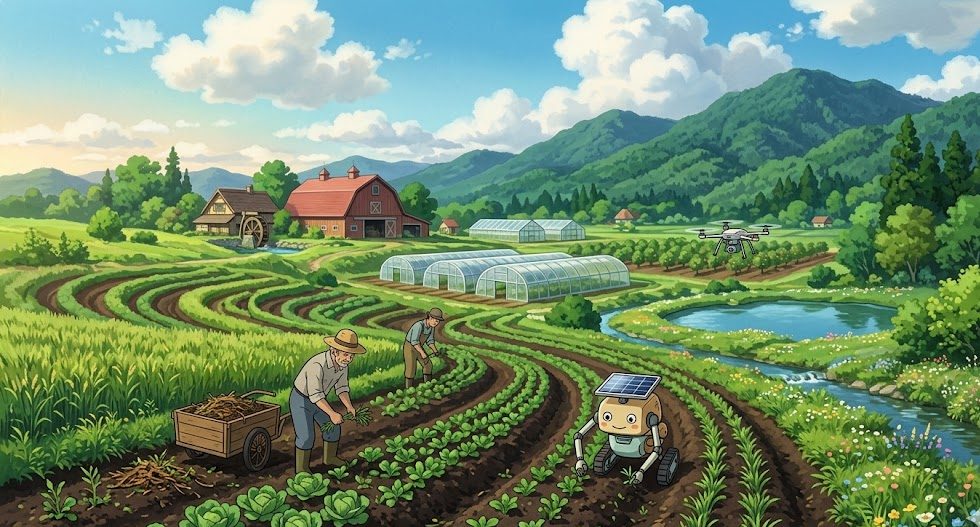
The global agricultural landscape is standing at a critical crossroads where traditional industrial methods are facing the limits of chemical dependency and soil depletion. As we move toward a more sustainable future, a new movement is emerging—one that combines AgriTech & Innovation with deep-rooted biological wisdom. For the modern farmer and the digital entrepreneur, the goal is no longer just about volume; it is about “Smart Farming” that ensures long-term profitability and ecological health.
Phase 1: The Digital Foundation of AgriTech
The “Digital Revolution” in farming is a fundamental shift in how we produce food, moving from broad, generalized practices to precision-based management. By utilizing AI and Smart Technology, farmers can now optimize every square inch of their land.
- Precision Agriculture: Using AI to analyze data helps in applying water, fertilizers, and pesticides only where and when they are needed.
- Data-Driven Decisions: Smart farming tools allow for the monitoring of crop health and environmental conditions in real-time.
- Real-Time Monitoring: Sensors and data analytics can monitor moisture levels and nutrient requirements, drastically reducing resource waste.
- Efficiency: These innovations are essential for building a “Sustainable Farming” model that reduces overhead while increasing output quality.
Phase 2: Eco-Friendly Soil Management
At the heart of this blueprint is a return to soil health. Modern agriculture treats the soil as a living ecosystem rather than just a medium for plants, focusing on Climate & Soil Management.
- Healing the Soil Naturally: Instead of relying on synthetic inputs, the focus is on natural restoration and soil science to enhance microbial health.
- Restoring Nutrient Cycles: Focusing on organic matter enrichment ensures the ground remains productive for generations to come.
- Microbial Synergy: Fostering beneficial bacteria and fungi helps crops feed and protect themselves naturally.
- Carbon Sequestration: Healthy soil management improves yields while helping to combat climate change by trapping carbon in the ground.
Phase 3: Intelligent Weed Management
Effective “Weed Control” is no longer about eradication through harsh chemicals; it is about intelligent, eco-friendly management.
- Biological Suppression: Smart farmers use cover crops and strategic mulching to keep the soil covered, preventing weed germination.
- Natural Protection: By building a balanced ecosystem, you create a “Natural Protection” barrier where weeds and pests struggle to take hold.
- Competition Mastery: Using “Practical Farming” manual techniques alongside biological competition ensures crops are protected without damaging the delicate soil microbiome.
Phase 4: Diversification through High-Value Crops
A “Farming Innovation Hub” thrives on diversity. Transitioning to “High-Value Cash Crops” allows for significantly higher profit margins per acre.
- Exotic Vegetable Farming: Growing non-traditional crops using Hydroponics allows for year-round production in controlled environments.
- Mushroom Farming: This requires minimal land and is a perfect example of a highly profitable “Sustainable Farming” venture.
- Herbal & Medicinal Plants: These command a premium in the global market and are essential for a “Digital Wealth Blueprint”.
- Forgotten Crops Farming: Reintroducing resilient, low-input crops adds genetic diversity and acts as a natural insurance policy against climate shifts.
Phase 5: Building the Circular Economy
A truly modern farm minimizes waste by creating a closed-loop system where every output becomes an input for another section.
- Livestock & Dairy Hub: Integrating “Poultry Farming” or dairy animals provides a natural source of fertilizer for “Natural Soil Healing”.
- Fish & Aqua Farming: Nutrient-rich water from aquaculture can be used to irrigate high-value crops, creating a symbiotic growth relationship.
- Animal Health: Maintaining high standards of animal care ensures these side-businesses remain productive assets rather than liabilities.
Conclusion: The Future of Your Harvest
The future of farming lies in the balance between the precision of AgriTech & Innovation and the foundational principles of eco-friendly management. By mastering “Smart Farming” techniques and soil science, we can ensure harvests that are as profitable as they are sustainable.
Whether you are an established cultivator or a digital entrepreneur building an “Innovation Hub,” this blueprint offers the tools needed for success in the agricultural sector. The era of smart, sustainable, and high-yield farming has arrived.