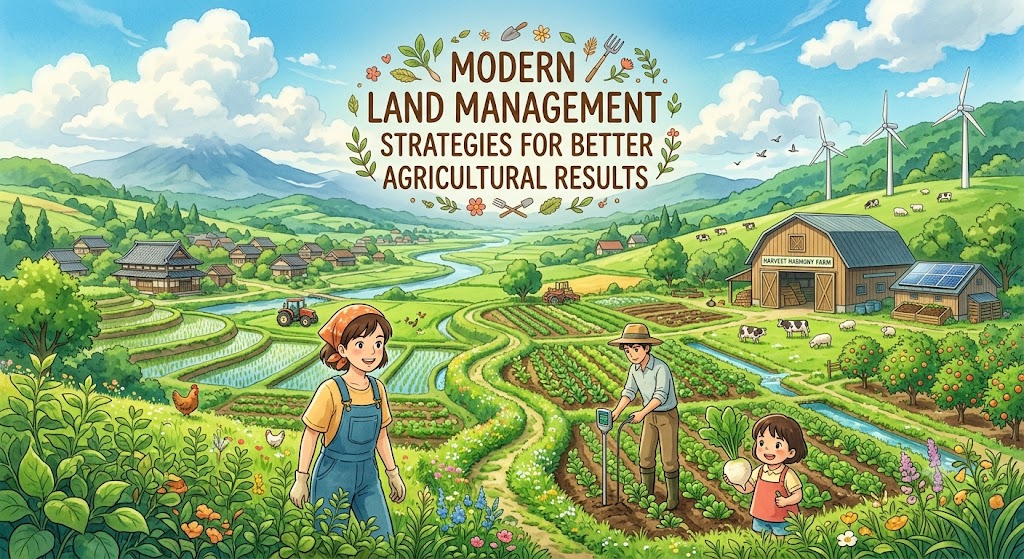
Land is one of the most valuable resources in agriculture, and how it is managed directly influences productivity, profitability, and long-term sustainability. As farmers face increasing challenges from climate variability, soil degradation, water shortages, and rising production costs, effective land management has become more important than ever. Modern agricultural success depends not only on what farmers grow but also on how efficiently they manage the land that supports those crops.
Modern land management combines traditional agricultural knowledge with innovative technologies and sustainable practices. The goal is to maximize productivity while protecting soil, conserving water, improving biodiversity, and ensuring that farmland remains productive for future generations.
This guide explores modern land management strategies that help farmers achieve better agricultural results while maintaining long-term sustainability.
Understanding Land Management in Agriculture
Land management involves planning, organizing, and implementing practices that improve the productivity and health of agricultural land.
Effective land management focuses on:
- Soil conservation
- Water management
- Crop planning
- Resource efficiency
- Environmental protection
- Long-term productivity
Successful farmers view land as a long-term investment rather than a short-term production resource.
Protecting land quality helps ensure consistent agricultural performance year after year.
Why Modern Land Management Matters
Poor land management can lead to numerous problems, including:
- Soil erosion
- Nutrient depletion
- Reduced water retention
- Lower crop yields
- Increased production costs
- Environmental degradation
Modern management strategies help address these challenges while improving farm profitability.
Benefits include:
- Higher productivity
- Better resource utilization
- Improved resilience
- Greater sustainability
Healthy land supports both agricultural and financial success.
Conduct Comprehensive Land Assessments
Effective management begins with understanding existing land conditions.
Farmers should evaluate:
- Soil characteristics
- Topography
- Drainage patterns
- Water availability
- Vegetation cover
- Erosion risks
Land assessments provide valuable information for planning production activities and identifying improvement opportunities.
Accurate information supports better decision-making.
Prioritize Soil Health Improvement
Healthy soil is the foundation of productive farmland.
Soil health influences:
- Root development
- Nutrient availability
- Water retention
- Microbial activity
- Crop productivity
Practices that improve soil health include:
- Compost application
- Cover cropping
- Crop rotation
- Organic matter incorporation
- Reduced tillage
Healthy soils support stronger crops while reducing dependency on external inputs.
Implement Precision Agriculture Technologies
Modern technology allows farmers to manage land more efficiently.
Examples include:
- GPS-guided equipment
- Soil sensors
- Satellite imagery
- Drones
- Variable-rate application systems
Benefits include:
- Improved resource allocation
- Reduced input waste
- Better field monitoring
- Enhanced productivity
Precision agriculture helps farmers optimize management practices based on actual field conditions.
Use Soil Mapping and Data Analysis
Soil conditions often vary significantly across individual fields.
Soil mapping helps identify differences in:
- Nutrient levels
- Organic matter content
- Moisture availability
- Soil texture
Benefits include:
- More accurate fertilizer applications
- Improved irrigation planning
- Better crop placement decisions
Field-specific management improves efficiency and agricultural performance.
Practice Crop Rotation
Continuous cultivation of the same crop can reduce land productivity over time.
Crop rotation helps:
- Improve soil fertility
- Reduce pest populations
- Minimize disease pressure
- Enhance nutrient cycling
Rotations involving cereals, legumes, vegetables, and cover crops contribute to healthier farming systems.
Diversification strengthens both productivity and sustainability.
Utilize Cover Crops
Cover crops provide protection when fields are not actively producing cash crops.
Benefits include:
- Erosion control
- Nutrient retention
- Improved soil structure
- Weed suppression
- Organic matter improvement
Popular cover crops include:
- Clover
- Rye
- Oats
- Vetch
Cover cropping is one of the most effective tools for long-term land improvement.
Improve Water Management Systems
Water management is closely linked to land productivity.
Effective strategies include:
Drip Irrigation
Reduces water waste and improves efficiency.
Soil Moisture Monitoring
Provides accurate irrigation guidance.
Rainwater Harvesting
Increases water availability during dry periods.
Proper water management supports crop growth while protecting soil resources.
Prevent Soil Erosion
Soil erosion remains one of the greatest threats to agricultural land.
Causes include:
- Wind
- Heavy rainfall
- Bare soil exposure
- Poor land-use practices
Erosion control measures include:
- Contour farming
- Cover crops
- Windbreaks
- Mulching
- Conservation tillage
Protecting topsoil preserves fertility and long-term productivity.
Adopt Conservation Tillage Practices
Excessive tillage can damage soil structure and increase erosion risks.
Conservation tillage helps:
- Preserve soil moisture
- Improve biological activity
- Reduce erosion
- Lower fuel costs
Reduced soil disturbance contributes to healthier and more resilient farmland.
Many farmers achieve long-term benefits through conservation-based approaches.
Integrate Agroforestry Systems
Agroforestry combines trees with crops or livestock operations.
Benefits include:
- Improved biodiversity
- Soil protection
- Water conservation
- Additional income opportunities
Trees can provide:
- Timber
- Fruits
- Nuts
- Wind protection
Agroforestry strengthens agricultural ecosystems while improving resource efficiency.
Manage Nutrients Strategically
Efficient nutrient management helps maintain soil fertility while reducing costs.
Best practices include:
- Soil testing
- Variable-rate applications
- Organic amendments
- Nutrient monitoring
Balanced fertility programs support crop performance and environmental sustainability.
Proper nutrient management prevents both deficiencies and excesses.
Improve Land Drainage
Poor drainage can limit crop growth and increase disease risks.
Solutions may include:
- Drainage channels
- Raised beds
- Improved field grading
- Organic matter additions
Well-drained soils support healthier roots and improved crop performance.
Managing excess water is as important as managing drought conditions.
Encourage Biodiversity
Biodiversity contributes to healthier agricultural systems.
Benefits include:
- Pollination support
- Natural pest control
- Ecosystem stability
- Improved resilience
Farmers can encourage biodiversity through:
- Habitat preservation
- Diverse crop systems
- Flowering plant areas
- Agroforestry integration
Healthy ecosystems often support stronger agricultural outcomes.
Utilize Land According to Capability
Not all land is equally suited for the same agricultural activities.
Farmers should match land use with:
- Soil quality
- Slope characteristics
- Water availability
- Climate conditions
Appropriate land-use planning improves productivity while reducing environmental risks.
Using land according to its strengths supports long-term sustainability.
Monitor Land Performance Continuously
Regular monitoring helps identify emerging problems before they become serious.
Areas to monitor include:
- Soil health
- Crop performance
- Water availability
- Erosion indicators
- Nutrient status
Continuous evaluation supports ongoing improvement and better management decisions.
Build Climate-Resilient Farming Systems
Climate variability increasingly affects agricultural land management.
Resilience strategies include:
- Soil health improvement
- Water conservation
- Crop diversification
- Agroforestry
- Precision agriculture
Adaptable systems are better equipped to maintain productivity under changing environmental conditions.
Develop Long-Term Land Management Plans
Successful farms often operate according to structured land management plans.
These plans may include:
- Soil conservation goals
- Water management strategies
- Crop rotation schedules
- Biodiversity initiatives
- Resource efficiency targets
- Infrastructure improvements
Long-term planning supports consistent productivity and profitability.
Economic Benefits of Modern Land Management
Effective land management often results in:
- Higher yields
- Reduced input costs
- Improved resource efficiency
- Greater resilience
- Better long-term profitability
Protecting land quality helps maintain productive capacity while reducing future restoration costs.
Conclusion
Modern land management strategies play a critical role in improving agricultural productivity, sustainability, and profitability. Through practices such as soil health improvement, precision agriculture, crop rotation, water conservation, erosion control, and biodiversity enhancement, farmers can maximize the value of their land while protecting natural resources.
As agricultural challenges continue to evolve, effective land management will remain one of the most important factors influencing long-term farm success. Farmers who invest in responsible land stewardship today are building stronger, more resilient agricultural operations capable of delivering reliable results for many years to come.