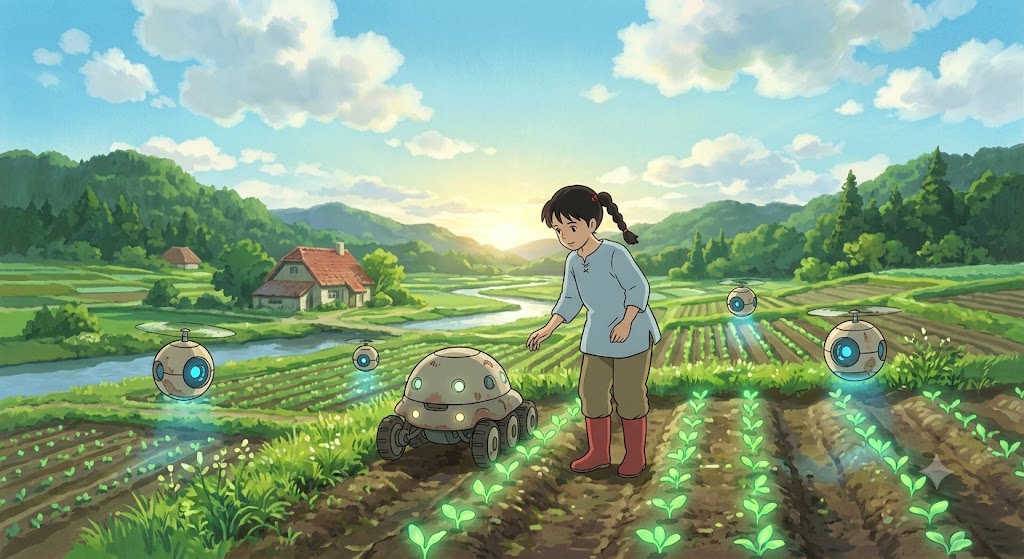
Modern agriculture is changing faster than ever before. Farmers around the world are facing new challenges such as unpredictable weather, rising production costs, labor shortages, and increasing food demand. To solve these problems, agriculture is becoming smarter through the use of Artificial Intelligence (AI), drones, automation, GPS technology, and advanced data analysis.
Precision agriculture is no longer a concept for the future—it is already transforming farms today. Instead of treating an entire field the same way, farmers can now manage every section of their land according to its specific needs. This approach helps improve crop yields, reduce waste, save money, and protect natural resources.
Whether managing a small family farm or a large commercial operation, precision agriculture offers practical solutions that make farming more efficient and sustainable.
Why Precision Agriculture Matters
Traditional farming often relies on experience and visual observation. While experience remains valuable, modern technology allows farmers to make decisions based on accurate data collected in real time.
Precision agriculture helps farmers answer important questions such as:
- Which areas need irrigation?
- Where is fertilizer actually required?
- Which crops show early signs of disease?
- How healthy is the soil?
- Which parts of the field are producing lower yields?
Having these answers before problems become serious allows farmers to improve productivity while reducing unnecessary expenses.
Artificial Intelligence Is Making Farming Smarter
Artificial Intelligence has become one of the biggest innovations in modern agriculture. AI systems can analyze thousands of pieces of information within seconds and recommend the best farming decisions.
Predicting Crop Performance
AI studies weather forecasts, soil quality, planting dates, and historical farm records to estimate future crop production. Better predictions help farmers prepare storage facilities, labor requirements, and marketing plans.
Detecting Plant Diseases Early
Many crop diseases begin long before farmers notice visible symptoms. AI-powered image recognition systems identify unhealthy plants using drone images and smartphone photos.
Early treatment helps prevent diseases from spreading throughout the field.
Intelligent Irrigation Management
Instead of watering entire fields equally, AI calculates exactly how much water each section needs based on soil moisture, rainfall forecasts, and crop growth stages.
This saves water while improving plant health.
Better Fertilizer Recommendations
AI analyzes soil nutrients and crop requirements to recommend the correct fertilizer type and quantity.
Benefits include:
- Lower fertilizer costs
- Reduced nutrient loss
- Healthier crops
- Better soil quality
How Drones Are Changing Agriculture
Agricultural drones have become one of the most valuable tools for precision farming. They can cover hundreds of acres in a short time while collecting highly detailed information that would otherwise require many hours of manual inspection.
Field Mapping
Drones create high-resolution aerial maps showing:
- Plant density
- Crop growth patterns
- Water distribution
- Weed locations
- Soil variation
These maps help farmers identify problem areas quickly.
Monitoring Crop Health
Special cameras mounted on drones detect plant stress before leaves begin changing color.
This allows farmers to:
- Apply fertilizer only where needed
- Prevent disease outbreaks
- Improve crop management
- Reduce unnecessary chemical use
Precision Spraying
Modern spraying drones apply pesticides and fertilizers with impressive accuracy.
Advantages include:
- Less chemical waste
- Faster application
- Lower labor requirements
- Reduced soil compaction
- Improved worker safety
Livestock Monitoring
Large livestock farms also benefit from drones.
Farmers can monitor:
- Animal locations
- Grazing patterns
- Fence conditions
- Water availability
- Injured animals
This reduces manual inspections across large properties.
Automation Is Redefining Farm Operations
Automation is helping farmers complete daily tasks more efficiently while reducing dependence on manual labor.
Today’s automated farming equipment includes:
- GPS-guided tractors
- Autonomous harvesters
- Robotic weed removers
- Automated irrigation systems
- Smart fertilizer spreaders
- Robotic fruit pickers
Many of these machines operate with minimal human supervision while maintaining excellent accuracy.
Internet of Things (IoT): Connecting the Entire Farm
Precision agriculture also relies on Internet of Things (IoT) devices.
These smart sensors collect information continuously from the field.
Examples include:
- Soil moisture sensors
- Temperature sensors
- Rain gauges
- Weather stations
- Water level monitors
- Livestock tracking devices
All collected information is automatically sent to cloud-based software where farmers can monitor their farms using smartphones or computers.
Instead of guessing field conditions, farmers receive live updates every day.
Benefits of Data-Driven Farming
Data has become one of agriculture’s most valuable resources.
When farmers combine AI, drones, and sensors, they gain a much clearer understanding of their fields.
Some important benefits include:
✔ Higher crop yields
✔ Lower production costs
✔ Better water conservation
✔ Reduced fertilizer use
✔ Less pesticide application
✔ Faster problem detection
✔ Improved farm planning
✔ Higher long-term profitability
Better information leads to better decisions throughout the farming season.
Environmental Advantages
Modern agriculture must balance productivity with environmental responsibility.
Precision farming supports sustainable agriculture in several ways.
Water Conservation
Smart irrigation systems prevent unnecessary watering by supplying only the required amount of moisture.
Reduced Chemical Pollution
Targeted pesticide and fertilizer application lowers chemical runoff into rivers and groundwater.
Improved Soil Health
Applying nutrients according to soil requirements prevents nutrient imbalances and protects beneficial microorganisms.
Lower Carbon Emissions
Automated machinery follows optimized routes, reducing fuel consumption and greenhouse gas emissions.
Challenges Farmers Still Face
Although precision agriculture offers many advantages, adoption is not without challenges.
High Initial Investment
Advanced equipment such as drones, GPS tractors, AI software, and smart sensors requires significant upfront costs.
Small farms may find these technologies difficult to afford initially.
Technical Skills
Farmers must learn how to operate software, interpret data, and maintain modern equipment.
Training becomes an important part of successful implementation.
Internet Connectivity
Many rural areas still experience limited internet access, making cloud-based technologies more difficult to use.
Equipment Maintenance
Like any advanced technology, sensors, drones, and automated machines require regular maintenance and software updates.
The Future Looks Even More Advanced
The next generation of precision agriculture will introduce technologies that seem almost futuristic today.
Experts expect to see:
- Fully autonomous tractors working day and night
- AI systems making real-time farming decisions
- Swarms of drones monitoring thousands of acres simultaneously
- Robots capable of harvesting delicate fruits
- Digital twins of farms for advanced planning
- Satellite-based crop monitoring with daily updates
- Fully automated irrigation controlled by weather predictions
As technology becomes more affordable, these innovations will become accessible to farms of all sizes.
Tips for Farmers Interested in Precision Agriculture
Farmers do not need to invest in every technology immediately.
A gradual approach often delivers the best results.
Consider these starting points:
- Begin with soil testing and GPS mapping.
- Install moisture sensors for irrigation management.
- Use drone services instead of purchasing a drone immediately.
- Adopt farm management software to organize records.
- Analyze collected data before expanding investments.
- Train workers to operate new equipment effectively.
- Upgrade technology step by step as farm needs grow.
This strategy reduces financial risk while allowing farmers to experience the benefits of modern farming technologies.
Final Thoughts
Precision agriculture represents one of the most important transformations in modern farming. Artificial Intelligence, drones, automation, and smart sensors are helping farmers produce more food while using fewer resources. These technologies improve decision-making, reduce operating costs, conserve water, protect soil health, and increase overall farm productivity.
Although challenges such as equipment costs and technical knowledge still exist, continuous innovation is making precision agriculture more affordable every year. Farms that embrace smart technology today will be better prepared to meet future food demands while protecting the environment for generations to come.
Frequently Asked Questions
1. What is precision agriculture?
Precision agriculture is a farming approach that uses AI, GPS, drones, sensors, and data analysis to improve crop management and increase farming efficiency.
2. How does AI help farmers?
AI analyzes weather, soil conditions, crop health, and historical data to provide recommendations for irrigation, fertilization, disease detection, and yield prediction.
3. Are drones useful for small farms?
Yes. Small farms can use drone service providers or affordable drones for crop monitoring, field mapping, and spraying without making huge investments.
4. Does precision agriculture reduce production costs?
Yes. By applying water, fertilizers, and pesticides only where needed, farmers reduce waste and improve overall profitability.
5. Is precision agriculture the future of farming?
Absolutely. As technology becomes more accessible and affordable, precision agriculture is expected to become a standard practice for improving food production, sustainability, and farm efficiency worldwide.