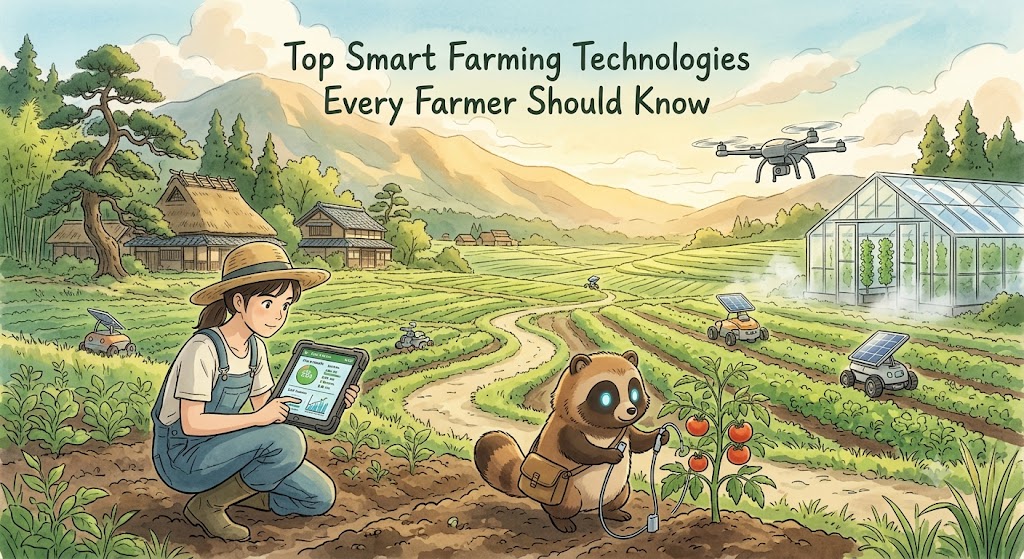
Agriculture has changed dramatically over the last decade. Traditional farming methods are now being supported by advanced technologies that help farmers grow healthier crops, reduce production costs, and make better use of natural resources. With increasing food demand, climate change, and labor shortages, modern farming is becoming more dependent on innovation than ever before.
Smart farming combines digital technology, automation, and data analysis to improve farm management. From soil sensors and drones to Artificial Intelligence (AI) and GPS-guided machinery, these technologies allow farmers to make informed decisions based on real-time information rather than guesswork.
The good news is that smart farming is no longer limited to large agricultural companies. Many affordable technologies are now available for small and medium-sized farms, making modern agriculture more productive, efficient, and sustainable.
This guide explores the top smart farming technologies every farmer should know and explains how they can improve crop production and long-term farm profitability.
What Is Smart Farming?
Smart farming is the use of modern technologies such as sensors, software, Artificial Intelligence, drones, GPS, and automation to monitor crops, livestock, soil, and weather conditions. These tools help farmers collect accurate information and make better management decisions throughout the growing season.
Instead of replacing traditional farming knowledge, smart technologies enhance it by providing real-time insights that improve efficiency and reduce waste.
Why Smart Farming Is Important
Modern agriculture faces several challenges, including:
- Rising production costs
- Climate change
- Water shortages
- Labor shortages
- Increasing food demand
- Soil degradation
Smart farming technologies help solve these challenges by improving resource management and increasing productivity.
Some major benefits include:
- Higher crop yields
- Lower production costs
- Better water management
- Early disease detection
- Improved decision-making
- Greater farm profitability
1. Soil Moisture and Nutrient Sensors
Healthy crops begin with healthy soil.
Smart soil sensors measure:
- Soil moisture
- Temperature
- Nutrient levels
- Soil salinity
- Electrical conductivity
Farmers receive real-time information that helps determine the best time to irrigate or apply fertilizers.
Benefits
- Prevents overwatering
- Saves water
- Reduces fertilizer waste
- Improves crop health
2. GPS-Guided Farm Equipment
Global Positioning System (GPS) technology has transformed modern farming.
GPS-guided tractors and machinery help farmers:
- Plant crops accurately
- Reduce overlapping operations
- Save fuel
- Improve field efficiency
- Reduce labor requirements
Precision farming begins with accurate field navigation.
3. Agricultural Drones
Drones have become one of the most valuable tools in precision agriculture.
Modern drones capture high-resolution images that reveal crop conditions before problems become visible from the ground.
Drones help identify:
- Pest infestations
- Disease outbreaks
- Water stress
- Nutrient deficiencies
- Uneven crop growth
Regular drone monitoring allows farmers to take corrective action quickly.
4. Artificial Intelligence (AI)
Artificial Intelligence analyzes large amounts of farm data and provides practical recommendations.
AI systems help farmers:
- Predict crop yields
- Detect diseases
- Analyze weather patterns
- Optimize irrigation
- Improve fertilizer management
Instead of relying entirely on experience, farmers can make data-driven decisions.
5. Smart Irrigation Systems
Water conservation is becoming increasingly important.
Smart irrigation systems automatically adjust watering schedules based on:
- Soil moisture
- Weather forecasts
- Crop growth stage
- Temperature
- Rainfall predictions
These systems reduce water waste while improving plant health.
6. Farm Management Software
Managing a farm involves much more than growing crops.
Digital farm management software helps organize:
- Planting schedules
- Fertilizer applications
- Irrigation records
- Pest monitoring
- Equipment maintenance
- Harvest data
- Financial records
Accurate records help farmers improve planning and increase profitability.
7. Weather Monitoring Stations
Weather conditions influence nearly every farming decision.
Modern weather stations provide real-time information about:
- Temperature
- Humidity
- Rainfall
- Wind speed
- Solar radiation
Accurate forecasts help farmers schedule planting, irrigation, spraying, and harvesting more effectively.
8. Precision Fertilizer Application
Traditional fertilizer application often results in unnecessary waste.
Precision farming technologies apply fertilizers only where they are needed.
Advantages include:
- Lower fertilizer costs
- Reduced environmental pollution
- Better nutrient efficiency
- Healthier crops
Balanced nutrient management supports higher yields.
9. Satellite Crop Monitoring
Satellite technology provides farmers with a broader view of crop performance.
Satellite imagery helps monitor:
- Crop growth
- Vegetation health
- Drought stress
- Field variability
- Yield potential
Large farms especially benefit from continuous satellite observation.
10. Automated Harvesting and Robotics
Agricultural automation continues to expand every year.
Modern robotic systems can assist with:
- Harvesting
- Fruit picking
- Weed removal
- Plant monitoring
- Sorting produce
Automation helps reduce labor shortages while increasing efficiency and accuracy.
Smart Farming Technologies at a Glance
| Technology | Main Purpose | Key Benefit |
|---|---|---|
| Soil Sensors | Monitor soil conditions | Better irrigation and fertilization |
| GPS Equipment | Precision field operations | Saves fuel and labor |
| Agricultural Drones | Crop monitoring | Early problem detection |
| Artificial Intelligence | Data analysis | Better decision-making |
| Smart Irrigation | Water management | Conserves water |
| Farm Software | Farm planning | Improved management |
| Weather Stations | Climate monitoring | Accurate farming schedules |
| Satellite Monitoring | Crop analysis | Better field management |
| Precision Fertilization | Nutrient application | Reduced input costs |
| Agricultural Robotics | Farm automation | Increased efficiency |
Tips for Farmers Starting Smart Farming
If you’re new to smart farming:
- Start with affordable tools like weather apps and soil sensors.
- Keep digital farm records.
- Monitor crop performance regularly.
- Learn one technology before investing in another.
- Choose equipment that matches your farm size and budget.
Small improvements often deliver significant long-term benefits.
Common Mistakes to Avoid
Avoid these common mistakes:
- Buying expensive technology without proper planning
- Ignoring equipment maintenance
- Failing to analyze collected data
- Depending only on technology without field inspections
- Choosing tools that are too advanced for your farm’s needs
Technology should support good farming practices, not replace them.
Conclusion
Smart farming technologies are transforming agriculture by helping farmers produce more with fewer resources. Tools such as soil sensors, GPS-guided equipment, drones, Artificial Intelligence, smart irrigation systems, and farm management software provide valuable information that improves productivity, reduces costs, and protects natural resources.
Farmers do not need to adopt every technology at once. Starting with simple and affordable solutions can make daily farm management easier while preparing the farm for future innovations. By combining modern technology with practical farming experience, farmers can build more productive, sustainable, and profitable agricultural businesses.
Frequently Asked Questions
1. What is smart farming technology?
Smart farming technology uses digital tools, sensors, automation, and data analysis to improve agricultural productivity and resource management.
2. Which smart farming technology is most useful for beginners?
Weather monitoring apps, soil moisture sensors, and farm management software are affordable and easy for beginners to use.
3. Can smart farming reduce production costs?
Yes. Smart technologies improve efficiency by reducing water use, fertilizer waste, fuel consumption, and labor requirements.
4. Are drones useful in agriculture?
Yes. Drones help farmers monitor crop health, detect pests and diseases early, and identify irrigation problems.
5. Is smart farming suitable for small farms?
Absolutely. Many smart farming tools are now affordable and can help small and medium-sized farmers improve productivity without major investments.