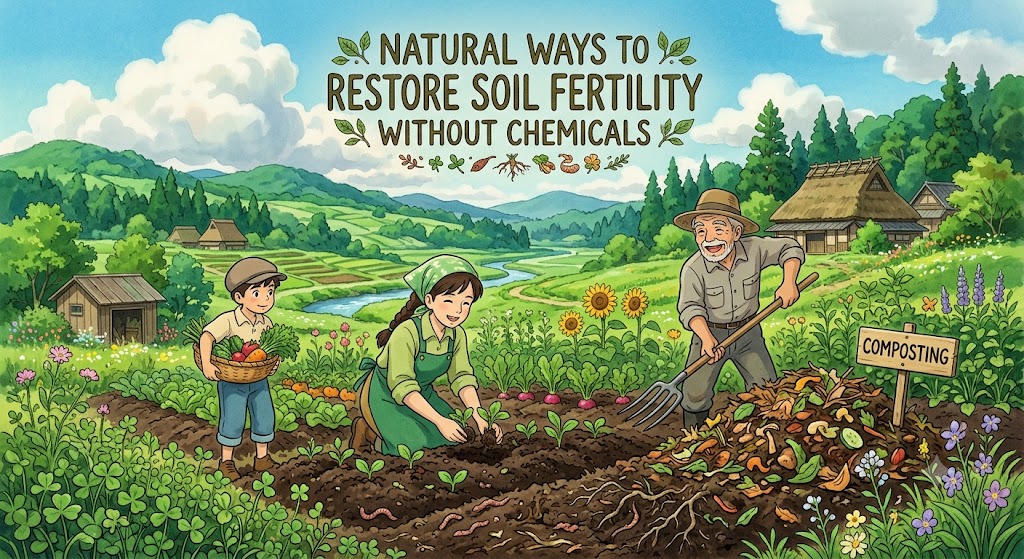
Healthy soil is the foundation of successful farming. Every productive field begins with fertile soil that provides plants with the nutrients, water, and biological support they need to grow. However, years of intensive farming, excessive chemical fertilizer use, poor irrigation practices, and continuous monocropping have caused soil fertility to decline in many parts of the world.
The good news is that restoring soil fertility doesn’t always require expensive synthetic fertilizers. Nature has its own powerful methods for rebuilding healthy soil. By adopting natural farming practices, farmers can improve soil structure, increase organic matter, encourage beneficial microorganisms, and create a productive farming system that remains healthy for years.
This guide explores practical and proven natural methods to restore soil fertility while reducing dependence on chemical inputs.
Understanding Why Soil Loses Fertility
Before improving soil health, it’s important to understand what causes fertility to decline.
Several common farming practices gradually weaken the soil over time.
Major Causes of Soil Degradation
- Continuous cultivation without giving soil time to recover
- Excessive use of chemical fertilizers
- Soil erosion caused by wind and water
- Burning crop residues
- Poor irrigation management
- Loss of organic matter
- Heavy machinery causing soil compaction
- Lack of crop diversity
When these problems continue for several growing seasons, soil becomes less productive and crops require increasing amounts of fertilizers to maintain yields.
Signs Your Soil Needs Restoration
Farmers can often identify unhealthy soil by observing changes in crop performance and soil condition.
Common warning signs include:
✔ Poor seed germination
✔ Yellow or weak plants
✔ Low crop yields
✔ Hard and compacted soil
✔ Water standing on the surface
✔ Increased weed growth
✔ More frequent pest and disease problems
✔ Dry soil that cracks easily
Recognizing these signs early makes restoration much easier.
1. Add Organic Compost Regularly
One of the simplest and most effective ways to improve soil fertility is by adding compost.
Compost is rich in organic matter that slowly releases nutrients while improving soil structure.
Good compost materials include:
- Vegetable scraps
- Dry leaves
- Animal manure
- Grass clippings
- Crop residues
- Kitchen waste
- Fruit peels
Benefits of Compost
- Improves soil texture
- Increases water retention
- Encourages beneficial microbes
- Supplies natural nutrients
- Reduces dependence on chemical fertilizers
Applying compost before each planting season gradually rebuilds healthy soil.
2. Plant Cover Crops
Cover crops are plants grown mainly to improve soil rather than for harvest.
Popular cover crops include:
- Clover
- Alfalfa
- Rye
- Mustard
- Cowpea
- Sunn hemp
These plants protect the soil surface while adding valuable organic matter.
Why Cover Crops Matter
- Prevent soil erosion
- Improve soil structure
- Increase organic matter
- Reduce weed growth
- Retain soil moisture
- Feed beneficial soil organisms
Many cover crops also fix atmospheric nitrogen naturally.
3. Rotate Crops Every Season
Growing the same crop repeatedly removes the same nutrients from the soil.
Crop rotation helps restore nutrient balance while interrupting pest and disease cycles.
Example Rotation
Year 1 → Corn
Year 2 → Beans
Year 3 → Wheat
Year 4 → Vegetables
Each crop contributes differently to soil health, making the entire farming system more sustainable.
4. Use Green Manure
Green manure involves growing specific plants and incorporating them into the soil before flowering.
Common green manure crops include:
- Sesbania
- Cowpea
- Clover
- Sun hemp
- Alfalfa
These plants naturally enrich soil with nitrogen and organic matter.
Green manure also improves microbial activity, making nutrients more available to future crops.
5. Keep Crop Residues on the Field
Many farmers burn crop residues after harvest.
Although burning clears fields quickly, it destroys valuable organic material and beneficial organisms.
Instead, leave residues on the field as mulch.
Benefits include:
- Conserves soil moisture
- Prevents erosion
- Adds organic matter
- Reduces temperature fluctuations
- Improves soil biology
Over time, residues decompose and naturally feed the soil.
6. Encourage Earthworms and Soil Microorganisms
Healthy soil is alive.
Millions of microorganisms work continuously beneath the surface to recycle nutrients and improve soil structure.
Earthworms are particularly valuable because they:
- Create natural air channels
- Improve drainage
- Mix organic matter
- Increase nutrient availability
Avoid unnecessary chemical applications that harm these beneficial organisms.
7. Apply Natural Mulch
Mulching protects the soil from harsh sunlight and heavy rainfall.
Excellent mulch materials include:
- Straw
- Dry leaves
- Wood chips
- Grass clippings
- Coconut husks
Mulch gradually decomposes, returning nutrients to the soil.
It also reduces weed growth and helps maintain consistent soil moisture.
8. Improve Soil With Animal Manure
Well-decomposed manure remains one of the oldest and most reliable natural fertilizers.
Suitable sources include:
- Cow manure
- Goat manure
- Sheep manure
- Poultry manure
- Horse manure
Always compost fresh manure before application to avoid damaging crops.
Properly prepared manure supplies:
- Nitrogen
- Phosphorus
- Potassium
- Organic carbon
- Beneficial microorganisms
9. Protect Soil From Erosion
Every year, fertile topsoil is lost through water and wind erosion.
Simple conservation practices can protect valuable soil.
Examples include:
- Contour farming
- Terracing
- Windbreak trees
- Grass strips
- Mulching
- Cover cropping
Preventing soil loss is often easier than rebuilding lost fertility.
10. Reduce Excessive Tillage
Frequent deep tillage damages soil structure and reduces microbial activity.
Conservation tillage helps preserve soil health by:
- Maintaining organic matter
- Protecting beneficial organisms
- Reducing erosion
- Improving moisture retention
- Lowering fuel costs
Minimal soil disturbance creates a healthier growing environment over time.
Healthy Soil Requires Balanced Nutrition
Just like crops, soil needs a balanced supply of nutrients.
Natural nutrient sources include:
| Nutrient | Natural Source |
|---|---|
| Nitrogen | Legumes, compost, manure |
| Phosphorus | Bone meal, compost |
| Potassium | Wood ash, compost |
| Calcium | Agricultural lime, crushed eggshells |
| Magnesium | Dolomite, compost |
Using multiple natural sources creates a balanced and resilient soil ecosystem.
Long-Term Benefits of Natural Soil Restoration
Farmers who consistently improve soil naturally often experience lasting improvements.
Expected Benefits
✔ Better crop yields
✔ Lower fertilizer expenses
✔ Increased water retention
✔ Improved drought resistance
✔ Stronger root development
✔ Healthier soil organisms
✔ Reduced environmental pollution
✔ Greater long-term farm sustainability
Healthy soil continues to improve year after year when managed responsibly.
Practical Tips for Farmers
If you’re beginning your soil restoration journey, remember these simple practices:
- Test your soil regularly.
- Add compost every growing season.
- Rotate crops whenever possible.
- Grow legumes between major crops.
- Avoid burning crop residues.
- Protect soil with mulch.
- Use natural manure after proper composting.
- Minimize unnecessary tillage.
- Maintain proper irrigation.
- Be patient—healthy soil develops gradually.
Small improvements each season can produce significant long-term results.
Conclusion
Restoring soil fertility naturally is one of the smartest investments a farmer can make. Healthy soil supports stronger crops, reduces production costs, improves water conservation, and protects the environment. By using compost, crop rotation, cover crops, mulch, green manure, animal manure, and conservation farming practices, farmers can rebuild soil without relying heavily on synthetic chemicals.
Natural soil restoration is not an overnight process, but consistent efforts produce healthier fields that remain productive for generations. As more farmers adopt sustainable practices, fertile soil will continue to be the foundation of successful agriculture worldwide.
Frequently Asked Questions
1. How long does it take to restore soil fertility naturally?
Depending on soil condition and management practices, noticeable improvements usually appear within one to three growing seasons.
2. Is compost better than chemical fertilizer?
Compost improves both soil fertility and soil structure, while chemical fertilizers mainly provide nutrients without increasing organic matter.
3. Can cover crops replace fertilizers completely?
Cover crops reduce fertilizer requirements significantly, but nutrient needs depend on crop type, soil condition, and farming practices.
4. Why is crop rotation important?
Crop rotation balances nutrient use, reduces pests and diseases, improves soil biodiversity, and supports long-term fertility.
5. What is the easiest natural method to improve soil?
Adding quality compost regularly is one of the simplest and most effective ways to restore soil fertility naturally.