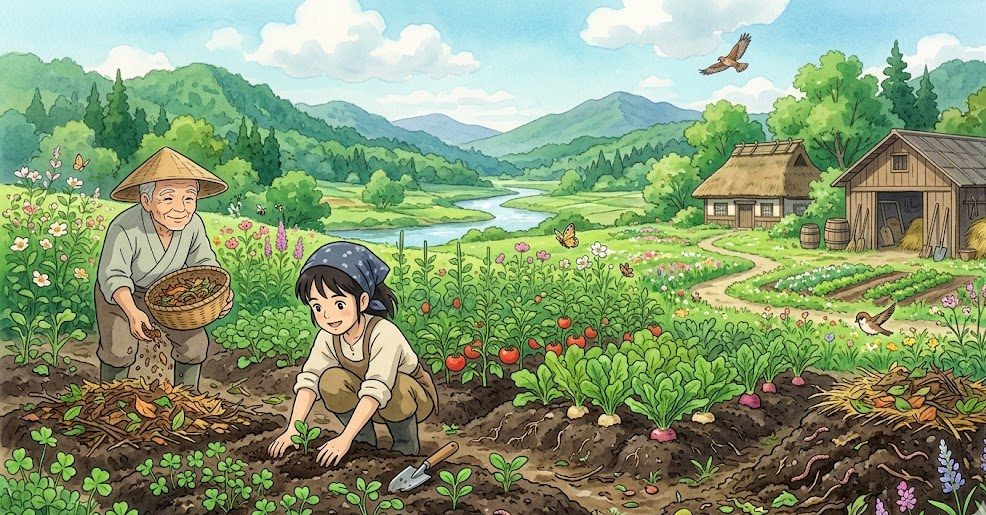
For decades, modern agriculture has treated soil like a simple medium to hold plants while pumping them with chemicals. By 2026, the consequences have become undeniable: depleted nutrients, hardened earth, and falling yields. Natural Soil Restoration is no longer a choice; it is a necessity for anyone looking to build a high-revenue, resilient farm.
Restoring soil is about shifting from “feeding the plant” to “feeding the soil.” When the soil is healthy, the plants grow themselves. This guide explores the most effective, science-backed techniques to heal your land and boost its fertility naturally.
1. The Carbon Foundation: Building Organic Matter
Soil fertility is built on Organic Carbon. Think of carbon as the “infrastructure” where nutrients and water stay. Without it, your expensive fertilizers simply wash away.
- Green Manuring (The Nitrogen Fix): Growing crops like Dhaincha or Sunn Hemp and plowing them back into the soil before they flower is the fastest way to add bulk carbon. This single act can reduce your urea requirement for the next season by up to 30%.
- The Power of Vermicompost: Standard manure is good, but vermicompost (earthworm castings) is “black gold.” It contains enzymes that stimulate root growth and microbial activity that synthetic products cannot replicate.
2. Breaking the Monotony: Crop Rotation & Diversity
Growing the same crop year after year is like “mining” the soil—you take the same nutrients from the same depth every time.
- The Legume Secret: Always include pulses (Moong, Urad, or Gram) in your rotation. These plants have a unique partnership with bacteria that “grab” nitrogen from the air and store it in the soil for the next crop.
- Deep vs. Shallow Roots: Rotate deep-rooted crops (like Cotton or Pigeon Pea) with shallow-rooted ones (like Cereals). Deep roots act as “nutrient pumps,” bringing up minerals from 3–4 feet underground that other plants can’t reach.
3. “The Cover Secret”: Never Leave Soil Naked
In nature, you never see bare soil; it’s always covered by grass or leaves. When we leave a field bare under the hot sun, the heat kills the beneficial bacteria in the top 2 inches—the most fertile part.
- Live Mulching: Growing creeping plants that cover the ground prevents soil erosion and keeps the soil temperature cool.
- Residue Management: Instead of burning stubble (which kills the soil biome), leave it on the field. As it rots, it feeds the earthworms and turns into “Humus”—the ultimate sign of fertile soil.
4. Biological Rejuvenation: The Microbial Web
Fertile soil is alive. A single teaspoon of healthy soil contains more microorganisms than there are people on Earth.
- Microbial Consortia: In 2026, we use “Bio-stimulants” (like Jeevamrutha or liquid seaweed) to wake up dormant microbes. These microbes act as “miners,” breaking down minerals into a form that plants can actually eat.
- Mycorrhizal Fungi: These fungi attach to plant roots, effectively increasing the root surface area by 100x. They are experts at finding phosphorus and water in dry conditions.
5. Correcting the Chemistry: pH & Micro-nutrients
Sometimes soil is full of nutrients, but the chemistry is “locked.” This is like being “starving at a wedding feast.”
- pH Balancing: If your soil is too acidic, use lime; if it’s too alkaline (salty), use gypsum. Correcting the pH makes the existing nutrients 50% more available to the plant.
- The Zinc & Boron Gap: Often, a massive yield failure is caused by the lack of just 2kg of micro-nutrients like Zinc or Boron. A simple Soil Test is the “medical report” your land needs before you start treatment.
6. The 2026 Agri-Tech Edge: Monitoring Restoration
Soil restoration is now data-driven. Using technology helps you track your progress:
- IoT Soil Sensors: These devices give you real-time data on moisture and salinity, so you know exactly when your restoration efforts are working.
- AI-Advisory: Modern apps can analyze your soil test reports and suggest the exact “Restoration Recipe” for your specific land type.
7. Economic Benefits: Why Healing Land Pays Off
Restored soil isn’t just “good for the earth”—it’s better for your wallet:
- Reduced Input Costs: Healthy soil needs 40–60% less chemical fertilizer and 30% less water.
- Premium Market Access: Crops grown in restored, natural soil have higher nutritional value and can be sold in premium “Organic” or “Regenerative” markets for double the price.
- Climate Resilience: Restored land survives droughts and heavy rains much better than “chemically dead” land.
Conclusion: Turning the Tide
Natural Soil Restoration is a journey, not a one-day task. It takes time for the earthworms to return and the microbes to wake up. But once your land is healed, it becomes a self-sustaining asset that produces more with less effort every year.
For the modern farmer, the message is clear: Take care of the soil, and the soil will take care of your future.
Restoration Checklist for 2026:
| Technique | Frequency | Primary Benefit |
|---|---|---|
| Soil Testing | Once every 2 years | Targeted mineral correction |
| Cover Cropping | Every off-season | Prevents erosion & heat stress |
| Vermicompost | Before every main sowing | Boosts microbial population |
| Crop Rotation | Every season | Prevents nutrient mining |
| Microbial Tea | Every 15–30 days | Unlocks “hidden” nutrients |
Export to Sheets
Pro-Tip: AdSense ke liye “Soil Health ROI” aur “Regenerative Farming Profits” jaise keywords use karein taaki finance aur agriculture dono ke premium ads aapki site par aayein.