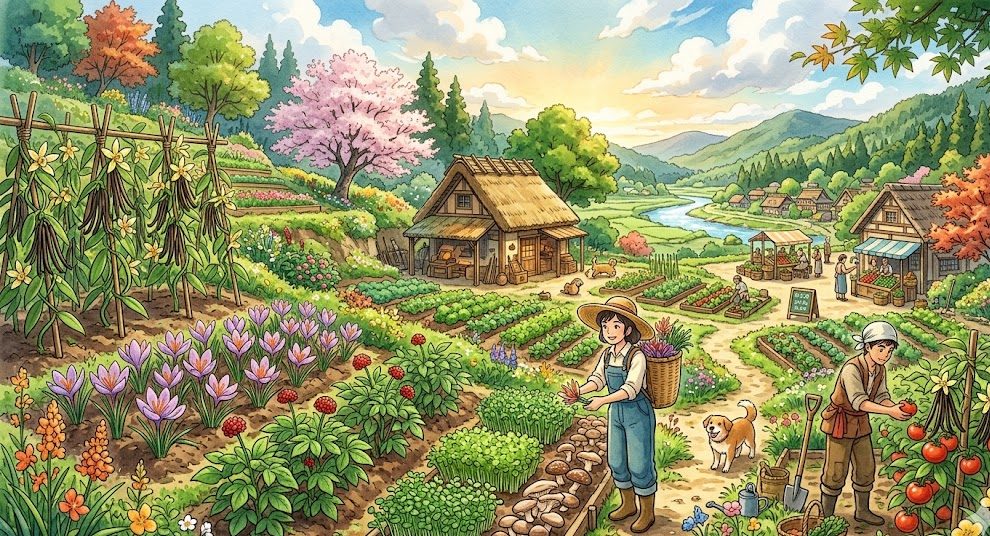
The agricultural landscape in 2026 is no longer just about feeding the world; it’s about precision, sustainability, and high-margin returns. As global supply chains stabilize and ag-tech becomes more accessible, savvy landowners are shifting away from traditional commodity crops like wheat and corn toward high-value alternatives that offer a significantly higher Return on Investment (ROI).
Whether you have a small boutique farm or a large-scale operation, choosing the right crop is the difference between “getting by” and “scaling up.” Here is a comprehensive guide to the most profitable cash crops to grow in 2026.
1. Culinary and Medicinal Herbs: The “Green Gold”
Herbs remain at the top of the list for 2026 due to their fast growth cycles and the booming wellness industry.
Lavender
Lavender is a powerhouse for ROI because it is a multi-purpose crop. You aren’t just selling dried flowers; you are selling essential oils, culinary flavorings, and “agri-tourism” experiences.
- Why 2026? The demand for natural sleep aids and organic skincare is at an all-time high.
- Profit Potential: A mature acre of lavender can produce thousands of dollars in essential oil alone.
Saffron
Often called “Red Gold,” saffron remains the most expensive spice in the world. Since it consists of the dried stigmas of the Crocus sativus flower, it requires intensive manual labor, which keeps the market price astronomical.
- Growth Tip: While labor-intensive, saffron requires very little water once established, making it a climate-resilient choice for 2026.
2. Specialized Mushrooms: Indoor High-Yielders
If you have limited land but access to indoor space (like climate-controlled containers or barns), mushrooms are your best bet.
Gourmet Mushrooms (Oyster & Shiitake)
The shift toward plant-based diets has turned gourmet mushrooms into a staple rather than a luxury. Oyster mushrooms, in particular, can grow on various substrates (like straw or coffee grounds) and go from “spore to harvest” in just a few weeks.
- ROI Factor: You can achieve multiple harvests per year, allowing for rapid compounding of profits.
Lion’s Mane
In 2026, nootropics (brain-boosting supplements) are a multi-billion dollar industry. Lion’s Mane is the “poster child” for this movement. It sells for a premium in both fresh markets and as a dried powder for supplements.
3. High-Value Perennials: The Long-Term Play
Perennials require a higher upfront investment and patience, but once they hit their stride, they provide “passive” agricultural income for decades.
Ginseng
Ginseng is the “slow cook” of the farming world. It can take 6–10 years to reach a harvestable size, but the payoff is massive.
- The Market: High-quality “wild-simulated” ginseng can fetch upwards of $500–$800 per pound. * Strategy: Plant a small plot every year to create a “rolling harvest” once the first cycle matures.
Bamboo
With the 2026 focus on plastic alternatives, bamboo is seeing a massive resurgence. It is one of the fastest-growing plants on Earth and is used for everything from construction material to sustainable fabric and paper.
4. The Superfood & Nut Category
Consumers in 2026 are obsessed with nutrient density.
Goji Berries
Goji berries are hardy, drought-tolerant, and produce fruit that is highly valued in the health-food sector. Because they are often imported, locally grown, organic goji berries can command a significant price premium at farmers’ markets and boutique grocers.
Microgreens
While technically a “stage” of growth rather than a specific species, microgreens (radish, kale, arugula) are the undisputed kings of ROI per square foot. * Turnover: 10–14 days.
- Profitability: You can grow these in vertical stacks, making them perfect for urban farming.
Financial Comparison Table (Estimated 2026 Projections)
| Crop | Growth Cycle | Initial Investment | Estimated Profit Margin |
|---|---|---|---|
| Microgreens | 2 Weeks | Low | Very High (Fast Turnover) |
| Saffron | 1 Year (Seasonal) | Medium | High (Price per gram) |
| Lavender | 3 Years (to maturity) | Medium | High (Value-added products) |
| Ginseng | 6–10 Years | High (Time cost) | Massive (per lb) |
| Oyster Mushrooms | 4–6 Weeks | Low/Medium | High (Continuous) |
Export to Sheets
Key Drivers of Profitability in 2026
To maximize your ROI, you must look beyond just the seeds. The most successful farmers in 2026 are focusing on these three pillars:
1. Vertical Integration (Value-Adding)
Don’t just sell the raw crop. If you grow lavender, sell the oil. If you grow mushrooms, sell dried “jerky” or powders. Processing the crop yourself captures the “retail margin” that usually goes to middlemen.
2. Ag-Tech and Automation
Sensor-based irrigation and AI-driven pest monitoring are no longer “futuristic”—they are essential for 2026. Reducing water waste and preventing crop loss through technology directly inflates your bottom line.
3. Direct-to-Consumer (DTC) Models
The most profitable farms are bypassing wholesalers. Utilizing social media, subscription boxes (CSA), and local farm-to-table partnerships allows you to keep 100% of the sale price.
Conclusion: Which Crop Should You Choose?
The “most profitable” crop is ultimately the one that fits your local climate and your available labor.
- For fast cash and low land: Go with Microgreens or Oyster Mushrooms.
- For a 5-year wealth-building plan: Invest in Lavender or Goji Berries.
- For a “legacy” high-value harvest: Plant Ginseng or Sandalwood.
In 2026, the market rewards the niche over the massive. By focusing on high-value, low-volume crops, you can turn a small plot of land into a high-functioning wealth engine.
The best time to plant was yesterday; the second best time is today.
Expert Guide Rule: Does your current land have access to indoor climate control, or are you looking specifically for outdoor, soil-based cultivation?