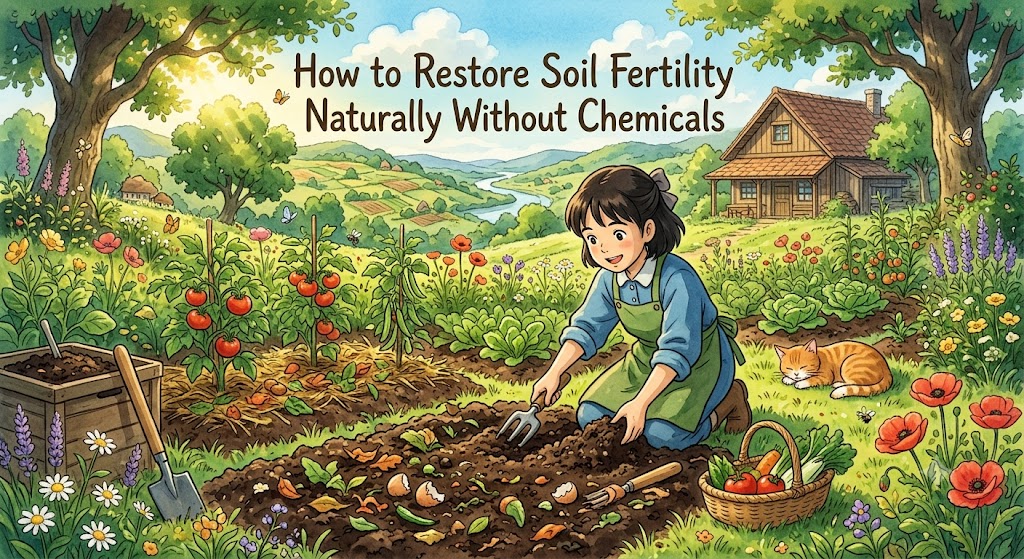
Healthy soil is the backbone of productive agriculture. Every successful harvest begins with fertile soil that can supply plants with nutrients, retain moisture, support beneficial microorganisms, and create the ideal environment for root growth. Unfortunately, years of excessive chemical fertilizer use, intensive tillage, monocropping, erosion, and poor land management have caused soil fertility to decline in many farming regions.
As soil becomes less fertile, farmers often notice lower crop yields, poor plant growth, increased pest problems, and higher production costs. While synthetic fertilizers may provide quick results, relying on them alone does not solve the underlying issue of declining soil health. Instead, restoring soil fertility naturally helps rebuild the soil ecosystem, improves long-term productivity, and reduces dependence on costly external inputs.
This guide explains practical and sustainable methods farmers can use to restore soil fertility without chemicals, ensuring healthier crops and more resilient farming systems.
What Is Soil Fertility?
Soil fertility refers to the soil’s ability to provide essential nutrients, water, oxygen, and a healthy environment for plant growth. Fertile soil supports vigorous root development, active microbial life, and balanced nutrient availability throughout the growing season.
A naturally fertile soil contains:
- Adequate organic matter
- Beneficial microorganisms
- Balanced nutrients
- Good soil structure
- Proper drainage
- Strong moisture-holding capacity
- Healthy earthworm populations
When these elements work together, crops grow stronger with fewer external inputs.
Why Soil Fertility Declines
Before restoring fertility, it is important to understand what causes soil degradation.
Some of the most common reasons include:
- Continuous cultivation of the same crop
- Excessive chemical fertilizer use
- Frequent deep tillage
- Soil erosion
- Burning crop residues
- Poor irrigation management
- Loss of organic matter
- Deforestation and overgrazing
Each of these practices gradually weakens the natural biological processes that maintain healthy soil.
Begin with a Soil Assessment
Every field has different nutrient levels and physical characteristics. Improving soil fertility begins with understanding its current condition.
A soil assessment should evaluate:
- Soil texture
- Organic matter content
- Soil pH
- Nutrient availability
- Drainage
- Compaction
- Moisture retention
Soil testing helps identify deficiencies and prevents unnecessary amendments, saving both time and money.
Increase Organic Matter
Organic matter is the heart of naturally fertile soil.
It improves nearly every aspect of soil health, including nutrient availability, water retention, and microbial activity.
Excellent sources include:
- Compost
- Farmyard manure
- Leaf litter
- Crop residues
- Green manure
- Vermicompost
Regular additions of organic matter gradually rebuild soil structure and improve productivity over time.
Compost: Nature’s Best Soil Builder
Compost is one of the most effective natural soil amendments.
Quality compost provides:
- Slow-release nutrients
- Beneficial microorganisms
- Improved soil structure
- Better water infiltration
- Increased moisture retention
Unlike synthetic fertilizers, compost continues enriching soil long after application.
Producing compost on the farm also reduces waste and lowers input costs.
Grow Cover Crops
Cover crops protect and nourish the soil between main cropping seasons.
Popular choices include:
- Clover
- Rye
- Mustard
- Sunn hemp
- Cowpea
- Hairy vetch
Cover crops offer several benefits:
- Reduce erosion
- Add organic matter
- Suppress weeds
- Improve soil structure
- Feed beneficial microbes
- Fix atmospheric nitrogen when legumes are used
After incorporation into the soil, they become valuable natural fertilizers.
Practice Crop Rotation
Planting the same crop repeatedly depletes specific nutrients and encourages pest populations.
Crop rotation restores balance naturally.
For example:
- Legumes replenish nitrogen.
- Deep-rooted crops break compacted soil.
- Different crop families interrupt disease cycles.
A diverse rotation keeps soil biologically active while reducing fertilizer requirements.
Reduce Excessive Tillage
Frequent plowing breaks down soil structure and disrupts beneficial organisms.
Conservation tillage helps restore fertility by:
- Preserving soil aggregates
- Protecting microbial habitats
- Reducing erosion
- Conserving moisture
- Increasing carbon storage
Less soil disturbance encourages long-term biological activity.
Encourage Beneficial Soil Microorganisms
Healthy soil is alive with bacteria, fungi, protozoa, and countless other microorganisms.
These organisms perform essential functions such as:
- Decomposing organic matter
- Releasing nutrients
- Improving soil structure
- Protecting roots from disease
- Supporting nutrient cycling
Farmers can support microbial life by:
- Applying compost regularly
- Avoiding excessive pesticides
- Maintaining organic matter
- Reducing tillage
Healthy microbial communities naturally improve soil fertility.
Protect Earthworm Populations
Earthworms are often called nature’s soil engineers.
Their activities improve:
- Soil aeration
- Water infiltration
- Organic matter decomposition
- Nutrient availability
- Root penetration
Maintaining organic matter and reducing unnecessary chemical use encourages larger earthworm populations.
Their presence is a good indicator of healthy soil.
Mulch the Soil
Applying organic mulch provides continuous protection for the soil surface.
Suitable materials include:
- Straw
- Dry grass
- Leaves
- Crop residues
- Wood chips
Mulch helps by:
- Conserving moisture
- Preventing erosion
- Reducing weeds
- Moderating soil temperature
- Gradually adding organic matter
As mulch decomposes, it becomes food for soil organisms.
Use Green Manure Crops
Green manure involves growing crops specifically to improve soil rather than for harvest.
Common green manure crops include:
- Sesbania
- Sunn hemp
- Cowpea
- Clover
These crops are incorporated into the soil before flowering.
Benefits include:
- Increased nitrogen
- Improved organic matter
- Better soil structure
- Enhanced microbial activity
Green manure is especially valuable in low-fertility fields.
Improve Water Management
Water influences every biological process in the soil.
Poor irrigation practices may reduce fertility by causing:
- Nutrient leaching
- Waterlogging
- Soil compaction
- Reduced oxygen availability
Natural water management techniques include:
- Rainwater harvesting
- Drip irrigation
- Mulching
- Proper drainage
- Soil moisture monitoring
Balanced moisture supports healthy microbial populations and root growth.
Prevent Soil Erosion
Topsoil contains the highest concentration of nutrients and organic matter.
Protecting it is essential.
Effective erosion control methods include:
- Cover crops
- Contour farming
- Terracing
- Windbreaks
- Permanent vegetation
- Mulching
Keeping soil in place preserves fertility and reduces nutrient losses.
Plant Deep-Rooted Species
Certain plants naturally improve soil by reaching deeper layers.
Examples include:
- Alfalfa
- Sunflower
- Pigeon pea
- Daikon radish
- Sorghum
These crops:
- Break compacted layers
- Improve drainage
- Increase organic matter
- Bring nutrients closer to the surface
Deep-rooted plants prepare the soil for future crops.
Integrate Livestock into Farming Systems
Mixed farming creates a natural nutrient cycle.
Livestock contribute manure rich in organic matter and essential nutrients.
When managed properly:
- Crop residues feed animals.
- Manure returns nutrients to the field.
- Soil biological activity increases.
- Fertilizer costs decrease.
This circular system supports long-term soil fertility.
Encourage Biodiversity
Diverse farming systems are naturally healthier.
Farm biodiversity includes:
- Multiple crop species
- Beneficial insects
- Birds
- Earthworms
- Soil fungi
- Pollinators
Greater biodiversity strengthens ecosystem stability while improving nutrient cycling.
Avoid Burning Crop Residues
Burning residues removes valuable organic matter and damages soil organisms.
Instead, farmers should:
- Compost residues
- Use them as mulch
- Incorporate them into the soil
- Feed suitable materials to livestock
Returning residues to the soil improves fertility over time.
Reduce Dependence on Chemical Inputs
Excessive chemical fertilizer use may temporarily increase yields but often reduces soil biological activity in the long run.
A gradual transition toward natural fertility management should include:
- Compost
- Green manure
- Crop rotation
- Organic mulching
- Biofertilizers
- Livestock manure
Balanced nutrient management produces healthier soil while maintaining crop productivity.
Monitor Soil Health Continuously
Restoring soil fertility is an ongoing process rather than a one-time activity.
Farmers should regularly monitor:
- Soil color
- Earthworm populations
- Organic matter
- Water infiltration
- Crop vigor
- Root development
- Soil pH
Keeping records allows farmers to evaluate improvements over time and adjust management practices as needed.
Long-Term Benefits of Natural Soil Fertility Restoration
Healthy soil delivers lasting rewards that extend beyond a single growing season.
Farmers often experience:
- Higher crop yields
- Improved grain and fruit quality
- Better drought tolerance
- Reduced fertilizer expenses
- Increased water-use efficiency
- Stronger resistance to pests and diseases
- Enhanced biodiversity
- Greater long-term profitability
Perhaps most importantly, naturally fertile soil remains productive for future generations instead of becoming increasingly dependent on external inputs.
Conclusion
Restoring soil fertility naturally is one of the smartest investments a farmer can make. Rather than relying solely on synthetic fertilizers, sustainable practices such as composting, crop rotation, cover cropping, mulching, conservation tillage, green manures, and efficient water management rebuild the soil from within. These methods strengthen soil structure, increase organic matter, encourage beneficial microorganisms, and create an environment where crops can thrive naturally.
Although rebuilding soil fertility takes time and patience, the long-term rewards are significant. Healthy soil produces stronger plants, higher yields, lower production costs, and greater resilience to climate change and extreme weather. Farmers who focus on nurturing the soil today are laying the foundation for productive farms and sustainable agriculture for many years to come.
Frequently Asked Questions
1. What is the fastest natural way to improve soil fertility?
Adding well-prepared compost and organic manure while planting cover crops is one of the fastest and most effective natural ways to improve soil fertility.
2. Can soil fertility be restored without chemical fertilizers?
Yes. Compost, crop rotation, green manure, cover crops, mulching, livestock manure, and conservation tillage can naturally restore soil fertility over time.
3. Why is organic matter important for fertile soil?
Organic matter improves soil structure, water retention, nutrient availability, microbial activity, and long-term productivity.
4. How long does it take to restore degraded soil naturally?
The timeline depends on the level of degradation and management practices. Noticeable improvements may appear within one or two growing seasons, while significant restoration often takes several years of consistent care.
5. Which farming practice contributes the most to long-term soil fertility?
A combination of compost application, crop rotation, cover cropping, reduced tillage, and maintaining year-round organic matter provides the greatest long-term benefits for soil fertility.