Most people look at a farm and focus entirely on the crops. Experienced growers, however, look down. They know that the secret to a high-yielding, resilient harvest does not start with the seed, but with the soil beneath it.
For decades, modern farming relied heavily on synthetic inputs to push yields higher. While this worked temporarily, it often treated the soil like an empty sponge, simply holding roots while chemicals did the feeding. Over time, this approach strips the land of its natural biology, leading to compacted dirt, poor water retention, and struggling crops.
Healing degraded soil is not an overnight fix, but it is the most profitable and sustainable investment a grower can make. By shifting focus from feeding the plant to feeding the soil, you can create a self-sustaining ecosystem that naturally boosts crop production, reduces input costs, and protects your land for generations.
Understanding the Living Soil Ecosystem
To fix your land, you first have to understand what healthy soil actually is. It is not just crushed rocks and dirt; it is a complex, living, breathing ecosystem.
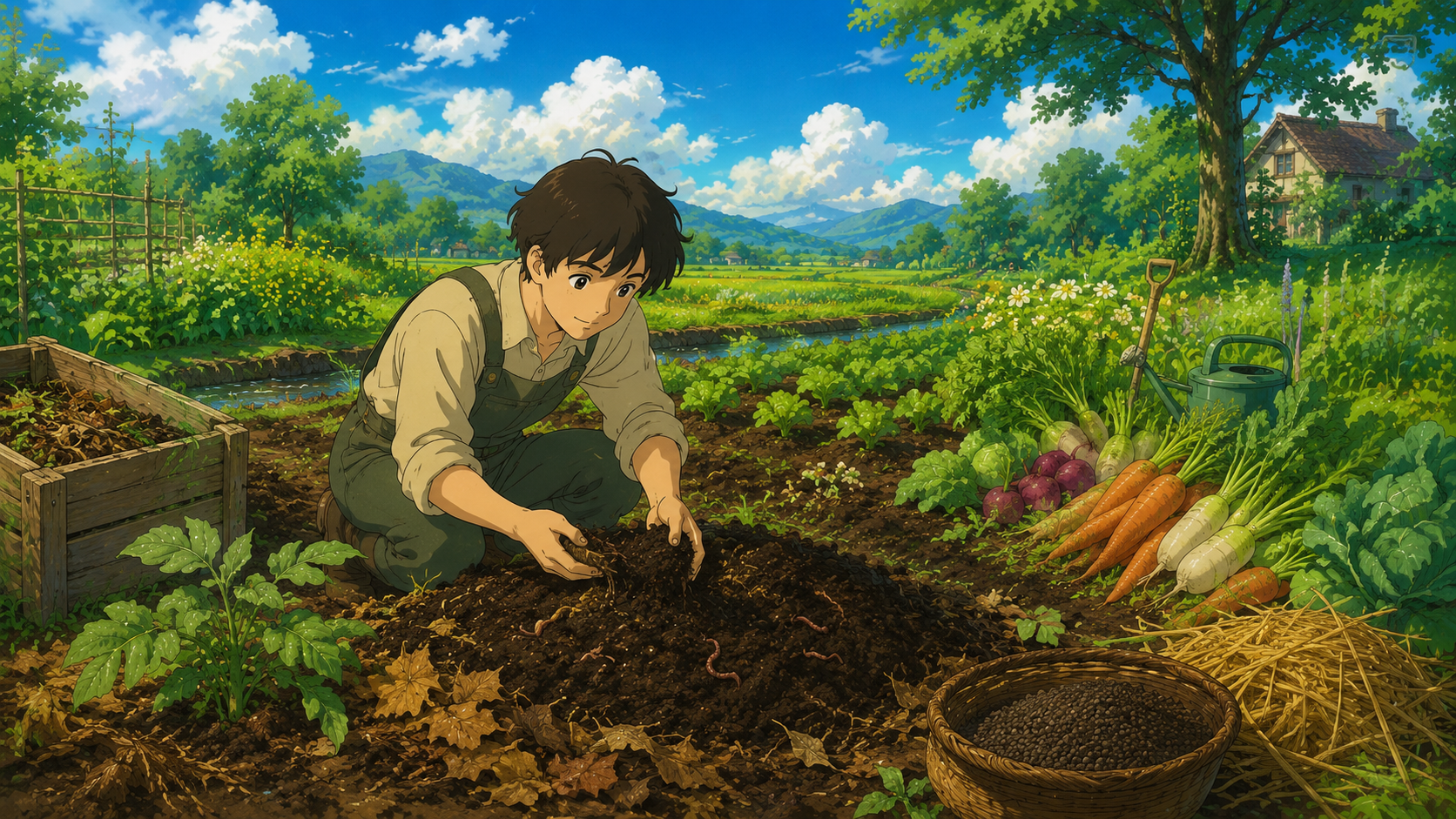
A single handful of healthy soil contains billions of living organisms, including bacteria, fungi, nematodes, and earthworms. These microscopic workers are the engine of your farm. They break down organic matter, process minerals locked in the ground, and deliver essential nutrients directly to the plant roots in a form the crops can easily absorb.
When soil is heavily tilled or drenched in harsh chemicals, this delicate web of life is destroyed. Healing your soil means creating a hospitable environment where these beneficial microbes can thrive and multiply once again.
The Power of Cover Crops and Green Manure
One of the golden rules of natural soil regeneration is simple: never leave the ground bare. Bare soil is exposed to wind erosion, baked by the sun, and washed away by heavy rains.
Cover crops are the ultimate natural remedy. Plants like clover, rye, vetch, and radishes are grown not for harvest, but specifically to protect and enrich the land during off-seasons. Their roots break up hardpan compaction, allowing air and water to penetrate deep into the ground.
Furthermore, leguminous cover crops naturally pull nitrogen from the atmosphere and lock it into the soil, acting as a free, green manure. When these cover crops are eventually mowed down and allowed to decompose, they add massive amounts of rich organic matter directly back into the earth.
Embracing No-Till and Reduced-Till Farming
Tilling the soil has been standard practice for centuries to prepare seedbeds and kill weeds. However, aggressive, repeated plowing is one of the fastest ways to degrade land.
Every time soil is turned over, its internal structure is shattered. The beneficial fungal networks (mycorrhizae) that help plant roots find water are ripped apart. Tilling also exposes the soil’s stored carbon to the air, causing it to oxidize and disappear.
Transitioning to a no-till or reduced-till system allows the soil to heal its natural structure. By planting directly into the residue of previous crops, you preserve the moisture, protect the microbial networks, and drastically reduce the fuel and labor costs associated with running heavy machinery over your fields multiple times a season.
Composting and Organic Mulch Application
You cannot withdraw from a bank account forever without making a deposit. The same applies to farming. Every harvest removes nutrients from the field.
High-quality organic compost is the best way to replenish that deficit naturally. Compost acts as an inoculant, introducing billions of beneficial microbes back into the dirt while providing a slow-release source of vital nutrients.
Applying a layer of organic mulch—such as straw, wood chips, or shredded leaves—over planting beds serves a dual purpose. As it slowly breaks down, it feeds the soil food web. Simultaneously, it acts as an insulating blanket, keeping the ground cool during summer heatwaves and drastically reducing water evaporation.
Practical Tips for Immediate Implementation
If you are ready to start transitioning your fields, here are a few practical, low-cost methods you can apply this season:
- Practice Crop Rotation: Never plant the exact same crop in the same field year after year. Different plants extract different nutrients and attract different pests. Rotating families of plants naturally breaks disease cycles and balances nutrient uptake.
- Leave Crop Residue: After harvesting corn or wheat, do not burn or remove the stalks. Leave the stubble in the field to decay. It is free organic matter that protects the topsoil.
- Introduce Animal Integration: If possible, allow livestock to graze on harvested fields or cover crops. Their manure and the gentle trampling of hooves naturally stimulate microbial activity and incorporate organic matter into the top layer of earth.
- Brew Compost Tea: For a quick biological boost, steep high-quality compost in aerated water to multiply the microbes, then spray it directly onto the soil or plant leaves as a natural disease deterrent and fertilizer.
A Real-Life Example of Soil Recovery
Consider the case of an aging, 50-acre family vegetable farm that had seen its yields decline steadily over a decade. The ground had turned hard, cracking deeply in the summer, and requiring massive amounts of irrigation and synthetic fertilizer just to maintain average production.
The owners decided to change their approach. They stopped deep plowing and began planting a winter cover crop mix of oats and field peas. Instead of leaving the ground bare in January, it was covered in a green blanket. In the spring, they rolled the cover crop flat and planted their cash crops directly into the decaying matter.
Within three years, the transformation was undeniable. Earthworms returned in massive numbers. The soil became dark, crumbly, and smelled like a forest floor. Best of all, their water usage dropped by 30% because the newly structured soil held moisture like a sponge, and their fertilizer bill was cut in half as the natural biology took over the heavy lifting.
Common Mistakes to Avoid
- Expecting Immediate Results: Natural soil building takes time. Do not panic if your yields dip slightly in the first transitional year. You are rebuilding an ecosystem that took decades to degrade.
- Applying Uncomposted Manure: Raw manure can burn plant roots and introduce dangerous pathogens or weed seeds into your fields. Always allow manure to compost fully before applying it.
- Compacting the Soil with Heavy Machinery: Avoid driving tractors over wet fields. The weight crushes the air pockets out of the wet earth, undoing years of natural soil structuring. Keep machinery to designated pathways whenever possible.
- Going “Cold Turkey” on Synthetics: If your soil is completely dead, abruptly stopping all synthetic fertilizers can starve your current crop. Taper off chemical use gradually as your soil’s organic matter and biological activity increase.
Step-by-Step Guide to Healing Your Soil
If you are unsure where to begin, follow this simple roadmap to start regenerating your land:
Step 1: Perform a Comprehensive Soil Test Before making changes, you need a baseline. Send soil samples to a local agricultural extension or lab. Do not just look at N-P-K (Nitrogen, Phosphorus, Potassium) levels; ask for a biological assay and organic matter percentage.
Step 2: Stop the Bleeding Immediately halt the practices that are causing the most damage. Reduce your tillage passes and commit to keeping the soil covered with mulch or living plants year-round.
Step 3: Add Organic Matter Calculate how much compost you can afford and source locally. Spread it evenly across your most degraded fields to kickstart the biological recovery.
Step 4: Plan a Cover Crop Rotation Determine your primary cash crops and select a cover crop mix that complements them. If you grow heavy nitrogen feeders like corn, plant a nitrogen-fixing legume cover crop the season before.
Step 5: Monitor and Adjust Grab a shovel every few months and dig a hole. Look at the root depth, count the earthworms, and observe how quickly water drains after a heavy rain. Let the visual health of the soil guide your next steps.
Conclusion
Healing degraded soil naturally is a journey of shifting your mindset from chemistry to biology. It is about working in harmony with nature rather than trying to force it into submission. By embracing cover crops, reducing tillage, and prioritizing organic matter, you build a resilient, fertile foundation for your farm. The initial transition requires patience and careful observation, but the long-term rewards—healthier crops, lower operating costs, and a thriving farm ecosystem—are well worth the effort.
Frequently Asked Questions
1. How long does it take to see real improvements in soil health? While you might notice better water retention and an increase in earthworms within the first year, significantly rebuilding soil organic matter and establishing strong microbial networks typically takes three to five years of consistent regenerative practices.
2. Can small-scale gardeners use these same farming techniques? Absolutely. The principles of soil biology apply everywhere, from a massive 1,000-acre commercial operation to a small raised bed in a backyard. Mulching, using compost, and planting diverse crops work on any scale.
3. Do cover crops compete with my main cash crops for water and nutrients? If managed incorrectly, they can. That is why cover crops are usually terminated (mowed or rolled) before the main cash crop is planted. Once terminated, they stop competing and immediately begin releasing their stored water and nutrients back to your cash crop.
4. Is natural soil healing more expensive than traditional chemical farming? In the short term, buying cover crop seeds and sourcing bulk compost involves an upfront cost. However, in the long term, natural farming is significantly cheaper. As your soil health improves, you drastically reduce your reliance on expensive synthetic fertilizers, pesticides, and irrigation water, leading to higher overall profit margins.