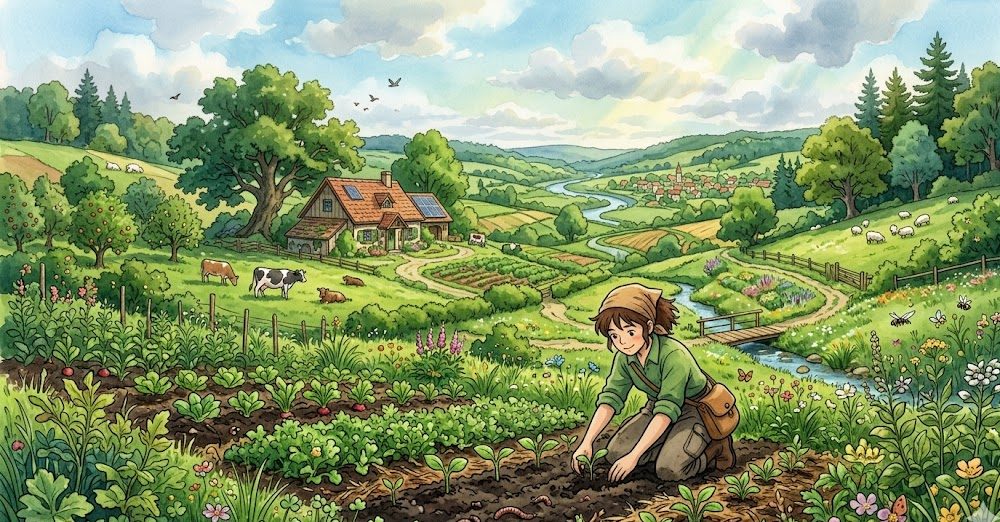
For decades, the global agricultural industry has focused on a single metric: maximum yield. However, this relentless pursuit has come at a steep cost. Conventional farming practices—heavy tilling, synthetic fertilizers, and mono-cropping—have severely degraded the earth’s topsoil. Today, the agricultural paradigm is shifting. Farmers, scientists, and environmentalists are turning to Regenerative Agriculture, a holistic approach designed not just to sustain the land, but to actively heal and restore soil health naturally.
This comprehensive guide explores the principles, scientific mechanisms, and profound economic benefits of regenerative agriculture, demonstrating how working with nature is the ultimate strategy for future-proofing our food systems.
The Crisis of Degraded Soil
Before understanding the solution, we must acknowledge the problem. Traditional agriculture treats soil as an inert medium—a mere sponge for synthetic nitrogen, phosphorus, and potassium. Intensive plowing breaks apart the soil’s natural structure, exposing it to wind and water erosion. Over time, this destroys the intricate web of microbial life, leading to compacted, lifeless dirt that requires ever-increasing amounts of chemical inputs to produce a harvest.
Regenerative agriculture flips this script. It recognizes that soil is a living, breathing ecosystem. By restoring the biological vitality of the earth, farmers can naturally enhance crop resilience, improve water quality, and drastically reduce input costs.
The 5 Core Principles of Regenerative Agriculture
Restoring soil health naturally doesn’t rely on expensive new technologies or chemical interventions; it relies on mimicking natural ecological processes. The regenerative model is built upon five foundational principles:
1. Minimize Soil Disturbance
Tillage is to the soil what an earthquake is to a city. It destroys the “houses” of soil microbes and severs the crucial fungal networks (mycorrhizal fungi) that deliver nutrients to plant roots. Regenerative farmers adopt no-till or low-till practices. By leaving the soil structure intact, they preserve the biological networks, retain stored carbon, and prevent the rapid evaporation of soil moisture.
2. Keep the Soil Covered (Armor the Soil)
Bare soil is vulnerable soil. In nature, the earth is rarely left naked. Regenerative agriculture utilizes cover crops (like clover, rye, or radishes) and natural mulches to create a protective armor over the topsoil. This cover regulates soil temperature, suppresses weed growth naturally, and prevents the harsh impact of rain from washing away valuable nutrients.
3. Maximize Plant Diversity
Nature thrives on diversity; pests and diseases thrive in monocultures (growing a single crop over vast areas). By implementing strategic crop rotations and intercropping, farmers create a varied diet for the soil microbiome. Different plants release different root exudates (liquid carbon sugars) into the soil, attracting a diverse array of beneficial microbes that naturally protect crops from pathogens and unlock various trace minerals.
4. Maintain Living Roots Year-Round
Microbes need a constant food source to survive and multiply. When fields are left barren after a harvest, the microbial population starves and crashes. By keeping living roots in the ground as long as possible—often through the use of perennial crops or winter cover crops—farmers ensure a continuous exchange of carbon and nutrients, keeping the soil ecosystem vibrant and active 365 days a year.
5. Integrate Livestock Safely
Animals are a critical component of natural ecosystems. When managed correctly through managed rotational grazing, livestock can rapidly accelerate soil restoration. As cattle or sheep move across a pasture, they naturally trample organic matter into the ground, while their manure and urine provide potent, bio-available biological fertilizers. This simulates the historical movement of wild herds, stimulating rapid plant regrowth and deep root development.
The Science of Healing: How Soil Restores Itself
When these five principles are applied, the soil undergoes a remarkable natural transformation driven by biology.
- The Power of the Microbiome: Healthy soil is teeming with life. A single teaspoon of regenerative soil can contain more microbes than there are humans on Earth. These bacteria and fungi act as the plant’s digestive system, breaking down organic matter and breaking apart rocks to deliver essential minerals directly to the plant roots in exchange for carbon sugars.
- Carbon Drawdown (Sequestration): Plants absorb carbon dioxide from the atmosphere through photosynthesis. In a regenerative system, much of this liquid carbon is pumped down into the roots and traded with soil microbes. The microbes then convert this carbon into stable humus, locking it safely underground. This not only builds dark, rich topsoil but also actively combats climate change.
- The Soil Sponge Effect: As organic matter increases, the soil transforms into a massive sponge. For every 1% increase in soil organic matter, an acre of land can hold an additional 20,000 gallons of water. This dramatically reduces runoff, prevents flooding, and provides a crucial water reserve during periods of drought.
The Economic and Commercial Benefits
Transitioning to regenerative agriculture is not just an ecological mission; it is a highly profitable business strategy.
- Drastic Reduction in Input Costs: As the soil microbiome recovers, the need for expensive synthetic fertilizers, herbicides, and pesticides drops significantly. Nature begins to do the heavy lifting for free.
- Climate Resilience: Regenerative farms suffer less yield loss during extreme weather events. Their superior water retention protects against drought, while robust soil structure prevents washout during heavy floods.
- Premium Market Opportunities: Consumers are increasingly demanding sustainably grown food. Crops cultivated using regenerative practices often command premium prices in the marketplace, and farmers can even open new revenue streams by selling carbon credits.
Conclusion: Partnering with Nature
Regenerative agriculture represents a return to biological sanity. It is a transition from an extractive mindset—taking as much from the earth as possible—to a restorative mindset. By focusing on healing the soil naturally, we can produce nutrient-dense food, clean our waterways, reverse ecological damage, and ensure that farming remains a viable, profitable livelihood for generations to come. The future of farming isn’t about fighting nature; it’s about partnering with it.