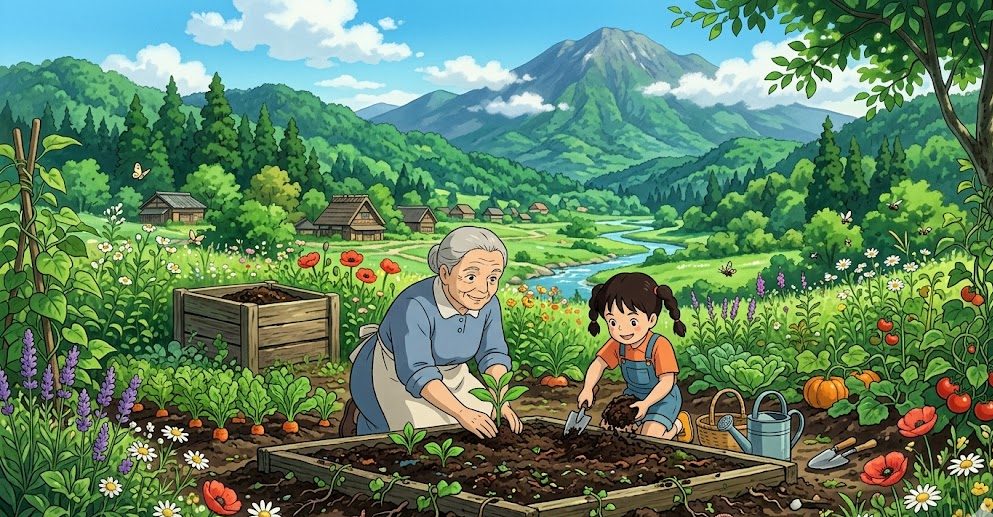
The ground beneath our feet is far more than just dirt; it is a complex, living ecosystem that serves as the foundation for all terrestrial life. Often referred to as the “skin of the Earth,” soil is a dynamic entity teeming with life, housing nearly 59% of the planet’s biological diversity (Lal, 2025).
However, decades of industrial agricultural practices—including intensive plowing, heavy synthetic chemical use, and widespread monocropping—have severely degraded this vital resource. Across the globe, between 20% and 40% of land area is actively degrading, directly impacting over 3.2 billion people (Banerjee, 2025).
To reverse this crisis and protect our environment, we must transition from destructive practices to Natural Soil Restoration and Organic Regeneration. Restoring the ground’s natural fertility allows us to heal the planet, secure clean water reserves, and produce highly nutritious food.
1. What is Regenerative Organic Agriculture?
Regenerative organic agriculture is a holistic, system-based farming methodology that moves beyond basic sustainability. Instead of simply maintaining an already depleted environment, its goal is to actively improve, renew, and revitalize the ecosystem (Arp, 2026; Giller et al., 2021).
While traditional fertility management focuses solely on synthetic nutrient levels (like nitrogen, phosphorus, and potassium), regenerative practices prioritize soil health. This approach nurtures natural biological cycles, enhances subterranean biodiversity, and improves long-term ecological resilience (Cusworth & Garnett, 2023).
   [ Minimize Disturbance ]  ───► Protects Soil Organisms & Structure
              │
   [ Maximize Diversity ]   ───► Breaks Pest Cycles & Enriches Biology
              │
   [ Constant Soil Cover ]  ───► Prevents Erosion & Feeds Microbes
              │
   [ Continuous Roots ]     ───► Pumps Carbon & Photo-Sugars into Earth
2. Core Principles of Natural Soil Restoration
To successfully rebuild degraded earth, practitioners follow specific, science-backed principles that mimic natural ecological patterns:
Minimize Mechanical and Chemical Disturbance
Conventional tillage (plowing) is incredibly destructive to underground ecosystems. It shatters delicate soil structures, tears apart beneficial fungal networks, and accelerates the loss of organic matter by turning soil carbon into atmospheric carbon dioxide (Feliziani, 2025; Idowu, 0000). Minimizing disturbance through no-till or reduced-till systems preserves the habitats of essential organisms like earthworms and beneficial bacteria (Paroda, 2025).
Maintain Continuous Soil Cover
Leaving fields bare between planting seasons exposes the earth to severe wind and water erosion, extreme temperature spikes, and intense nutrient leaching. Keeping the ground constantly covered with organic crop residues or active living plants preserves moisture, regulates surface temperatures, and protects the microbial communities thriving below ground (Feliziani, 2025; Paroda, 2025).
Maximize Crop and Plant Diversity
Monoculture (growing only one crop repeatedly) starves the soil ecosystem by offering a highly restricted biological diet, which invites pests and diseases. Introducing polycultures, multi-species cover crops, and complex crop rotations disrupts pest cycles and optimizes resource use (Feliziani, 2025; Paroda, 2025). For instance, intercropping legumes alongside grains naturally fixes atmospheric nitrogen into the soil, drastically reducing the need for costly synthetic fertilizers (Feliziani, 2025).
Keep Living Roots in the Soil Year-Round
Living plant roots constantly exude photosynthesized sugars, amino acids, and carbon compounds directly into the ground. This root exudate serves as a primary energy source, feeding the local microbial community and fueling biological carbon sequestration (Cusworth & Garnett, 2023).
3. The Power of Soil Organic Matter (SOM)
At the absolute center of earth health is Soil Organic Matter (SOM) and its core component, Soil Organic Carbon (SOC). SOM functions as the biological engine of the soil profile, regulating nutrient cycling, water filtration, and physical stability (Banerjee, 2025; Lal, 2025).
| Soil Property | Impact of Increasing Soil Organic Carbon (SOC) |
| Nutrient Storage | Naturally stores and slowly releases vital elements like nitrogen, phosphorus, and sulfur, eliminating the need for chemical inputs (Banerjee, 2025). |
| Water Management | Drastically improves water infiltration and retention capacities, making fields highly resilient to severe droughts (Cusworth & Garnett, 2023; Feliziani, 2025). |
| Structural Stability | Acts as a natural binding agent to form resilient soil aggregates, preventing erosion and keeping topsoil intact against heavy winds and rains (Idowu, 0000). |
| Carbon Sequestration | Acts as the planet’s second-largest active carbon sink, safely capturing and storing massive amounts of carbon to help mitigate global climate change (Banerjee, 2025). |
4. Practical Strategies for Organic Regeneration
Transitioning a backyard garden, a community plot, or a large-scale farm into a thriving organic ecosystem requires a few highly effective, practical techniques:
- Utilize High-Quality Compost and Green Manure: Applying well-composted organic matter introduces complex microbial life and vital nutrients back into depleted earth (Feliziani, 2025).
- Plant Multi-Species Cover Crops: Growing cold-hardy crops like winter rye, clover, and vetch during off-seasons provides living root pathways, improves aeration, and minimizes erosion (Feliziani, 2025; Paroda, 2025).
- Incorporate Biochar and Organic Amendments: Adding stable carbon forms like biochar can permanently improve nutrient-holding capacity and provide a safe shelter for beneficial soil microbes.
- Practice Managed Rotational Grazing: When properly managed, integrating livestock allows animals to mimic natural wild herds. Their brief, concentrated impact naturally stimulates forage growth and returns organic nutrients to the earth through manure deposition (Banerjee, 2025; Feliziani, 2025).
5. The Ultimate Impact on Earth and Human Health
The health of our soil is inherently linked to the health of humanity and the entire planet. Restoring biological life to our land initiates a cascade of powerful, positive environmental loops:
The Soil-Health Feedback Loop: Healthy, living soil generates resilient and nutrient-dense crops. Consuming these nutrient-packed foods directly enhances human nutrition, fosters public wellbeing, and builds community health equity (Rosier, 2025).
Simultaneously, implementing regenerative systems improves farm viability by reducing input costs for expensive chemical fertilizers and pesticides (Banerjee, 2025; Rosier, 2025). On a global scale, revitalizing agricultural land acts as a critical natural climate solution, capturing carbon directly from the atmosphere and storing it safely underground where it can build future life (Banerjee, 2025).
Conclusion
Natural soil restoration is no longer just an alternative farming method—it is a critical necessity for the future of our planet. By understanding that the ground is a living, breathing entity and adopting organic regenerative principles, we can actively heal our landscapes. Every step taken to build soil organic matter, reduce tillage, and foster biodiversity is a direct investment in clean water, a stable climate, and a healthier world.