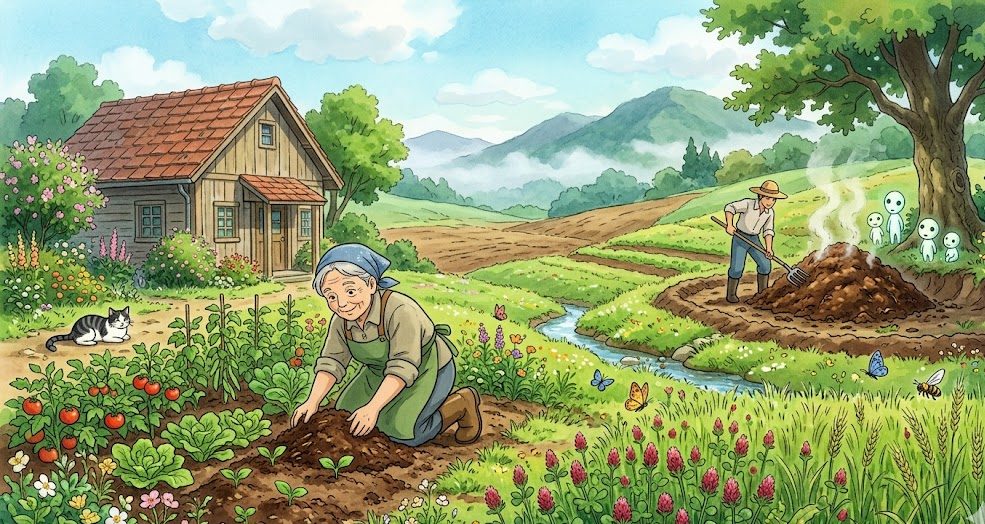
Have you ever looked at a patch of ground in your garden or farm and noticed it looks powdery, cracked, completely dry, and pale? Nothing seems to grow there except maybe a few stubborn weeds, and when it rains, the water just puddles on top instead of sinking in.
If this sounds familiar, you are likely dealing with dead soil.
Decades of heavy chemical use, over-tilling, leaving the ground bare, and monoculture farming have stripped vast amounts of land of its natural vitality. Dead soil isn’t just dry dirt; it is dirt that has lost its living ecosystem.
The good news is that soil isn’t permanently broken. Nature has a remarkable ability to heal itself if given the right tools. Here is a comprehensive, beginner-friendly guide featuring 5 practical steps to restore your dead soil naturally and bring your land back to life.
The Difference Between “Dirt” and “Living Soil”
Before we jump into the steps, it helps to understand what makes soil “alive.” Dirt is simply a collection of minerals, sand, silt, and clay. Living soil, however, is a bustling metropolis filled with billions of microscopic organisms—including bacteria, fungi, protozoa, and earthworms.
This network is known as the Soil Food Web. These tiny creatures break down organic matter, unlock nutrients for your plants, and create tunnels that allow air and water to reach plant roots. When you wipe out these organisms, your soil dies and turns back into lifeless dirt.
Step 1: Stop Tilling and Avoid Chemical Inputs
The very first step to saving dead soil is to stop doing the things that killed it in the first place.
- Ditch the Rototiller: While tilling makes the ground look fluffy for a few days, it actually destroys the delicate fungal networks (mycorrhizae) and crushes earthworm tunnels. It introduces too much oxygen, which burns up organic matter rapidly and leaves the soil vulnerable to erosion.
- Say No to Synthetic Chemical Fertilizers: Chemical fertilizers act like an addiction. They provide a quick hit of nitrogen or potassium to plants but do absolutely nothing to feed the soil biology. Over time, the high salt content in these chemicals drives away or kills beneficial microbes.
The Fix: Switch to a “No-Till” or “Low-Till” approach. Let the soil rest so the natural biology can begin rebuilding its broken home.
Step 2: Infuse the Land with Organic Matter (The Quick Starter)
If dead soil is starving, organic matter is the all-you-can-eat buffet that will bring the microbes back. You need to add high-quality carbon and nutrient sources directly to the top layer of your soil.
- Finished Compost: Compost is packed with active microbes and essential nutrients. Spread a 2- to 3-inch layer over your dead soil. Do not dig it in; let the rain and native earthworms pull it down naturally.
- Aged Manure: Cow, horse, or chicken manure (make sure it is well-composted so it doesn’t burn your plants) introduces incredible microbial diversity and nitrogen back into the dirt.
- Compost Tea: If your soil is completely barren, spraying it with liquid compost tea is like giving it a direct shot of liquid life, instantly introducing billions of beneficial bacteria to the surface.
Step 3: Plant Cover Crops (Green Manure)
Nature hates being naked. If you leave dead soil exposed to the hot sun and heavy rains, the remaining nutrients will wash away, and the top layer will bake into a hard, impenetrable crust.
Cover crops are plants grown specifically to protect and enrich the soil rather than to be harvested for food.
| Cover Crop Type | Examples | How It Restores the Soil |
|---|---|---|
| Nitrogen Fixers | Clover, Vetch, Peas | Pull nitrogen from the air and store it in their roots, naturally fertilizing the ground. |
| Deep Rooters | Daikon Radish, Alfalfa | Punch through compacted, hard clay soil to create air channels and bring up deep minerals. |
| Biomass Builders | Cereal Rye, Oats, Oats | Produce massive amounts of leaves and roots that turn into rich organic matter when they die. |
Export to Sheets
When these crops reach maturity, you simply cut them down at the base and leave them right on top of the soil to decompose. This process mimics the natural forest floor.
Step 4: Keep the Ground Heavily Mulched
In a natural forest or meadow, the soil is always covered by fallen leaves, twigs, and dying plants. This natural blanket serves several vital functions for recovery:
- Moisture Retention: Dead soil cannot hold water. Mulch acts like a shield, preventing the sun from evaporating whatever moisture is left in the ground.
- Temperature Regulation: Microbes and earthworms hate extreme heat. A thick layer of mulch keeps the underground environment cool and comfortable, encouraging earthworms to return.
- Continuous Slow Feeding: As wood chips, straw, or shredded leaves slowly rot over months and years, they continuously feed the soil from the top down.
What to use for mulch: Clean straw, fallen autumn leaves, wood chips, shredded bark, or even grass clippings (as long as they are free from chemical weedkillers).
Step 5: Inoculate with Mycorrhizal Fungi
In a healthy ecosystem, plants have a symbiotic relationship with a specific type of underground fungi called Mycorrhizae.
These fungi attach themselves to plant roots and act as an extended highway system. They reach deep into tight spaces where plant roots can’t fit, fetching water and nutrients and bringing them back to the plant. In exchange, the plant feeds the fungi natural sugars.
In dead soil, these fungi are completely missing. You can buy organic mycorrhizal inoculant powders at local garden centers. When you are ready to plant your cover crops or new vegetables, dust the seeds or the root balls of your seedlings with this powder. This jumpstarts the biological connection immediately.
Conclusion: Healing Takes Time
Restoring dead soil naturally is not an overnight process. It took years of neglect or chemical abuse to deplete the land, and it will take some time for nature to rebuild its complex underground systems.
However, within just one or two seasons of applying compost, keeping the ground covered, and stopping harsh tilling, you will start to notice a massive shift. The soil will turn darker, smell rich and earthy, hold water like a sponge, and pull in earthworms from all around.
By investing a little patience and working with nature’s design, you can transform the most stubborn, lifeless dirt into a thriving, fertile paradise capable of growing abundant crops for years to come.