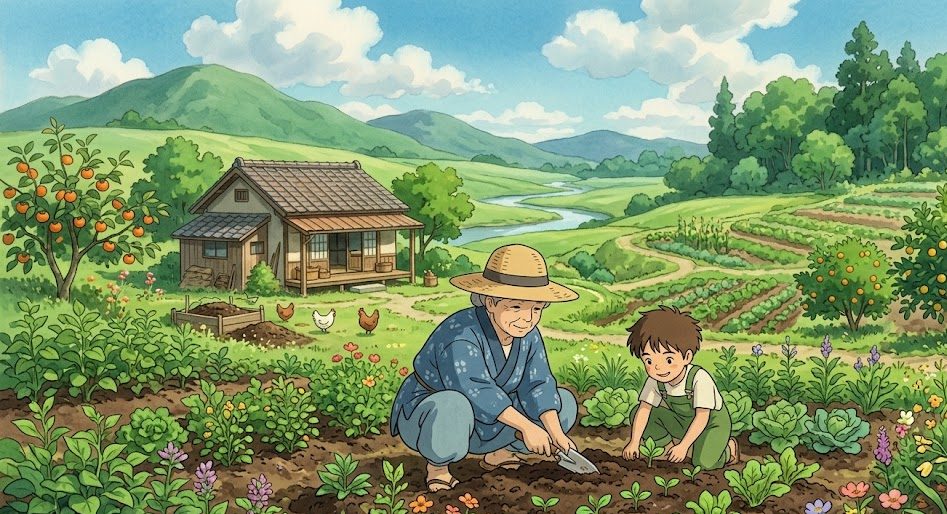
For many farmers, the biggest challenge is simple: how to earn better income without exhausting the land. High-value cash crops can bring strong returns, but repeated chemical-heavy farming often reduces soil fertility, increases input costs, and weakens long-term productivity. A more sustainable path is to combine profitable crop selection with natural soil healing. When soil becomes healthier, crops often become stronger, input expenses can become more manageable, and productivity can remain stable over the long run.
Natural soil healing is not about abandoning productivity. It is about rebuilding the biological life of the soil so that crops can perform better. Healthy soil contains beneficial microorganisms, balanced organic matter, good moisture-holding capacity, and better structure. These factors directly affect root development, nutrient uptake, and crop resilience.
Why Soil Health Matters for Profit
Many farmers focus only on fertilizers, seeds, and market prices. But soil is the foundation of farm economics. When soil loses organic matter, it becomes harder, less able to hold water, and more dependent on repeated chemical inputs. This creates a cycle where production costs rise while yields become less predictable.
Healthy soil improves profitability in several ways:
- Better water retention reduces irrigation needs.
- Strong root growth improves nutrient efficiency.
- Improved microbial activity supports natural nutrient cycling.
- Better soil structure reduces erosion and compaction.
- Crops often become more resilient to weather stress.
In simple terms, healthier soil often means lower risk and better long-term margins.
Choosing High-Value Cash Crops
Not every crop delivers the same financial return. High-value cash crops usually offer stronger market demand, better price per acre, or opportunities for premium quality. The best choice depends on climate, water availability, market access, and local demand.
1. Spices
Spices often have strong value because they require relatively smaller land area but can generate good returns. Crops such as turmeric, ginger, cumin, and coriander are widely grown in many regions. These crops also respond well to organic matter-rich soil.
2. Medicinal and Herbal Crops
Medicinal plants such as aloe vera, ashwagandha, lemongrass, and basil have growing market demand. Buyers increasingly look for clean cultivation practices, which makes natural soil improvement especially valuable.
3. Vegetables
Tomato, chili, onion, capsicum, cucumber, and specialty vegetables can provide attractive profits where farmers have access to nearby markets. Because vegetables are intensive crops, soil health management becomes especially important.
4. Fruit Crops
Pomegranate, papaya, guava, banana, and citrus can provide long-term income when managed properly. Fruit crops benefit greatly from healthy soil because root health directly affects production quality.
5. Niche Premium Crops
Microgreens, flowers, seed spices, and specialty herbs can sometimes generate premium margins, especially when supplied directly to urban markets, restaurants, or processors.
Natural Soil Healing Methods
Improving soil naturally does not happen overnight, but even gradual changes can create strong long-term benefits.
Compost and Farmyard Manure
Well-decomposed compost adds organic matter and supports beneficial microbes. It improves soil texture and helps the soil retain moisture. Good compost should be mature and fully broken down before application.
Cover Crops
Cover crops such as legumes, cowpea, or clover protect the soil surface and improve organic matter. Many legumes also help fix nitrogen, reducing nutrient pressure on the next crop.
Crop Rotation
Growing the same crop repeatedly can encourage pests, diseases, and nutrient imbalance. Rotating crops breaks these cycles and improves soil resilience. For example, alternating vegetables with legumes can be highly effective.
Mulching
Mulch helps reduce evaporation, suppress weeds, moderate temperature, and slowly add organic matter. Crop residue, straw, leaves, or natural biomass can all be useful.
Reduced Tillage
Excessive tillage can damage soil structure and microbial life. Reduced disturbance often helps maintain aggregation, moisture, and biological activity.
Biofertilizers and Microbial Inputs
Beneficial microbes can support nutrient availability and root development. These biological approaches often work best when combined with organic matter.
A Practical Profit Strategy
A profitable farm usually combines smart crop selection with gradual soil rebuilding.
A practical approach may look like this:
Year 1: Improve organic matter through compost, cover crops, and residue management.
Year 2: Introduce a profitable cash crop such as spices, vegetables, or medicinal crops.
Year 3: Rotate with legumes or soil-restoring crops while maintaining cash crop income.
This strategy protects the farm from overexploitation while preserving productivity.
Water Efficiency and Soil Biology
Water is one of the largest cost factors in farming. Soil with strong organic matter can hold moisture longer. This reduces irrigation frequency and helps crops during short dry periods.
Healthy soil also improves infiltration. Instead of water running off the surface, more water enters the root zone where plants can use it. That means better efficiency from every irrigation cycle.
Market Planning Matters
Growing a high-value crop does not guarantee high profit. Market planning should happen before planting.
Farmers should consider:
- Local buyer demand
- Distance to markets
- Storage requirements
- Price seasonality
- Contract farming opportunities
- Processing or value addition options
For example, turmeric may earn more when cleaned, dried, and processed properly. Herbs may perform better when sold to processors rather than local wholesale markets.
Common Mistakes to Avoid
Many farmers lose money not because of bad crops, but because of weak planning.
Common mistakes include:
- Choosing crops only because prices were high last season
- Ignoring soil condition before planting
- Overusing chemical inputs
- Growing without confirmed market channels
- Repeating the same crop continuously
Profitability comes from balancing production, soil health, and market timing.
Long-Term Thinking Creates Better Returns
Natural soil healing is not a short-term shortcut. It is a long-term profit strategy. When soil becomes biologically active and structurally healthy, the farm becomes more efficient and more resilient.
High-value cash crops can generate attractive income, but sustainable success depends on what happens below the surface. A healthy soil system supports stronger roots, better nutrient use, improved water retention, and more stable yields.