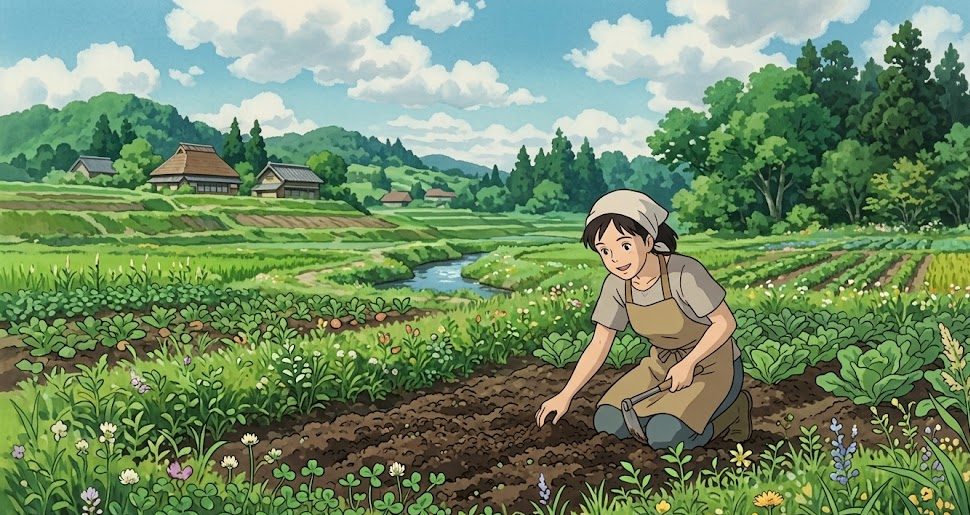
In the pursuit of high-profit “cash crops,” many farmers fall into the trap of short-term gains. We use heavy synthetic fertilizers for a quick growth spurt and aggressive chemical herbicides to clear the field. However, this often leads to a “dead” soil profile—compacted, acidic, and devoid of the microbial life necessary for long-term sustainability.
The real challenge, and the hallmark of a master grower, is learning how to heal the soil naturally while simultaneously keeping weeds at bay. This guide provides a strategic roadmap to balancing soil regeneration with effective weed management to ensure your cash crops reach their maximum potential.
1. The Relationship Between Soil Health and Weeds
Nature abhors a vacuum. If your soil is depleted, bare, or imbalanced, nature sends in “pioneer species”—which we call weeds—to cover the wound.
- The Lesson: Weeds are often bio-indicators. For example, dandelions often appear in compacted soil because their deep taproots are trying to break up the earth.
- The Strategy: By healing the soil and correcting nutrient imbalances, you actually make the environment less hospitable for many common weeds and more hospitable for your cash crops.
2. Healing the Soil: The “Natural Medicine” for Land
Healing soil requires moving away from chemical dependency and moving toward biological restoration.
A. The Power of “Green Manure” (Cover Crops)
Instead of leaving your field fallow (empty) between cash crop cycles, plant cover crops like Crimson Clover, Hairy Vetch, or Daikon Radish.
- Healing Property: These plants fix nitrogen, break up compaction, and add massive amounts of organic carbon when tilled back into the surface or crimped down.
- Weed Control: They create a “living carpet” that outcompetes weeds for sunlight and space.
B. Microbial Inoculants and Compost Teas
Healthy soil should crawl with beneficial bacteria and fungi.
- Healing Property: Applying compost tea or liquid seaweed introduces beneficial microbes that help plants absorb nutrients.
- Weed Control: Healthy, microbially active soil promotes vigorous crop growth. A strong, leafy cash crop will naturally shade out smaller weed seedlings (a process called “canopy closure”).
3. Smart Weed Management Without Harsh Chemicals
You can manage weeds effectively while keeping your organic certifications and soil biology intact.
A. The “No-Till” or “Low-Till” Revolution
Every time you turn the soil, you bring thousands of dormant weed seeds to the surface where they can germinate.
- The Technique: Use a broadfork for aeration instead of a mechanical tiller. By leaving the soil layers undisturbed, you keep the “weed seed bank” buried underground where it cannot grow.
B. Strategic Mulching
Mulching is the ultimate dual-purpose tool.
- For the Soil: Organic mulches (like wood chips, straw, or shredded leaves) decompose over time, turning into rich humus.
- For Weed Control: A 3–4 inch layer of mulch acts as a physical barrier. It blocks 99% of sunlight from reaching weed seeds. For high-value cash crops, using silage tarps for a few weeks before planting can kill off weed flushes naturally through “occultation” (blocking light).
C. Flame Weeding
For large-scale cash crops, flame weeding is a game-changer.
- The Technique: A propane torch is used to quickly pass over the soil. You aren’t “burning” the weeds to ash; you are just heating them enough to burst their cellular walls.
- The Benefit: It kills the weeds without disturbing the soil or leaving chemical residues that harm soil health.
4. Integration: The Seasonal Roadmap
How do you combine these practices into a working farm schedule?
| Phase | Soil Healing Action | Weed Management Action |
|---|---|---|
| Pre-Planting | Apply high-quality compost | Use silage tarps to kill early weed flushes |
| Planting | Add Mycorrhizal fungi to seeds | High-density planting to reduce open soil |
| Growth Period | Foliar feeding with liquid kelp | Hand-hoeing or “scuffle” hoeing only the top inch |
| Post-Harvest | Sow a multi-species cover crop | Mow weeds before they go to seed |
Export to Sheets
5. Managing Nutrition for Success
Cash crops (like tomatoes, hemp, or peppers) are often “heavy feeders.”
- Avoid Synthetic N-P-K: These salts can kill earthworms and beneficial fungi.
- Use Slow-Release Organics: Bone meal, blood meal, and rock phosphate feed the plant slowly and improve the soil’s long-term mineral balance. When your cash crop is strong and healthy, it is much more resilient against weed competition.
6. The “Stale Seedbed” Method
This is a pro-tip for anyone growing high-value crops.
- Prepare your soil as if you are about to plant.
- Irrigate the empty bed and wait 7–10 days for weeds to sprout.
- Kill those baby weeds (using a flame weeder or light hoe).
- THEN plant your cash crop. Since you’ve already cleared the first “flush” of weeds, your cash crop gets a massive head start in clean soil.
7. Conclusion: The Regenerative Profit Model
Healing your soil naturally isn’t just an “eco-friendly” choice—it’s a financial one. Soil that is healed and full of organic matter requires less water, less supplemental fertilizer, and less labor for weed control over time.
By treating weeds as a symptom of soil health rather than an enemy to be poisoned, you create a regenerative cycle. Your soil gets richer, your weeds get fewer, and your cash crop yields get higher every single year.
Essential Summary Checklist:
- Don’t leave soil bare: Always use mulch or cover crops.
- Minimize Disturbance: Stop aggressive tilling to keep weed seeds buried.
- Feed the Biology: Focus on feeding the soil microbes, not just the plant.
- Observe and Adapt: If a specific weed keeps appearing, research what it says about your soil (e.g., compaction, acidity, or high nitrogen).
Master the soil, and the harvest will take care of itself.