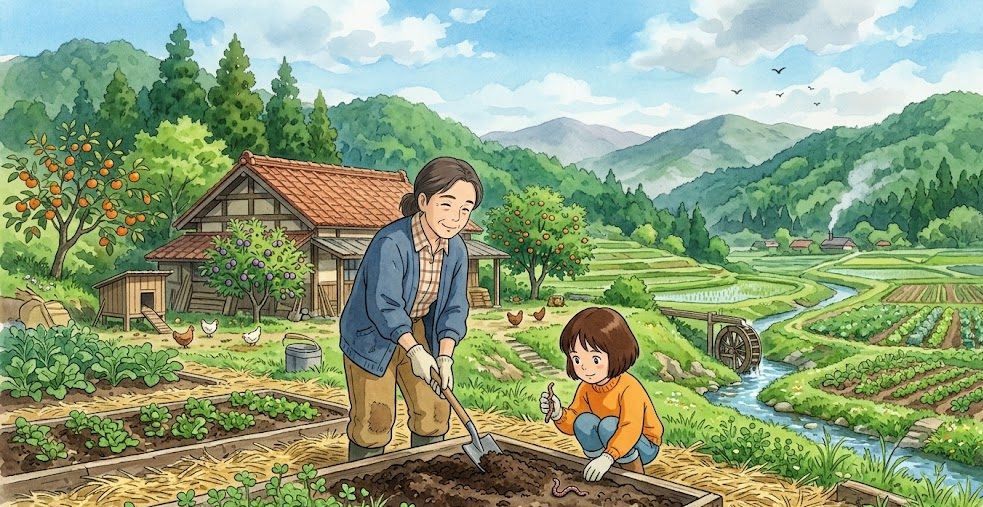
Sustainable farming is more than just a method; it is a commitment to the future of our planet. As industrial farming practices continue to deplete the Earth’s natural resources, the shift toward natural soil restoration and eco-friendly weed control is becoming essential. This guide explores how to rebuild land from the ground up while managing unwanted growth without the use of toxic chemicals.
Part 1: The Art of Natural Soil Restoration
Healthy soil is the foundation of any successful farm. Over time, intensive farming can strip soil of its nutrients, leaving it “dead” and reliant on synthetic fertilizers. Restoring it naturally involves bringing the biology back to life.
1. The Power of Composting and Humus
Compost is often called “Black Gold” for a reason. It is the most effective way to introduce organic matter back into the soil.
- Thermal Composting: High-temperature composting kills pathogens and weed seeds while creating a nutrient-dense fertilizer.
- Vermiculture: Using red wiggler worms to create worm castings. These castings are rich in plant-available nitrogen and beneficial microbes.
- Humic Acid: Applying humic substances helps in “chelating” nutrients, making them easier for plant roots to absorb.
2. Green Manuring and Nitrogen Fixation
Instead of applying urea or synthetic nitrogen, farmers can grow their own.
- Leguminous Crops: Planting peas, beans, or alfalfa helps capture nitrogen from the atmosphere and store it in root nodules.
- Biomass Incorporation: Once the green manure crop reaches its peak, it is tilled back into the soil or mowed down to decompose, adding massive amounts of organic carbon.
3. Mycorrhizal Fungi Integration
The “Wood Wide Web” exists under our feet. Beneficial fungi form a symbiotic relationship with plant roots, extending their reach to find water and phosphorus. Encouraging these fungi by avoiding heavy tilling and chemical fungicides is a cornerstone of restoration.
Part 2: Effective Natural Weed Control Tips
In sustainable farming, we don’t aim for a “sterile” field, but rather an environment where the crop has the competitive advantage. Weed control must be strategic and preventative.
1. The Stale Seedbed Technique
This is a pro-level strategy for organic farmers.
- The Process: Prepare your soil as if you are going to plant, then water it and wait for 7-10 days.
- The Result: The first flush of weed seeds will germinate. You then kill these weeds using a light flame weeder or shallow cultivation before planting your actual crop. This significantly reduces the weed bank in the soil.
2. Mulching: The Living and the Dead
Mulch acts as a physical barrier that prevents sunlight from reaching weed seeds.
- Organic Mulch: Using straw, hay, or wood chips. As they break down, they also feed the soil.
- Living Mulch: Planting low-growing clover underneath taller crops like corn. The clover covers the ground, suppressing weeds and fixing nitrogen simultaneously.
3. Occultation and Solarization
Using the sun’s power to clear a field is highly effective for small to mid-sized setups.
- Solarization: Covering moist soil with clear plastic for 4-6 weeks during the hottest part of summer. The heat kills weed seeds and soil-borne pests.
- Occultation: Using heavy black silage tarps. This starves weeds of light, causing them to germinate and die in the dark, leaving a clean bed for planting.
Part 3: Integrating Technology and Tradition
Modern sustainable farming often uses “Smart Farming” tools to enhance these age-old techniques.
- Precision Irrigation: Using drip systems to water only the crop and not the spaces in between, which naturally starves weeds of the moisture they need to grow.
- Soil Sensors: Using IoT devices to monitor NPK levels and moisture, ensuring that soil restoration efforts are targeted and efficient.
- No-Till Drills: These machines allow you to plant seeds directly into the soil without turning it over, keeping the weed seeds buried deep where they cannot germinate.
Part 4: The Economic Impact of Sustainability
Many farmers fear that going natural will hurt their profits. However, the data suggests the opposite over a 3-5 year period.
| Factor | Conventional Farming | Sustainable Farming |
| Input Costs | High (Fertilizers/Pesticides) | Low (Compost/Seeds) |
| Water Usage | High (Evaporation from bare soil) | Low (Retention from mulch) |
| Resilience | Low (Susceptible to drought) | High (Healthy soil acts as a buffer) |
| Market Value | Standard Commodity Prices | Premium Organic/Regenerative Prices |
Conclusion: A Holistic Approach
Natural soil restoration and weed control are not isolated tasks; they are part of a singular cycle. When soil is healthy and rich in organic matter, crops grow stronger and faster, naturally outcompeting many common weeds. By reducing our reliance on “quick-fix” chemicals and embracing the biological complexity of the land, we create a farm that is both profitable and permanent.