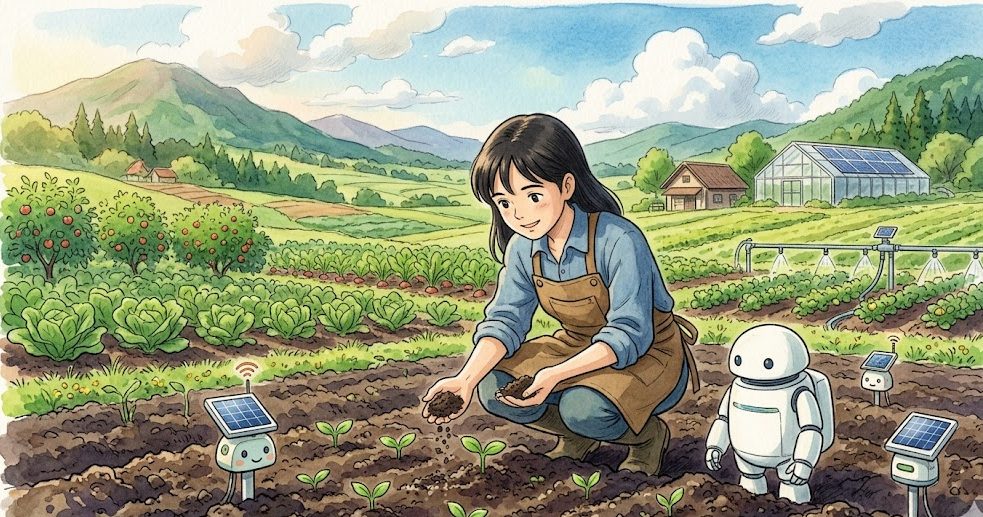
The landscape of modern farming is undergoing a radical shift. As the global population grows and climate patterns become increasingly unpredictable, the traditional “spray and pray” method of agriculture is no longer sufficient. To stay profitable and competitive, farmers are turning to Smart Agriculture—a revolutionary approach that leverages Artificial Intelligence (AI), deep-rooted soil health management, and high-value cash crop strategies to maximize yields while minimizing inputs.
In this guide, we explore how you can transform your farm into a high-performance, data-driven enterprise that is both sustainable and incredibly lucrative.
1. The Role of AI and Smart Tech in Modern Farming
Many think that AI is reserved for industrial conglomerates, but the reality is that smart technology is becoming increasingly accessible for small to medium-scale entrepreneurs. AI in agriculture acts as a digital farm manager, working 24/7 to analyze data that the human eye might miss.
Precision Decision-Making
AI-powered platforms can analyze satellite imagery and drone data to provide “prescription maps” for your fields. Instead of treating an entire acre with fertilizer, AI tells you exactly which square meters are nutrient-deficient.
- Automated Irrigation: AI sensors detect the exact moisture levels at the root zone, triggering irrigation only when necessary. This saves massive amounts of water and prevents root rot.
- Predictive Pest Scouting: Machine learning models can analyze images of your crops to identify pests or diseases at their earliest stage, allowing you to take targeted action before an outbreak wipes out your harvest.
By integrating even basic AI tools, you shift from reactive farming (fixing problems after they appear) to proactive farming (preventing problems before they start).
2. Soil Health: The Biological Engine
Technology provides the data, but the soil provides the wealth. If your soil health is neglected, your technology will only tell you that your yields are failing. Smart agriculture treats the soil as a living, breathing asset.
Moving Beyond NPK
Conventional farming relies heavily on NPK (Nitrogen, Phosphorus, Potassium) fertilizers, which often lead to soil degradation over time. Smart soil health management focuses on:
- Microbial Biodiversity: Encouraging beneficial bacteria and fungi that break down nutrients into forms plants can easily absorb.
- Carbon Sequestration: Using cover crops and minimum-tillage techniques to keep carbon in the ground, which improves water retention and soil structure.
- Smart Bio-Stimulants: Applying organic, lab-tested biostimulants that are tailored to the specific nutrient deficiencies revealed by your soil tests.
When you restore your soil’s natural biology, you reduce your need for synthetic fertilizers by up to 30%, which directly boosts your bottom line.
3. High-Value Cash Crop Strategies
Not all crops are created equal. A “smart” farmer understands that profitability is determined by the value per square foot. To maximize income, you need a strategy that focuses on high-demand, high-margin produce.
How to Select Your Cash Crops
- Market-Driven Selection: Use keyword data and demand analysis to identify crops that are popular in your local or target export markets.
- Growth Cycles: Focus on crops with multiple harvest cycles per year. For example, microgreens or exotic herbs can be harvested within weeks, providing a constant flow of cash compared to traditional seasonal crops.
- Value-Added Processing: Smart agriculture doesn’t end at the harvest. Can you turn your raw produce into a high-value product? For instance, processing fresh herbs into dried culinary blends or essential oils can increase your profit margin by 200% or more.
4. The Integrated “Smart Farm” Ecosystem
The most successful modern farmers run their operations as an integrated ecosystem. They don’t just grow crops; they manage systems that support one another.
- Waste-to-Wealth: Use the organic waste from your crop production to feed livestock, and use the resulting manure to create premium-grade compost for your fields.
- Vertical and Hydroponic Integration: Even if you have traditional soil fields, adding a small, high-tech hydroponic setup for exotic vegetables can ensure year-round income, protecting you against climate-induced failure in your main fields.
- Digital Traceability: In the modern market, consumers pay a premium for “traceable” food. By using digital logs (supported by AI tools), you can prove the origins, organic status, and quality of your crops, allowing you to charge a premium price at the farm gate.
5. Overcoming the Transition Challenges
Transitioning to smart, AI-driven agriculture can feel overwhelming, but it is best done in phases.
- Phase 1: Soil Audit: Spend your first season getting your soil chemistry and biology to peak performance.
- Phase 2: Digital Documentation: Start tracking every input and output. You cannot optimize what you do not measure.
- Phase 3: Targeted Tech Adoption: Start with one piece of smart tech—perhaps automated irrigation or soil moisture sensors—and prove the ROI before scaling.
Conclusion: The Future is Profitable
Smart agriculture is not just about using gadgets; it is about adopting a mindset of precision, data, and biology. By using AI to guide your decisions, restoring your soil to its natural glory, and strategically choosing cash crops that offer the highest return on investment, you are building a farming business that is built for the future.
The farm of the 21st century is a high-tech lab, a biological sanctuary, and a highly profitable enterprise. The tools are available, the markets are waiting, and the time to start is now.