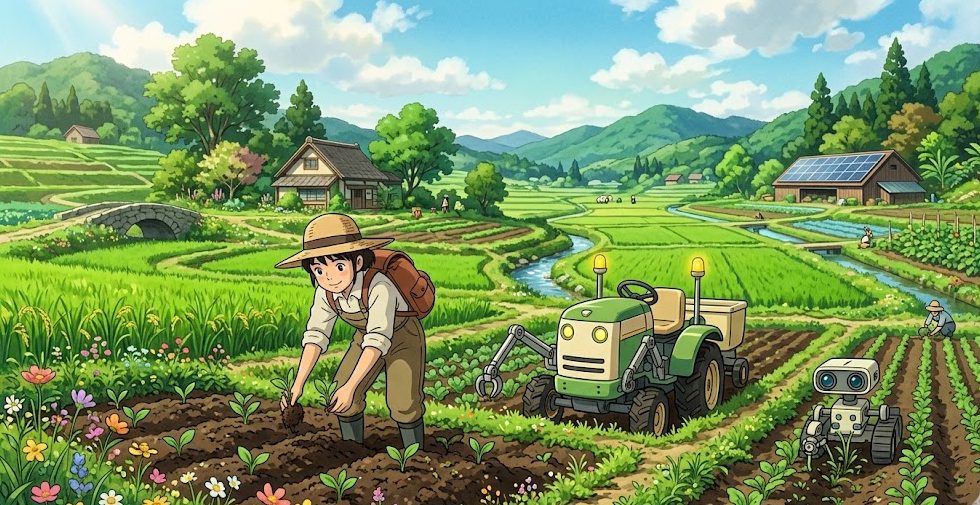
Agriculture is currently undergoing its most significant evolution since the invention of the tractor. We are moving away from the “standardized” industrial farming models of the past toward a nuanced, high-precision future. For the modern farmer—whether you are managing a high-output commercial venture or an innovative urban agricultural project—success no longer comes from brute force. It comes from the intersection of Artificial Intelligence, biological soil restoration, and surgical weed management.
This guide explores how you can leverage these advanced concepts to increase your farm’s profitability, resilience, and sustainability.
1. The AI Revolution in Agriculture: Precision at Scale
Artificial Intelligence (AI) is the “brain” of the modern farm. It allows you to move from general observation to hyper-specific intervention, saving thousands in input costs annually.
Predictive Crop Monitoring
AI-powered drones and fixed-sensor arrays now act as the eyes of your farm. By utilizing multispectral imaging, AI can detect “stress signatures” in plants long before they become visible to the human eye.
- Early Detection: If a section of your crop is suffering from nitrogen deficiency or early-stage fungal infection, AI algorithms identify the exact square meter affected.
- Actionable Intelligence: Instead of spraying the entire field, you apply treatments only to the targeted zones. This precision reduces chemical usage by up to 60%, drastically cutting your operational expenses while maintaining crop health.
Market Intelligence
AI isn’t just for the field; it is a powerful tool for your business office. By analyzing global market trends, weather patterns, and supply chain logistics, AI platforms can predict which crops will command the highest premiums in the coming season. Using this data helps you decide your planting schedule, ensuring you grow what the market actually wants, not just what is traditional.
2. Soil Healing: Reversing the Damage
For decades, intensive farming practices have stripped soil of its microbial vitality. Healing your soil is not just an environmental goal—it is a financial one. Degraded soil requires more fertilizer, more water, and more labor. Restored soil does the heavy lifting for you.
The Microbiome First Approach
Think of your soil as a living digestive system. To heal it, you must focus on the “soil food web.”
- Mycorrhizal Fungi: These beneficial fungi extend the reach of plant roots, allowing them to access nutrients and water that were previously locked away. Inoculating your soil with these fungi can increase yields by 15–20% without adding a single gram of synthetic fertilizer.
- Biochar Integration: Adding biochar to your soil structure acts as a permanent battery for nutrients. It prevents fertilizer runoff and creates a permanent home for beneficial bacteria, ensuring that your soil remains productive for decades.
Cover Crops as Bio-Drills
Compacted soil is the enemy of root growth. Instead of heavy mechanical tilling, which destroys soil structure, use “bio-drills”—deep-rooted cover crops like daikon radish or tillage turnips. These crops break through hardpan layers, naturally aerating the soil and creating channels for water and air to penetrate deep into the ground.
3. Surgical Weed Control: Beyond Chemicals
Weeds are the primary competitor for your crop’s resources. However, the traditional approach—blanket herbicide application—is costly, harmful to soil health, and increasingly regulated. Advanced farming requires a surgical approach to weed management.
Robotics and Machine Vision
The future of weed control is autonomous. Today, AI-guided robotic weeders use computer vision to distinguish between your crop and a weed in milliseconds.
- Mechanical Precision: These robots can hoe or zap weeds with lasers within millimeters of your valuable crop without damaging it.
- Chemical-Free Pathways: By removing weeds mechanically, you avoid the “yield drag” often caused by herbicide stress on your plants. This is particularly important for high-value organic crops where chemical use is restricted or prohibited.
Allelopathy: Nature’s Herbicide
Some plants naturally produce biochemicals that inhibit the growth of competing weeds. This is called allelopathy. By integrating allelopathic crops (like certain varieties of rye or sorghum) into your rotation, you can naturally suppress weed emergence. It is a “set it and forget it” weed control strategy that reduces your need for external labor and inputs.
4. Integrating the System: The Modern Farm Workflow
To truly master these advanced guides, you must integrate them into a cohesive workflow. Sustainability and technology are not separate; they are two sides of the same coin.
- Map: Use drone-based AI to map your farm’s health and weed pressure.
- Restore: Apply soil-healing amendments (biochar, mycorrhizae) specifically where the AI maps indicate low biological activity.
- Manage: Deploy autonomous weeding tools to handle pressure areas, reducing the need for chemical intervention.
- Analyze: Measure the decrease in input costs against the increase in yield to calculate your true profit per square meter.
5. The Economic Impact of Advanced Farming
Why invest in these advanced methods? Because the economics of traditional farming are becoming increasingly squeezed by rising input costs and climate volatility.
- Cost Reduction: By using AI to target fertilizers and mechanical tools to replace herbicides, you lower your variable costs.
- Premium Pricing: Produce grown in healthy, nutrient-dense soil without harsh chemicals commands a higher market price in the D2C (Direct-to-Consumer) segment.
- Asset Appreciation: A farm with healthy, living soil is a more valuable asset than a farm with degraded dirt. You are not just growing food; you are building the long-term equity of your land.
Conclusion: Farming as a High-Tech Frontier
Advanced farming is no longer about labor; it is about intelligence. The farmers who thrive in the next decade will be the ones who treat their land as a high-tech ecosystem. By utilizing AI for precision, biological methods for soil healing, and robotics for weed control, you create a system that is not only highly profitable but also endlessly sustainable.
The shift may seem daunting, but it begins with a single step—replacing one outdated practice with one data-driven, nature-focused innovation. Start small, track your data, and watch as your farm transforms into a model of modern agricultural excellence.