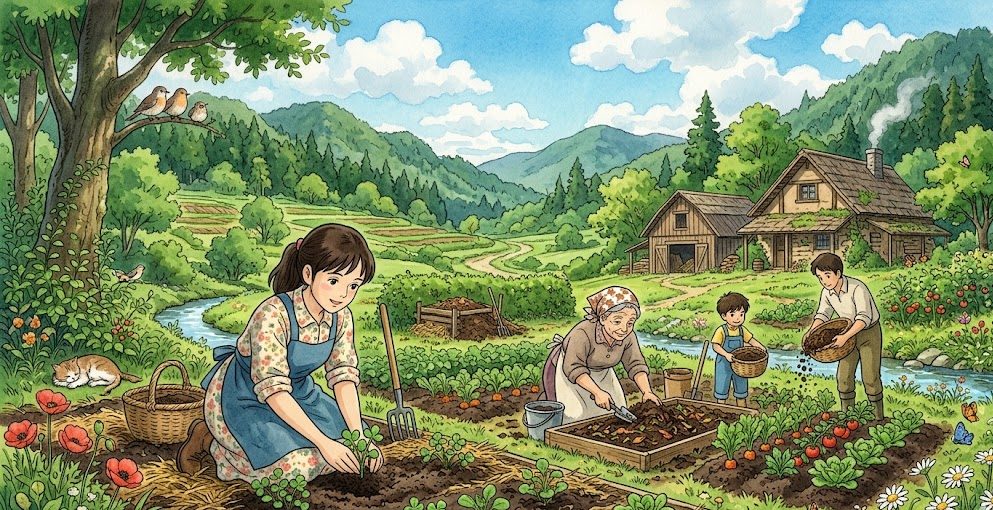
Think of the soil beneath your feet as a living, breathing ecosystem. Just like a human body, when soil is fed nothing but synthetic chemicals and worked to the point of exhaustion, it gets sick. It loses its structure, dries up easily, and struggles to support life.
For decades, intensive farming practices have treated soil like an empty cup—something to be filled with chemical fertilizers just to force crops to grow. But this approach has left us with depleted land and weak plants that depend entirely on the next chemical fix.
Natural soil restoration and organic land management are all about breathing life back into the dirt. By feeding the underground ecosystem of microbes, fungi, and earthworms, you can transform hard, lifeless dirt into rich, sponge-like soil that grows vibrant crops with minimal effort.
Whether you manage a backyard garden or a multi-acre farm, here is how you can heal your soil naturally.
1. Stop Tilling and Start Building
For generations, turning over the soil with a tiller or plow was considered a mandatory first step to planting. We now know that intensive tilling does more harm than good.
Every time you rip up the dirt, you slice through intricate networks of beneficial fungi, crush earthworm tunnels, and expose hidden organic matter to the air, causing it to burn off rapidly. Worst of all, tilling destroys the natural structure of the soil, leaving it prone to turning into hard crust in the summer and washing away in the rain.
Switch to No-Till Gardening
Instead of digging deep into the ground, simply add organic matter right on top of the soil. Let the earthworms and soil microbes do the heavy lifting of pulling those nutrients downward. This keeps the delicate underground architecture intact, making it easier for plant roots to access water and oxygen.
2. Feed the Soil with Premium Compost
If synthetic fertilizers are a temporary energy drink for plants, compost is a permanent, healthy diet for the soil. Compost doesn’t just deliver a quick dose of nitrogen, phosphorus, and potassium; it completely alters the physical makeup of your dirt.
The Power of Microbes
A single teaspoon of healthy compost contains billions of beneficial bacteria and fungi. These microscopic helpers form partnerships with plant roots, breaking down locked-up minerals and feeding them directly to your crops in exchange for plant sugars.
[ Dead Clay or Sand ] + [ Rich Organic Compost ] = [ Living, Sponge-Like Loam ]
                                                          |
                                           (Retains Water & Fights Diseases)
How to Apply It
Spread a 1 to 2-inch layer of well-rotted compost over your growing beds every single season. You don’t need to mix it in. Just lay it down, and let the rain and soil biology carry the nutrients to the root zone.
3. Plant Cover Crops (Living Fertilizers)
Leaving soil bare and exposed to the elements is one of the quickest ways to ruin its fertility. Bare soil bakes under the hot sun, dries out completely, and erodes during heavy downpours.
Organic land management relies on cover crops—often called “green manure”—to keep the ground covered and protected during the off-season.
Choosing the Right Cover Crop
Different cover crops serve different healing purposes for your land:
- Legumes (Clover, Vetch, Field Peas): These incredible plants work with specific soil bacteria to pull nitrogen gas from the air and store it in their roots, naturally fertilizing the dirt for your next crop.
- Deep-Rooted Radishes (Daiko Radish): These act like natural jackhammers. Their massive roots drill deep into heavy clay soils, breaking up compaction and creating channels for water and future plant roots.
- Grasses (Winter Rye, Oats): These grow massive, fibrous root systems that hold the soil firmly in place, stopping erosion while adding tons of organic matter when they decompose.
4. Master the Art of Mulching
In a natural forest or meadow, you will never see bare soil. Nature always covers itself with fallen leaves, twigs, and old plant matter. Replicating this through mulching is a cornerstone of organic land management.
Benefits of a Thick Mulch Layer
- Water Conservation: Mulch acts like a protective blanket, cutting down evaporation by up to 70%. This means you spend significantly less time and money watering your crops.
- Weed Suppression: A good 2 to 3-inch layer of mulch blocks sunlight from reaching weed seeds, stopping them from germinating.
- Temperature Regulation: Mulch keeps soil noticeably cooler during blistering summer days and warmer during chilly autumn nights, reducing stress on plant roots.
Great natural mulch options include clean straw, shredded leaves, wood chips, and pine needles. As these materials break down over time, they slowly transform into rich, black humus.
5. Implement Rotational Grazing (For Larger Lands)
If you manage a larger piece of property with livestock, how you manage your animals plays a massive role in soil health. Allowing livestock to roam freely over the same pasture all year long leads to overgrazing, tightly packed soil, and depleted grass roots.
Regenerative Grazing Practices
By practicing rotational grazing—moving animals frequently between smaller, fenced pastures—you mimic the movement of wild herds.
The animals graze an area quickly, stamp their manure and urine into the ground (which acts as an incredible natural fertilizer), and move on. This leaves the pasture with plenty of time to rest, recover, and grow incredibly deep root systems that pump carbon back into the soil.
Conclusion
Natural soil restoration is not an overnight fix, but it is a permanent one. By stepping away from harsh chemical inputs and focusing on no-till practices, heavy composting, cover crops, and mulching, you treat the root cause of poor plant growth rather than just the symptoms. Restoring your soil gives you resilient crops, lower input costs, and the deep satisfaction of leaving the earth healthier than you found it.
Frequently Asked Questions (FAQs)
1. How long does it take to restore dead soil naturally?
You will see noticeable improvements in water retention and plant health within the very first season of adding compost and mulch. However, fully transforming heavy, dead clay or sandy dirt into a rich, dark, self-sustaining ecosystem typically takes two to three years of consistent organic care.
2. Can I make my own compost at home?
Absolutely! All you need is a mix of “greens” (nitrogen-rich items like kitchen scraps, coffee grounds, and fresh grass clippings) and “browns” (carbon-rich items like dry leaves, straw, and shredded cardboard). Keep the pile damp like a wrung-out sponge and turn it occasionally to create free, high-quality soil fertilizer.
3. How do I know if my soil is healthy?
Healthy soil has a rich, sweet earthy smell (caused by beneficial bacteria), a dark brown color, and a crumbly texture similar to chocolate cake crumbs. If you dig a small hole and find at least 3 to 5 earthworms in a shovel full of dirt, your soil restoration efforts are working beautifully.
4. Is natural soil restoration more expensive than using chemical fertilizers?
In the long run, it is significantly cheaper. While chemical fertilizers must be bought and applied year after year, natural methods use cheap or free local resources (like leaves, compost scraps, and wood chips). Over time, your soil becomes self-sustaining, lowering your watering and fertilizer costs down to nearly zero.
5. What should I do if my soil is heavily compacted?
Avoid tilling it, as that will make the compaction worse below the surface. Instead, plant deep-rooting cover crops like daikon radishes to puncture the hard soil naturally. Top the area with a thick layer of organic compost and mulch, allowing earthworms to slowly loosen the dirt for you.