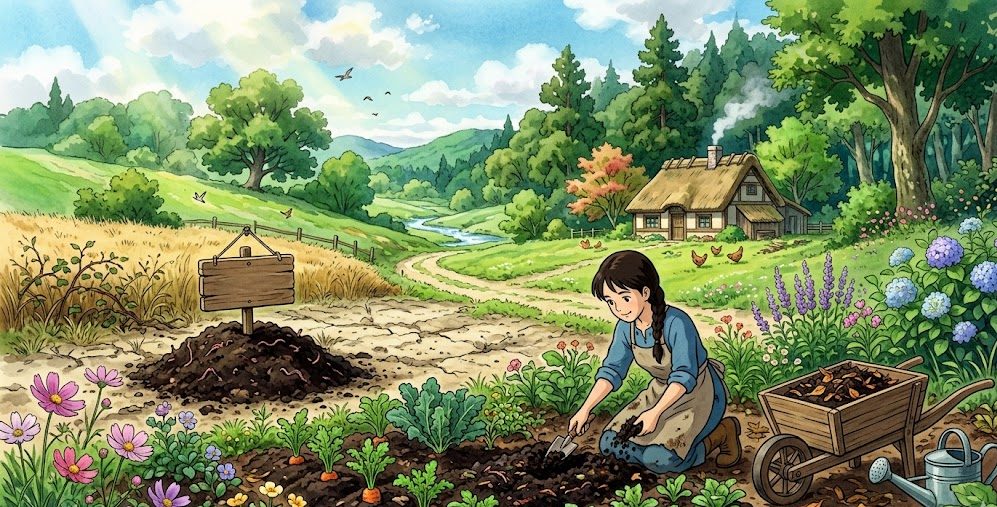
If you have ever tried to dig into a patch of ground only to find hard, cracked, dusty, or clay-like earth where nothing seems to grow, you are dealing with “dead dirt.”
To the untrained eye, soil and dirt might look exactly the same. But to a gardener, farmer, or environmentalist, they are worlds apart. Dirt is simply a collection of dead minerals, sand, silt, and clay particles. Soil, on the other hand, is a living, breathing ecosystem teeming with billions of microscopic organisms, fungi, earthworms, and vital organic matter.
When soil is over-farmed, heavily sprayed with chemical fertilizers, left exposed to harsh weather, or cleared of all native plants, it loses its biological life. It turns back into dead dirt.
The good news? You don’t have to abandon your land or rely on synthetic chemical fixes to get your plants growing again. Healing the earth takes time, but with a few foundational, natural techniques, you can restore dead dirt and turn it back into rich, dark, fertile soil. Let’s walk through how to do it step-by-step.
The Secret Ingredient: What Makes Dirt Alive?
Before you start fixing your soil, you need to understand what went missing in the first place: Organic Matter.
Organic matter is anything that was once alive and is now decomposing. This includes fallen leaves, decaying plant roots, dead bugs, animal manure, and compost. In healthy garden soil, organic matter should ideally make up about 5% to 10% of the total soil volume.
While that percentage sounds small, its impact is massive. Organic matter acts like a giant sponge, holding onto water so your plants don’t dry out. It binds loose sand particles together and loosens tight clay. Most importantly, organic matter is the primary food source for beneficial soil microbes and earthworms. Without it, the soil ecosystem starves, compacts, and dies.
1. Feed the Underground: The Power of Finished Compost
The fastest, most reliable way to inject organic matter and life directly back into dead dirt is by adding high-quality, finished compost.
Compost is packed with decomposed plant material and millions of beneficial bacteria and fungi. When you add it to dead dirt, you aren’t just adding nutrients; you are introducing a workforce that will immediately start rebuilding the soil structure.
How to Apply It to Dead Dirt
If your soil is extremely hard and compacted, you may need to gently loosen the top 2 to 3 inches of earth with a garden fork. Spread a thick layer—at least 3 to 4 inches—of compost over the entire area.
For incredibly degraded soil, you can carefully mix the compost into the top few inches of dirt. However, as your soil begins to heal over time, try to avoid heavy tilling. Tilling breaks up the delicate fungal networks (mycorrhizae) that plants rely on to absorb water and deep nutrients.
2. Never Leave Soil Naked: The Magic of Mulching
Look at a natural forest floor or an undisturbed meadow. You will never see bare, exposed dirt. Nature always covers itself with a layer of fallen leaves, twigs, pine needles, and dying wild plants.
When dead dirt is left completely bare, the hot sun bakes it until it is hard as concrete, and heavy rains wash away whatever loose nutrients are left. Covering your soil with a thick layer of organic mulch is non-negotiable if you want to restore it.
Best Types of Organic Mulch for Soil Restoration
- Shredded Leaves: An abundant, free resource in autumn. As they break down, they invite earthworms back to the surface.
- Straw or Clean Hay: Excellent for vegetable gardens, straw keeps the soil cool and retains an immense amount of moisture.
- Wood Chips or Shredded Bark: Ideal for paths, walkways, and around established trees or perennial bushes. They decompose slowly, providing a steady, long-term supply of carbon to the soil.
- Grass Clippings: Ensure these are free from synthetic chemical weed killers. They are rich in nitrogen and break down quickly.
As the mulch rests on top of your dead dirt, the bottom layer will slowly decompose, turning into rich humus and blending naturally into the dirt below.
3. Plant Living Plugs: Growing Green Manures and Cover Crops
Sometimes, the best way to fix dead dirt isn’t by putting things on it, but by growing specific plants in it. These specialized plants are called cover crops, or “green manures.”
Cover crops are not grown for food or harvest. Instead, they are planted strictly to protect, feed, and structurally rebuild the soil.
How Cover Crops Rebuild Dead Dirt
- Breaking Compacted Earth: Plants like Daikon Radishes (often called “tillage radishes”) grow massive, thick taproots that can punch straight through rock-hard clay, creating deep channels for air and water.
- Fixing Nitrogen Naturally: Legumes like clover, vetch, and field peas have a unique relationship with specific soil bacteria. They pull nitrogen gas out of the air and store it in their root systems. When the plant dies, that nitrogen is released directly into the soil as a free, natural fertilizer.
- Adding Mass: Grasses like winter rye or oats grow dense, fiber-like root networks. When you terminate these crops before they go to seed, their roots rot underground, leaving behind thousands of tiny pathways and an incredible amount of organic matter.
To use this method, sow cover crop seeds over your dead dirt, let them grow for a few weeks or months, and then chop them down right at the soil level. Leave the green residue on top of the soil as a mulch layer, allowing the roots to decay naturally where they stand.
4. Brewing Life: Liquid Soil Conditioners
If your soil is so degraded that it cannot support cover crops yet, you can give it a liquid jump-start using organic soil conditioners.
Compost Tea
Compost tea is made by steeping high-quality compost in aerated water for 24 to 48 hours, often with a little bit of molasses to feed the bacteria. The result is a concentrated liquid teeming with billions of active microbes. Pouring this liquid directly onto dead dirt helps repopulate the underground environment much faster than waiting for dry compost to break down on its own.
Humic and Fulvic Acids
Available at most organic garden centers, humic acids are highly concentrated forms of ancient organic matter. When applied to dead, sandy, or clay soils, humic acid acts as a chemical binder, helping dead mineral particles stick together to form a crumbly, healthy soil structure that can properly hold onto water and plant food.
A Quick Roadmap: Soil Restoration Timeline
Restoring soil is a journey, not an overnight event. Here is a realistic look at how dead dirt transforms over time when using natural methods.
| Stage | Expected Timeline | What is Happening Underground |
|---|---|---|
| Month 1 | Immediate Actions | Compost is applied; mulch covers the surface. Moisture retention improves immediately, preventing further erosion. |
| Month 3 | Early Signs of Life | Microorganisms begin breaking down the compost. Fungal webs start to form. The very first earthworms begin returning. |
| Month 6 | Structural Changes | First round of cover crops rot down. Hard clay starts to crack open; loose sand begins to hold together like breadcrumbs. |
| Year 1+ | The Turning Point | The dead dirt has officially transitioned into living soil. It smells earthy, holds water beautifully, and can support healthy vegetable or flower growth. |
Frequently Asked Questions (FAQs)
1. How can I tell if my dirt is officially “dead”?
Dead dirt is usually pale, dry, dusty, or rock-hard. When you dig into it, you won’t find any earthworms, insects, or visible root systems. It often lacks a smell entirely, whereas healthy, living soil has a distinct, rich, sweet, and earthy aroma caused by a beneficial bacterium called Actinomycetes.
2. Should I use chemical fertilizers to fix dead dirt quickly?
No. Chemical fertilizers are simple synthetic salts. While they might give a temporary chemical boost to a plant, they actually make dead dirt worse in the long run. They dry out the soil, kill off the remaining beneficial microbes, and do absolutely nothing to improve the physical structure or organic matter of the soil.
3. Can I use fresh animal manure to restore my soil?
Be very careful with fresh manure. Chicken, cow, or horse manure is incredibly high in ammonia and can easily burn plant roots or introduce harmful pathogens. Always compost fresh manure for at least 3 to 6 months before applying it to your growing areas.
4. How long does it take to turn dead dirt back into healthy soil?
Depending on how badly damaged the dirt is, you will see noticeable improvements in water retention and softness within 3 to 6 months. However, creating deep, rich, fully fertile topsoil naturally usually takes 1 to 2 full growing seasons of continuous organic care.
5. Do I need to buy earthworms and release them into my dead dirt?
Generally, no. Buying earthworms and dropping them onto dry, dead dirt is a waste of money because they will either crawl away or die from lack of food and moisture. If you add compost, keep the ground damp, and cover it with organic mulch, the native earthworms sleeping deep underground will naturally find their way back to your soil.
Conclusion
Turning dead dirt back into a thriving, fertile paradise is one of the most rewarding journeys a gardener or grower can experience. It requires walking away from fast chemical shortcuts and embracing the natural cycles that have kept our planet green for millions of years.
Remember the golden rule of sustainable growing: Stop feeding your plants, and start feeding your soil. By layering generous amounts of compost, keeping the ground heavily mulched, and letting the deep roots of cover crops do the heavy lifting, you will watch your dusty dirt transform into a rich, vibrant ecosystem. Be patient, stay consistent, and let nature do what it does best!