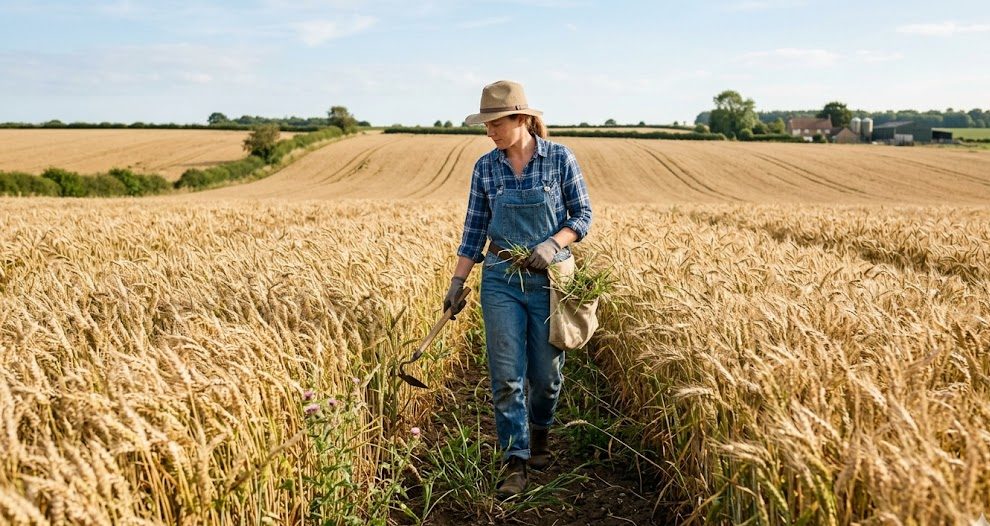
Every farmer and market gardener knows the feeling: you plant your seeds, meticulously manage your soil, and wait for the first green shoots. But alongside your prized cash crops, the silent thieves inevitably emerge. Weeds. These uninvited guests are nature’s ultimate opportunists, aggressively competing for sunlight, water, and precious soil nutrients. Left unchecked, invasive weed pressure can decimate your crop yield by up to 40%, turning a profitable season into a financial struggle.
However, the days of relying entirely on heavy chemical blanket-spraying are rapidly coming to an end. As we move deeper into 2026, changing agricultural regulations, rising input costs, and the alarming spread of herbicide-resistant “superweeds” are forcing a massive shift in agronomy. Today, protecting your harvest requires a smarter, multi-layered approach.
In this comprehensive guide, we will explore the most effective, modern weed control strategies—ranging from organic soil management to cutting-edge smart farming technologies—to help you secure your harvest and protect your bottom line.
Understanding Integrated Weed Management (IWM)
The most successful agricultural operations no longer look for a single “silver bullet” to eradicate weeds. Instead, they utilize Integrated Weed Management (IWM). IWM is a holistic strategy that combines cultural, physical, biological, and technological methods to manage weed populations.
The goal is not necessarily zero weeds—which is often economically and ecologically impossible—but rather keeping weed populations below the threshold where they cause measurable economic damage to your harvest. By stacking multiple control methods, you make it incredibly difficult for weeds to adapt, survive, and reproduce.
Cultural Weed Control: Winning the Battle Before It Starts
Cultural weed control focuses on changing the farming environment to favor the crop over the weed. This is your first line of defense and relies heavily on smart planning and sustainable soil management.
Crop Rotation and Cover Cropping
Planting the same crop in the same field year after year creates a predictable environment that allows specific weed species to thrive. A robust crop rotation disrupts this cycle. By changing the planting dates, harvest times, and growth habits of your primary crops, you constantly keep weed populations off balance.
Furthermore, integrating cover crops—such as winter rye, clover, or buckwheat—is a game-changer for organic soil management. Cover crops act as a “living mulch.” They aggressively cover the bare earth, blocking the sunlight that weed seeds need to germinate. Once terminated and rolled down, they leave a dense biomass on the soil surface that suppresses weeds while naturally feeding your soil microbiome.
Optimized Plant Spacing and Micro-Farming Techniques
If you leave empty space in a field, nature will fill it. In highly optimized micro-farming setups, growers use dense, intensive planting grids. By carefully calculating the exact space a mature crop needs and planting tightly, the crop canopy closes faster. This “canopy closure” physically shades out the soil, starving emerging weed seedlings of the light they need to photosynthesize and grow.
Mechanical and Physical Eradication
When weeds do break through your cultural defenses, physical removal is the next step. While traditional deep tillage is falling out of favor due to soil erosion and the destruction of fungal networks, modern mechanical control has become highly refined.
Precision Cultivation
Today’s tractor-mounted cultivators are incredibly precise. Shallow cultivation targets just the top inch of the soil, slicing the roots of young weeds without disturbing the deeper soil structure or bringing dormant weed seeds up to the surface. Timing is everything here; cultivation is wildly successful when weeds are in the “white thread” stage (just germinating) but loses effectiveness once they establish deep taproots.
Thermal Weed Control
For operations prioritizing organic practices, thermal weed control is gaining massive traction. Flame weeders use targeted bursts of propane heat to instantly boil the water inside the weed’s plant cells, causing the plant to wither and die within hours. Alternatively, commercial steam weeders inject high-temperature steam directly into the top layer of soil, neutralizing both actively growing weeds and dormant seeds without using a single drop of synthetic chemicals.
The Role of Smart Farming in Weed Management
Perhaps the most exciting developments in weed control are happening in the realm of smart farming. Technology has finally advanced to the point where data-driven agriculture is accessible and highly profitable for farms of all sizes.
AI-Powered Weed Mapping
You cannot effectively manage what you cannot see. Modern farmers are utilizing drones equipped with multispectral cameras to fly over their fields, capturing high-resolution imagery. Artificial intelligence software then analyzes these images to map exactly where weed clusters are developing. Instead of guessing the severity of a weed problem, you get a real-time, digital map of the battlefield.
Smart Sprayers and Laser Weeding
Blanket spraying herbicides is expensive and damages the surrounding ecosystem. The solution is computer-vision-guided smart sprayers. These sophisticated implements attach to a tractor and use cameras to identify weeds in real-time as they pass over the crop rows. They then fire a micro-dose of herbicide only onto the specific weed, reducing chemical usage by up to 80%.
Taking it a step further, automated laser weeders are now rolling through commercial fields. Using advanced AI to differentiate between a cash crop and an invasive weed, these autonomous robots use high-powered thermal lasers to instantly vaporize weeds with pinpoint accuracy, operating day and night without human intervention.
The Hydroponic Alternative: Eliminating Soil Weed Pressure
If you want to bypass traditional weed control entirely, shifting a portion of your production into Controlled Environment Agriculture (CEA) might be the answer.
In commercial hydroponics, plants are grown in nutrient-rich water solutions rather than soil. Because there is no soil, there is zero soil-borne weed pressure. While indoor growers still need to manage algae or biofilm in their water lines, the countless hours and financial resources traditionally spent on plowing, cultivating, and spraying weeds are completely eliminated. For high-value crops like leafy greens or herbs, this transition allows for year-round, hyper-clean harvesting.
Conclusion
Protecting your harvest from yield-robbing weeds is an ongoing challenge, but it is one you can win with the right strategies in place. Moving away from a sole reliance on chemical herbicides and embracing Integrated Weed Management will make your farm more resilient and profitable.
Start by prioritizing soil health through cover cropping and strategic rotation. When physical intervention is needed, utilize precision cultivation or thermal methods to protect your soil structure. Most importantly, begin looking toward the future by adopting smart farming technologies that offer pinpoint accuracy and incredible cost savings. By combining the timeless principles of agricultural ecology with the technological innovations of 2026, you can ensure your crops thrive, your soil remains healthy, and your harvests reach their absolute maximum potential.