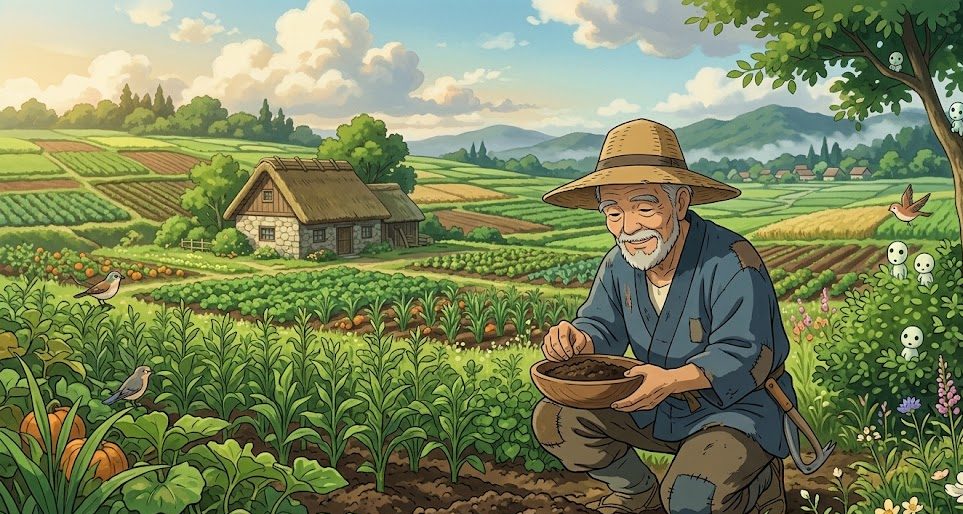
In the modern agricultural landscape, profitability is no longer just about maximizing yield—it is about optimizing efficiency, reducing input costs, and meeting the growing consumer demand for sustainably grown produce. Transitioning to a farm model that prioritizes natural soil health and effective, low-cost weed management is not only better for the environment; it is a smarter business move that protects your long-term profit margins.
This guide provides a comprehensive blueprint for maximizing your farming business through natural strategies and high-value crop selection.
1. Building Natural Soil Health for Sustained Yields
The foundation of every profitable farm is the soil. Synthetic fertilizers provide a temporary boost, but they often degrade soil structure over time, leading to higher costs and lower resilience.
The Science of Living Soil
Profit-driven farmers view soil as a living asset. Healthy soil contains a vast network of fungi, bacteria, and beneficial insects that process nutrients into a form plants can easily absorb.
- Composting at Scale: Converting farm waste—such as crop residues, manure, and even local organic municipal waste—into high-quality compost reduces your reliance on expensive commercial fertilizers.
- Soil Microbiome Support: Avoiding harsh, broad-spectrum chemicals helps maintain the natural microbial balance, which is the key to disease resistance.
Enhancing Fertility Without Chemicals
- Cover Cropping: Utilize legumes like clover or hairy vetch during off-seasons to fix atmospheric nitrogen directly into the soil.
- Minimal Disturbance: Reducing mechanical tilling preserves the fungal hyphae and soil structure that are essential for deep root growth and water retention.
2. Low-Cost, Sustainable Weed Control Strategies
Weeds are the primary competitor for your crops’ nutrients, water, and sunlight. However, heavy reliance on herbicides increases your operational costs and can harm your soil.
Integrated Weed Management (IWM)
The goal of IWM is not to eradicate every weed, but to suppress them to a level where they do not impact your harvest.
- Strategic Mulching: Covering the soil around your cash crops with organic material—such as straw, wood chips, or biodegradable landscape fabric—effectively prevents weed seeds from germinating by blocking sunlight.
- Crowding Techniques: Planting crops at specific, high-density spacings creates a dense canopy that shades out weeds naturally.
- The “False Seedbed” Method: Irrigate your prepared soil 10–14 days before planting your actual crop. Allow weed seeds to germinate, then perform a shallow, mechanical weeding pass to eliminate them before your cash crop ever hits the ground.
3. Selecting Cash Crops for Maximum ROI
To achieve true profitability, you must align your crop selection with market demand and the specific advantages of your farm’s infrastructure.
Targeting High-Margin Niches
Instead of competing in commodity markets with low price points, focus on crops that command a premium price:
- Microgreens: These require very little space and offer a extremely fast turnover cycle (often 2–3 weeks).
- Gourmet Mushrooms: Mushrooms like Shiitake or Oyster can be grown indoors year-round using agricultural byproducts like straw or sawdust, making them an excellent high-value, space-efficient crop.
- Heirloom Vegetables: Consumers are increasingly willing to pay more for unique, flavorful varieties that are not available in standard grocery chains.
Diversification as Risk Management
Never rely on a single crop for your farm’s income. By growing a diverse range of crops with different harvest windows, you protect your business from total failure due to a localized pest outbreak or an unexpected weather event.
4. Leveraging Efficiency and Branding
A profitable farm is a well-managed one. Integrating simple technology and effective marketing is the final step in your scaling blueprint.
- Data-Driven Decisions: Keep meticulous logs of your costs per crop, your harvest yields, and your labor hours. Reviewing this data annually is the only way to identify which crops are actually profitable versus those that are just “busy work.”
- Direct-to-Consumer Branding: By selling directly through local markets, farm-to-table partnerships, or Community Supported Agriculture (CSA) programs, you retain the full retail margin instead of splitting profits with wholesalers.
- Marketing the “Natural” Edge: Modern consumers actively seek out farms that use regenerative, chemical-free methods. Labeling your produce as sustainably grown or regenerative allows you to command a higher price point than mass-market competitors.
Conclusion
Profitability in modern farming is achieved by working with nature rather than attempting to force production through chemical-heavy interventions. By investing in soil health, managing weeds through strategic physical suppression, and focusing on high-margin niche crops, you can build a farm that is both environmentally resilient and financially robust.
Start by implementing one of these strategies this season, track your results, and scale as your knowledge—and your profit margins—grow.