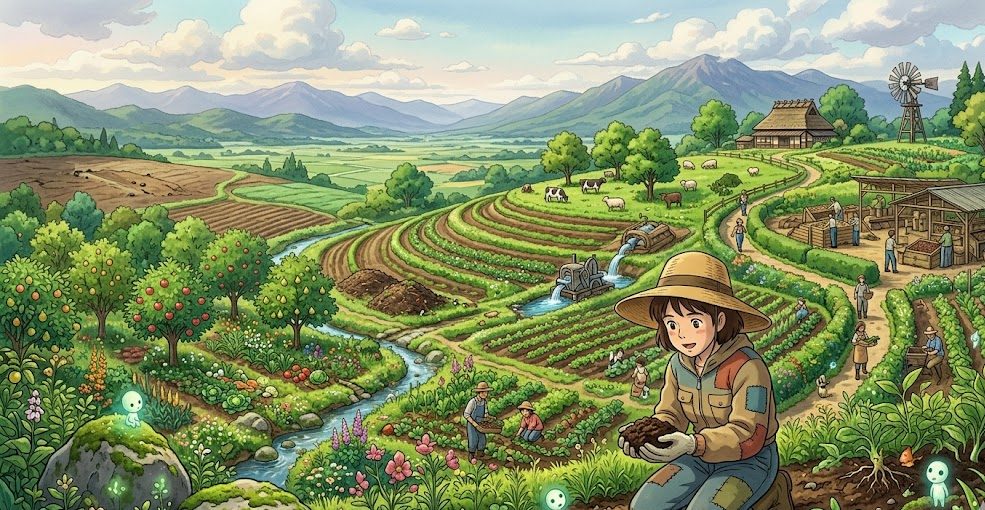
For generations, the thin layer of living topsoil covering our planet has been treated less like a dynamic biological ecosystem and more like an inert holding tank for synthetic chemicals. Intensive mechanical plowing, heavy synthetic fertilizers, and routine chemical sprays have successfully driven short-term crop production. However, this approach has come at a steep environmental cost.
Today, industrial farmlands are facing a quiet crisis: widespread soil compaction, rapid loss of organic carbon, and the steady decline of essential subterranean life.
When soil loses its natural biological vitality, it hardens, struggles to hold water, and loses its fertility. This leaves crops increasingly dependent on expensive, energy-intensive chemical inputs just to sustain basic production levels.
True agricultural sustainability requires a fundamental shift in perspective. To build a resilient food system, we must pivot from merely feeding crops to actively healing the soil naturally. By working with natural ecological processes, farmers can revive degraded land, lower production costs, and build a self-sustaining agricultural system that thrives for generations.
Understanding the Soil Ecosystem: It is Alive
To heal degraded soil, we must first understand that healthy earth is not just fragmented rock and dirt; it is a complex, living web of biological interactions. A single teaspoon of healthy, undisturbed topsoil contains more living organisms—including beneficial bacteria, mycorrhizal fungi, protozoa, and nematodes—than there are people on Earth.
Chemical-Dependent Loop:
[Synthetic Inputs] ──> [Suppressed Microbes] ──> [Compacted Soil] ──> [Increased Input Reliance]

Natural Regenerative Loop:
[Organic Amendments] ──> [Thriving Microbes] ──> [Aggregated Soil Structure] ──> [Self-Sustaining Fertility]
These microorganisms serve as the primary engine driving natural soil fertility. They break down organic matter, convert tightly bound minerals into plant-accessible nutrients, and secrete natural glues that bind loose soil particles into stable aggregates. This open, spongy structure allows air and water to penetrate deep into the root zone, creating an optimal environment for robust plant growth.
Core Methods for Healing Soil Naturally
Restoring life to damaged soil requires an integrated approach that eliminates harmful practices while actively feeding and protecting the underground ecosystem. These four practical, field-proven methods form the foundation of natural soil remediation.
1. Minimizing Soil Disturbance (Conservation Tillage)
Mechanical tillage—deeply plowing and turning over the earth—is one of the most disruptive actions a farmer can take against soil biology. Plowing forcefully injects a massive burst of oxygen into the ground, which rapidly oxidizes and burns through stable soil organic matter. It also physically shreds the delicate, underground networks of mycorrhizal fungi that transport water and key nutrients directly to plant roots.
- No-Till Seeding: Shifting to zero-till or direct-seeding systems allows crops to be planted cleanly through specialized machinery without flipping the topsoil. This practice keeps the soil carbon safely underground, protects the habitats of earthworms, and prevents hidden weed seeds from being brought to the surface to germinate.
- Strip-Tillage: For operations where full zero-till is difficult due to cold or wet regional soils, strip-tillage offers an excellent middle ground. This technique creates narrow, gently cleared seedbeds for row crops while leaving the wide, intervening lanes completely undisturbed and heavily protected by organic residue.
2. Utilizing Diverse Cover Crops and Living Roots
Leaving fields bare between major cash crops exposes vulnerable topsoil to the baking sun, wind erosion, and heavy, compacting rain. Keeping a continuous, living root system in the ground year-round acts as a vital lifeline for sustaining active soil biology.
- Rhizosphere Exudates: Living roots continuously pump liquid carbon compounds—such as sugars, amino acids, and enzymes—directly into the surrounding soil zone, known as the rhizosphere. This continuous supply of energy feeds local beneficial microbial populations, keeping them active and healthy even during the off-season.
- The Power of Cover Crop Cocktails: Planting a diverse mix of multiple cover crop species simultaneously yields far better results than seeding a single crop alone.
| Cover Crop Variety | Specific Structural Function | Primary Biological Benefit to Soil |
| Deep-Rooted Legumes (e.g., Sunn Hemp, Vetch) | Fixes atmospheric nitrogen gas via symbiotic root nodules. | Supplies natural, slow-release nitrogen to subsequent cash crops. |
| Fibrous Grasses (e.g., Cereal Rye, Oats) | Produces dense, extensive root networks near the surface. | Effectively binds loose topsoil and scavenges leftover nutrients. |
| Aggressive Brassicas (e.g., Daikon Radish) | Drills thick, deep taproots into dense underground pans. | Mechanically shatters compacted subsoil layers naturally. |
3. Integrating High-Quality Organic Amendments
In addition to growing cover crops, adding well-processed organic amendments provides a vital boost that can rapidly accelerate the healing process in severely depleted or compacted soils.
- Thermophilic Compost: Applying properly managed, aerated compost introduces billions of beneficial microorganisms while supplying stable organic matter. This helps rebuild the foundational soil food web far faster than leaving the ground to recover entirely on its own.
- Biochar Applications: Biochar is a highly stable, porous carbon material created by baking agricultural biomass in an oxygen-depleted environment. When mixed into fields alongside high-quality compost, biochar acts like a permanent microscopic sponge. It stays in the soil for centuries, creating a permanent structural network that retains moisture, locks in nutrients, and provides a safe shelter for beneficial microbes.
4. Implementing Rotational Grazing and Holistic Livestock Integration
Before the advent of industrial agriculture, wild herds of herbivores naturally roamed across expansive grasslands. Their brief, intensive grazing periods—followed by long recovery windows—built some of the deepest, most fertile topsoils on the planet.
Modern sustainable operations can replicate this natural process through Managed Intensive Rotational Grazing (MIRG). By keeping livestock concentrated in small paddocks for very short periods before moving them, animals naturally trample carbon-rich organic matter directly into the ground. Their manure and urine act as a potent biological stimulant, kickstarting dormant soil microbes without causing overgrazing or soil compaction.
Step-by-Step Transition Plan for Farms and Gardens
Transitioning away from a chemical-dependent management system to a natural, self-sustaining framework requires a steady, structured approach to avoid sudden management disruptions.
1.Step 1: Baseline Biological and Physical Testing:Phase 1: Diagnosis.
Conduct a detailed evaluation of your soil’s current physical condition. Look beyond standard N-P-K chemical levels; measure your baseline Soil Organic Matter (SOM) percentage, test water infiltration speeds, and count earthworm populations per cubic foot to gauge overall biological activity.
2.Step 2: Reducing Chemical Interventions and Plowing:Phase 2: Stabilization.
Begin systematically dialing back intensive deep plowing and reduce applications of highly soluble, synthetic salt-based fertilizers. This reduction stops the ongoing disruption of the soil microbiome, giving native beneficial organisms a stable environment to begin recovering.
3.Step 3: Seeding Diverse Cover Crops and Applying Carbon:Phase 3: Regeneration.
Introduce a high-diversity mix of cover crops during your seasonal fallow windows. At the same time, top-dress fields with high-quality compost or biochar blends to provide an immediate food source and structural habitat for the renewing microbial communities.
4.Step 4: Diversifying the Multi-Year Rotation Flow:Phase 4: Optimization.
Establish a dynamic, multi-year crop rotation schedule that ensures you never plant the same family of crops back-to-back. Mix deep-rooting varieties with shallow feeders, and loop in restorative pasture phases to naturally break up persistent pest and disease cycles.
The Mycorrhizal Connection: Glomalin, a robust glycoprotein produced exclusively by arbuscular mycorrhizal fungi, accounts for an estimated 27% of all permanent carbon stored in healthy agricultural soils. This natural compound acts as a powerful stabilizing glue, binding vulnerable soil particles together and protecting the ground against severe wind and water erosion.
Frequently Asked Questions (FAQs)
How can I tell if my soil is beginning to heal naturally?
The earliest signs of soil recovery are easily visible in the field. You will notice a steady increase in earthworm counts, the soil will smell rich and earthy rather than sour or metallic, and the ground will feel noticeably softer underfoot. Over time, your crops will develop deeper, more resilient root systems and display better natural resistance to dry spells.
Does shifting to natural soil healing methods require buying expensive new machinery?
Not necessarily. While commercial large-scale operations often choose to invest in specialized no-till seed drills, smaller farms and market gardens can easily transition using affordable, low-tech solutions. Strategies like manual broadforking, sheet mulching, and using simple silage tarps to terminate cover crops require very little financial investment.
Can natural soil building methods completely replace synthetic fertilizers?
Yes, over time. As your soil organic matter increases and the biological food web fully recovers, microbes naturally unlock and recycle vast stores of minerals already bound up within the earth. During the initial transition years, organic inputs like compost, legume cover crops, and natural rock dusts are used to smoothly bridge any nutrient gaps.
Will high-diversity cover crops compete with my main cash crops for water?
When managed correctly, cover crops actually improve overall water availability. Terminating the cover crops right before planting your cash crop creates a thick, protective surface mulch. This organic layer cools the field, dramatically cuts down on surface evaporation, and improves water infiltration, ensuring more moisture stays available in the root zone.
Conclusion
Healing the soil naturally is far more than a trend; it is an ecological necessity for the future of global food production. Continuing to mask declining soil health with increasing doses of synthetic chemicals is an unsustainable path that erodes both farm profitability and long-term land productivity.
By stepping back from disruptive tillage, maintaining constant living roots, and feeding the underground ecosystem with diverse organic matter, we can unlock the earth’s natural capacity to regenerate. This biological restoration does more than just protect the environment—it builds an inherently resilient, highly productive farm that can consistently deliver abundant, high-quality yields with fewer costly inputs.